USCCA Resources
Parts of Firearms
Discover the essential components of a gun and learn how its parts work together to ensure safe and reliable operation.
Browse the TermsBarrel/Barrel Crown
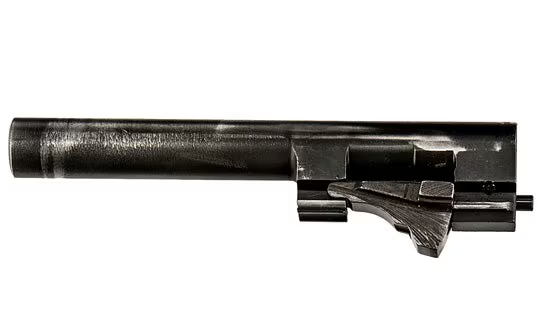
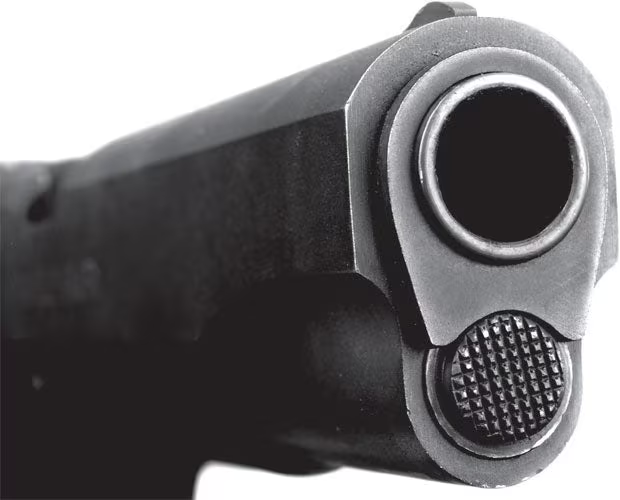
A barrel is the metal tube on the firearm through which the bullet is propelled in a specific direction.
Barrel Crown
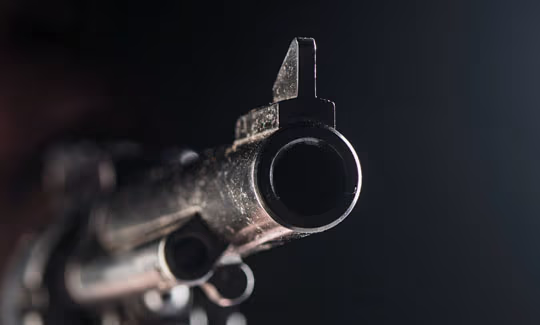
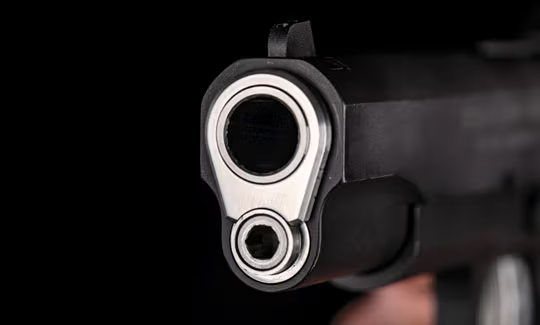
A barrel crown can be defined as the shaping of the point on a muzzle where the end of the bore intersects with the face of the end of the barrel. Different styles and shapes of crowns have evolved to meet specific shooting needs. It is important to maintain uniformity and consistency of the crown since this is the last point of the bore that the bullet contacts as it leaves the barrel.
There are various types of crowns, including target, recessed, 11 degree, concave and recessed. A target crown is machined into the muzzle to protect the rifling. This preserves and protects accuracy. If the very edge of the bore is nicked, scratched or damaged in any way, it will impact the dynamics of the bullet as it exits the muzzle.
Pull-and-Release Trigger/Binary® Trigger
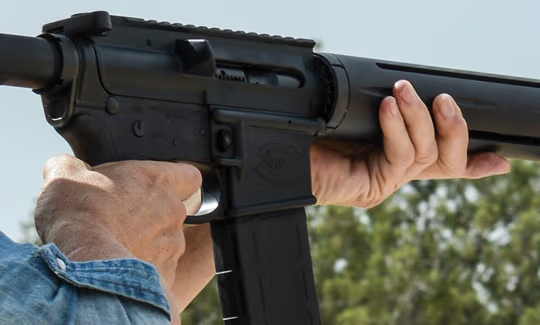
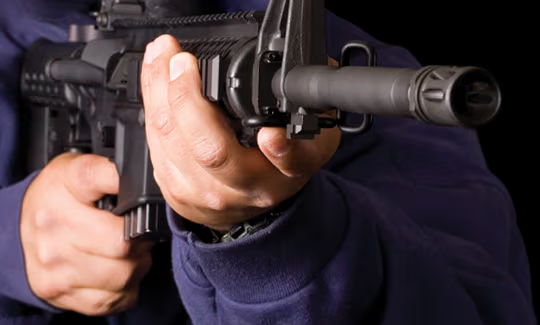
A pull-and-release trigger allows for faster split times and tighter groupings. Unlike bump stocks or forced-reset triggers, pull-and-release triggers do not force, accelerate or otherwise manipulate the user’s finger to operate the trigger any faster than he or she would otherwise be capable of doing on his or her own.
The Binary® trigger is Franklin Armory’s patented pull-and-release trigger system (Binary Firing System®) that fires one round on pull and one round on release. Franklin Armory’s patented Binary® semi-automatic trigger provides users with the ability to select between semi-automatic and Binary® modes and to safely cancel the release round. Unlike bump stocks or forced-reset triggers, pull-and-release triggers comply with federal and most state regulations.
Bore
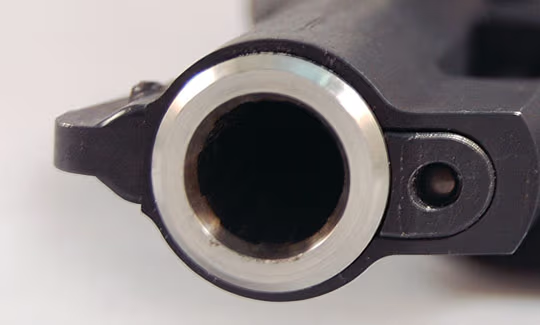
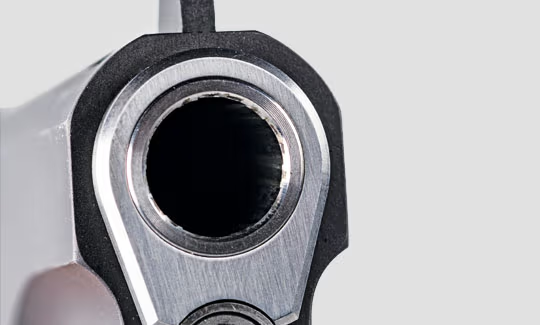
The bore is the interior of the barrel of a firearm. In guns that have rifled barrels, including rifles and pistols, the diameter of the bore determines the caliber — or the outside diameter — of the bullets loaded into the ammunition for a particular firearm.
Bump Fire/Bump-Fire Stock
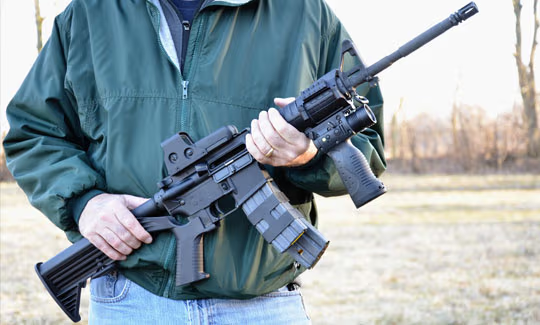
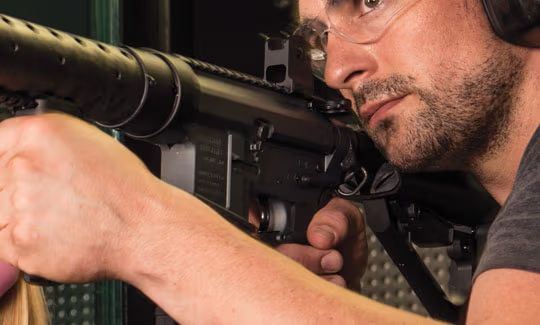
Bump fire (or bump firing) is a technique used with a semi-automatic firearm to replicate full-automatic fire. This is accomplished by using the recoil and weight of the firearm to engage the trigger. This can be done with any semi-automatic firearm by affixing the trigger with a stationary object and pulling the handguard forward to fire a round.
Bump-Fire Stock
A bump-fire stock (or bump stock) is an aftermarket product designed to make a semi-automatic rifle fire faster. It is used to replace the rifle’s stock — the part held against the shoulder — freeing it to slide back and forth rapidly and harness the recoil energy.
Bump stocks came under scrutiny due to the 2017 mass shooting in Las Vegas as a dozen of the rifles used by the shooter were modified with bump stocks, allowing the shooter to reportedly fire more than 1,100 rounds in 11 minutes. However, bump-fire stocks have been available for many years in the U.S.
Chamber
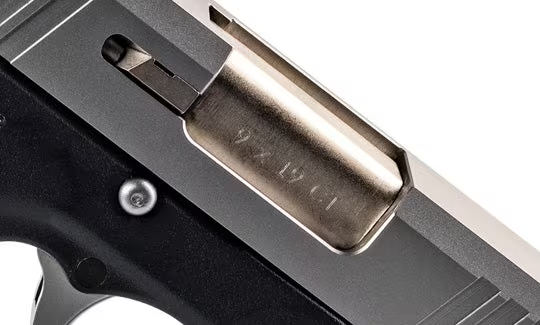
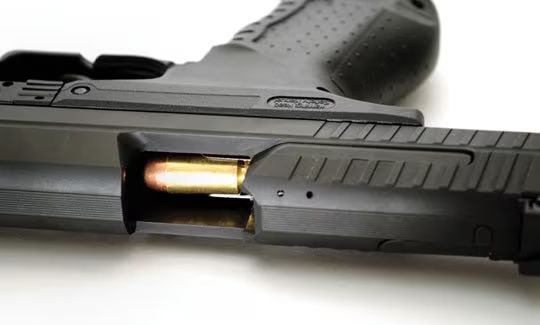
A chamber is the rear end of the barrel where the cartridge is inserted to be fired. The chamber must contain the cartridge and the resulting pressure when it is fired. In revolvers, the chambers are separate from the barrel and are contained in the cylinder.
Clip
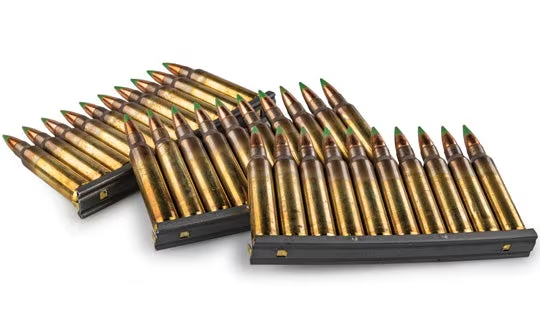
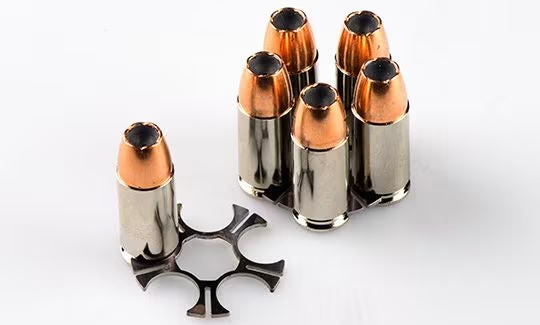
A clip is a device that is used to store multiple rounds of ammunition together as a unit, ready for insertion into the magazine or cylinder of a firearm. This speeds up the process of loading and reloading the firearm as several rounds can be loaded at once, rather than one round being loaded at a time.
Cylinder
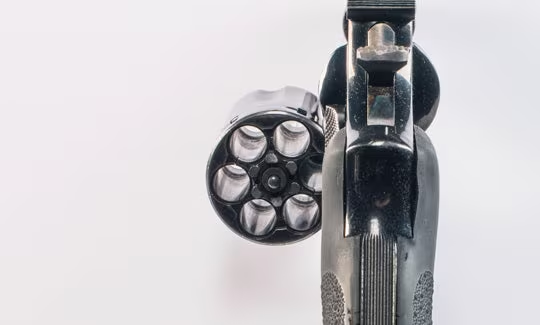
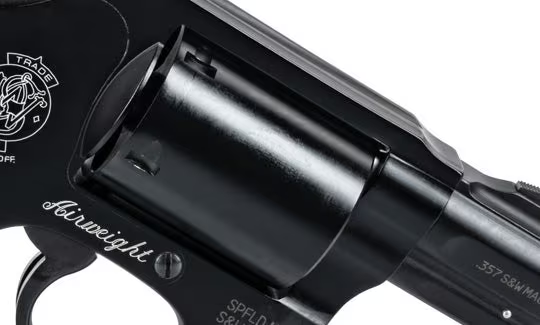
A cylinder is the round rotating assembly in a revolver that has multiple chambers, each holding a single cartridge. The cylinder rotates to bring unfired cartridges in line with the barrel to be fired. In modern revolvers, the cylinder will open out to the left side to be emptied of empty cases, followed by reloading. In older revolvers, the cylinder might not open or might utilize a loading gate. Instead, the cylinder might be removed completely for reloading, or the entire revolver might break open on a hinge at the lower front of the frame.
Dust Cover
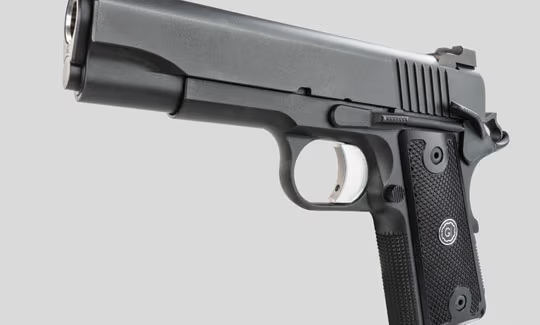
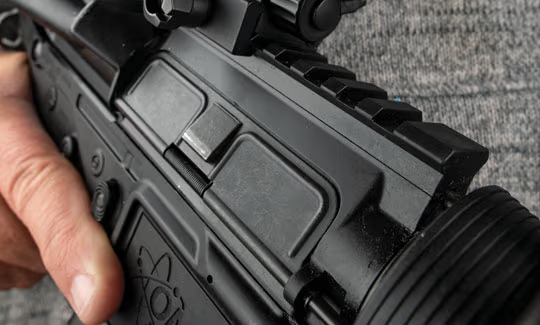
Although some people choose not to use the term “dust cover” in reference to a handgun, it refers to the forward part of the frame in a pistol. This is where a Picatinny rail accessory system could be found, if present. In a rifle, the dust cover seals the ejection port (the area that allows spent brass to exit the upper receiver after firing) from allowing contaminants such as sand, dirt or other debris into the mechanism.
En Bloc Clip
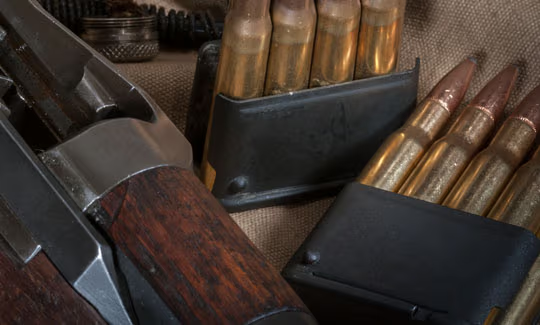
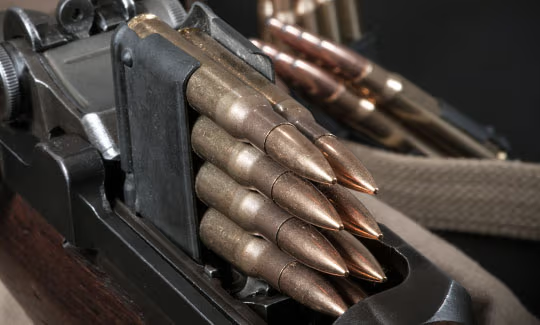
An en bloc clip is a device which holds ammunition for a firearm together for ease of reloading. Both cartridges and clip are inserted as a unit into a fixed magazine within the rifle. The clip is usually ejected or falls from the rifle upon firing or chambering the last round. Several rifle designs utilize an en bloc clip for loading — notably the M1 Garand.
Ejection Port
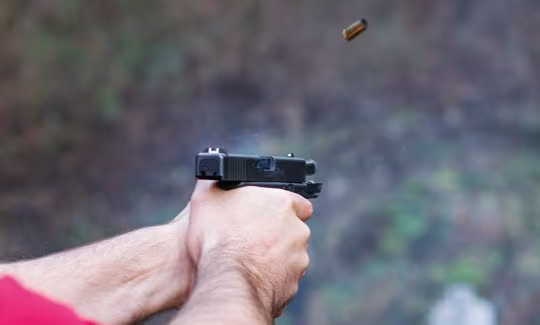
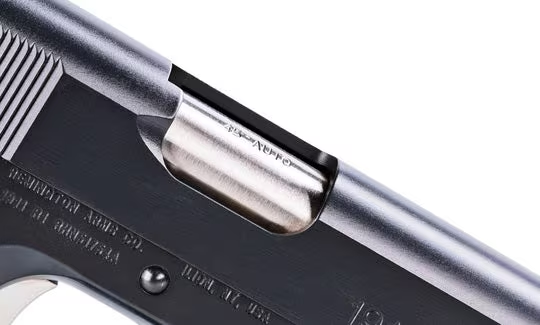
In semi-automatic firearms, an ejection port is typically a window cut into the slide from which the ejected case is propelled out of the action. This window must not be covered or obstructed.
Ejector
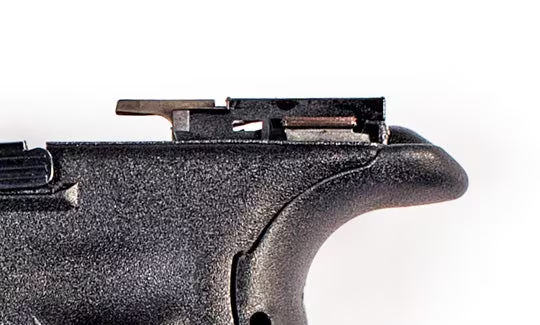
An ejector is the part of a handgun that causes the cartridge case — fired or unfired — to exit the gun. On a pistol, it is fitted to the slide at the ejection port, while on a revolver, it is usually a spring-tensioned rod in the middle of the cylinder.
Extractor
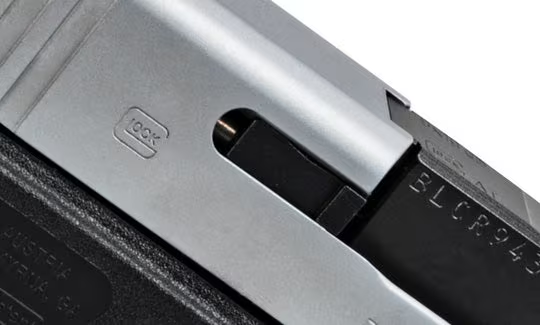
An extractor is part of a handgun that removes a cartridge case — fired or unfired — from the chamber. On pistols, the extractor is some sort of hook that engages the rim or extractor groove in the case. On revolvers, it usually is a roughly star-shaped mechanism that pushes all the cartridges out of the open cylinder simultaneously.
Flash Suppressor
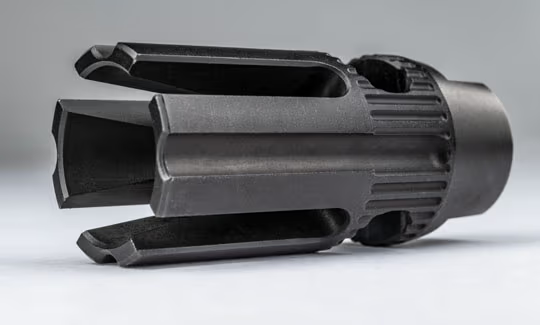
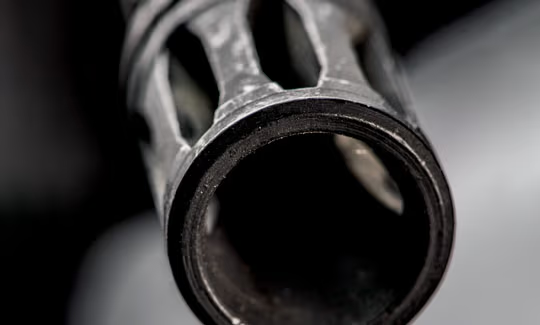
A flash suppressor is a device attached to the muzzle of a rifle or pistol that reduces its visible light signature while firing by cooling or dispersing the burning gases that exit the muzzle. The purpose of a flash suppressor — also referred to as a “flash hider” or “flash guard” — is to guard the shooter from a significant portion of the visible flash. Some states, such as California, Massachusetts, New York and New Jersey, have laws in place restricting the use of flash suppressors.
There are currently two primary types of flash suppressors: the duckbill and birdcage. The duckbill type has a number of prongs, while the birdcage type has a ring around its end for stability and to prevent the flash suppressor from being “caught up” on surrounding objects.
Frame
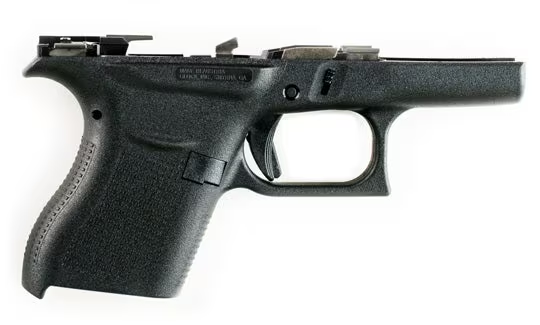
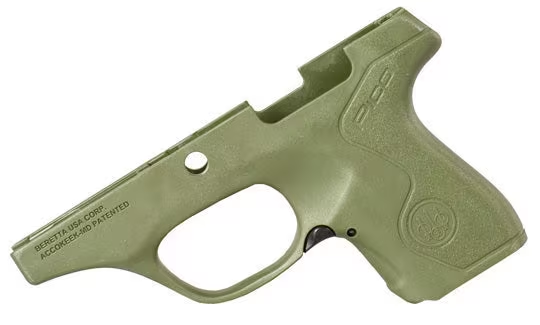
A frame is the solid piece of hardware, also called the receiver, which houses all of the internal components such as the hammer, grip, firing mechanism, ammunition storage (magazine or cylinder) and trigger assembly.
Grip
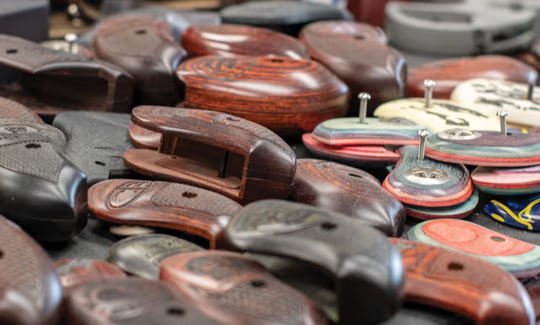
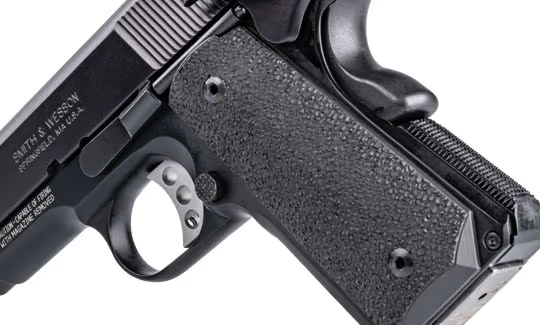
Many handguns have wooden, plastic or metal panels that are screwed or inserted into the frame to create a non-slip and cosmetically appealing appearance. Most metal-framed pistols and revolvers have grip panels, while most polymer-framed (plastic) pistols do not. Grip can also refer to the area of the frame around which the hand clasps the frame. The word grip can also be used to describe the position of a person’s hand or hands on a firearm.
Grip Safety
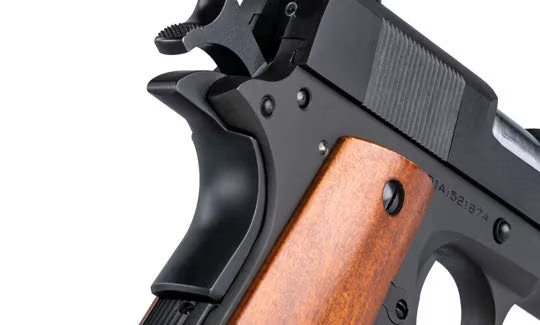
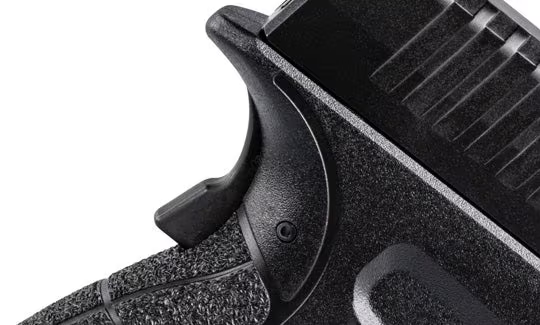
A grip safety is a particular type of safety found on several pistols, notably the Browning-designed 1911, that requires the user to firmly grasp the pistol in order to actually fire. The grip safety generally prevents the trigger from being pulled when not fully depressed by the shooter’s hand.
Hammer
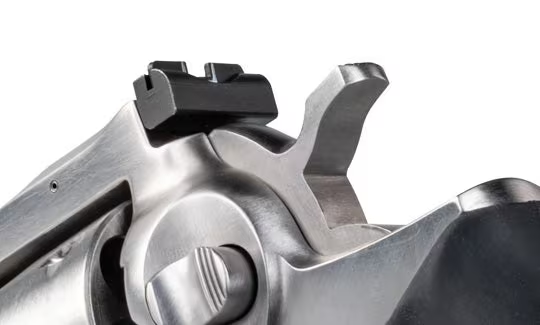
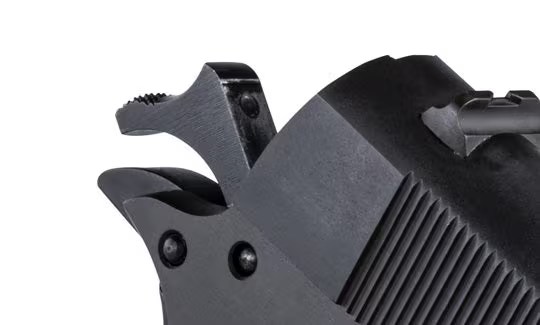
A hammer is the striking mechanism that uses rotation in an arc to build momentum to impact a firing pin to fire the gun. The hammer may or may not be visible. It works just like a construction hammer. In this analogy, the hammer of the gun is the hammer pounding the nail (the firing pin) into a piece of wood (the primer of the cartridge), the muscles in your arm being analogous to the hammer spring in the handgun.
Magazines
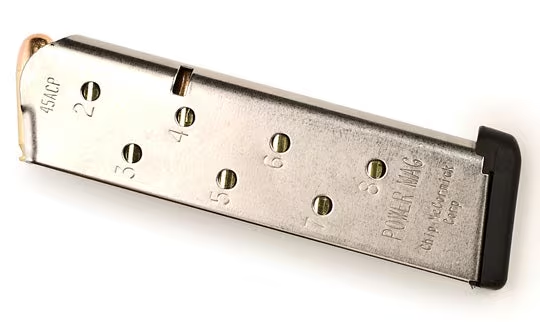
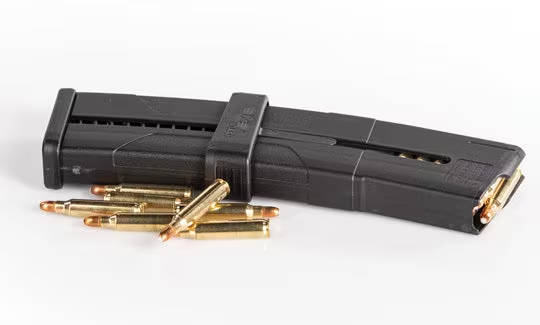
A magazine is part of the firearm that holds the ammunition and automatically feeds the ammo into the chamber. Most pistols have magazines that detach from the pistol. The cylinder of a revolver can functionally be thought of as a non-detachable magazine. Pistol magazines are typically composed of a tubular body, a spring, a follower and a floorplate that holds everything in the tube. Think of the magazine tube as an elevator shaft. The follower is the elevator, the spring is the elevator cable and the cartridge is the passenger being lifted upward toward its destination.
Types of Magazines
Double-Stack Magazine
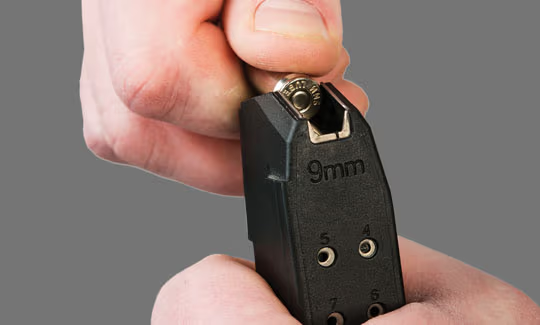
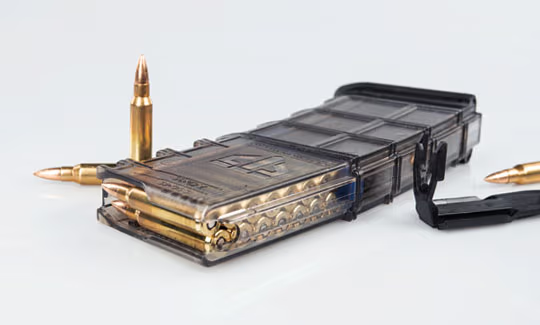
A double-stack magazine’s cartridges are held in a zigzag arrangement. The cartridges of either column are fed into the chamber. A double stack is necessarily wider than a single stack; it accommodates about one and a half times more ammo in the same vertical space. This is important when it comes to concealed carry.
For individuals who intend to carry a concealed handgun, width is an important factor. It is called “printing” when the outline of your concealed firearm is visible through your clothing. This can draw unwanted attention.
Single-Stack Magazine
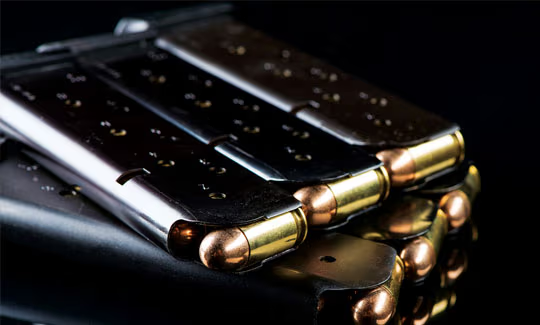
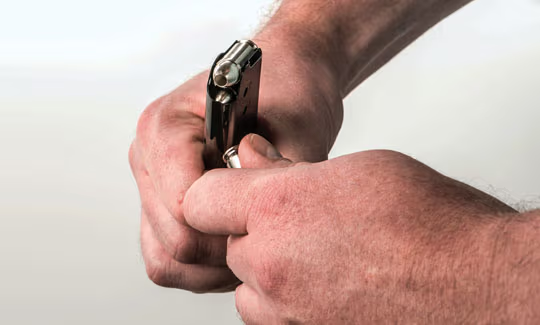
A single-stack magazine holds all of its cartridges in one column and has a thinner frame. This type of frame is easier for shooters with smaller hands to grip.
Magazine Catch
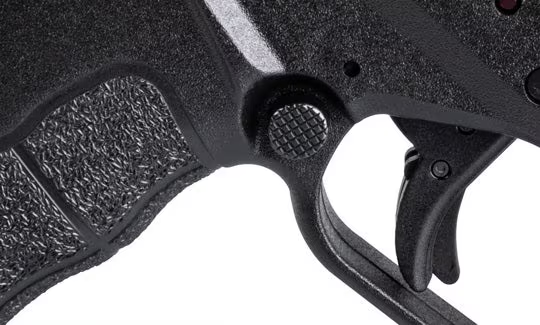
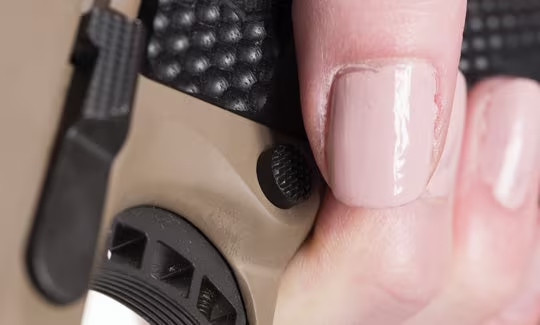
The magazine catch holds the magazine in the pistol. Typically, this also includes a button or lever that, when pressed, will release the magazine from the pistol. Revolvers have an analogous cylinder latch that will allow the cylinder to be opened.
Magazine (Mag) Well
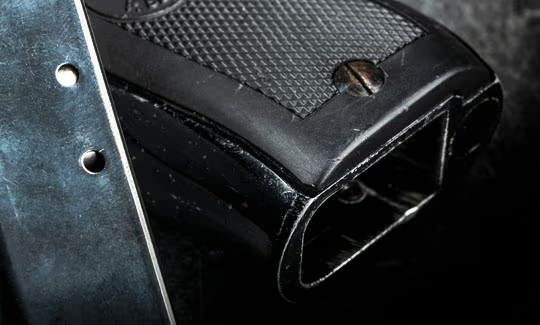
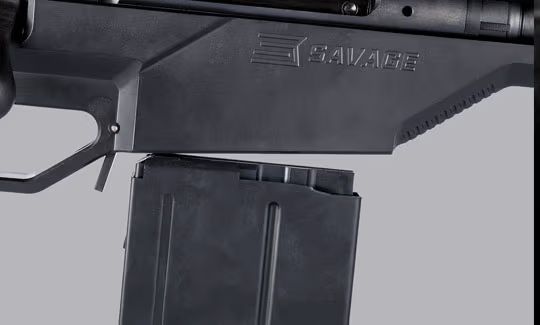
A magazine (mag) well is the area of a firearm into which magazines are inserted. Different forms of magazine inserts exist, most notably where the magazine locks in or slides in and is locked in place until the magazine release is pressed to allow the magazine to be separated from the firearm. On a semi-auto handgun, the magazine well is at the base of the grip, while on rifle, it is usually placed in front of the trigger guard.
Manual Safety
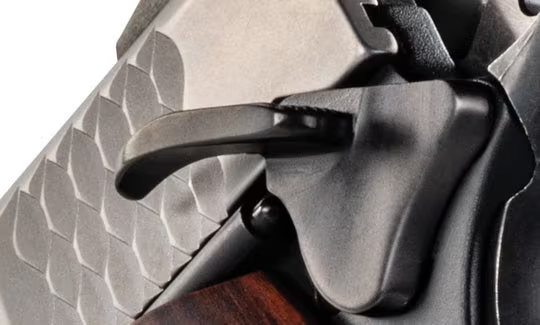
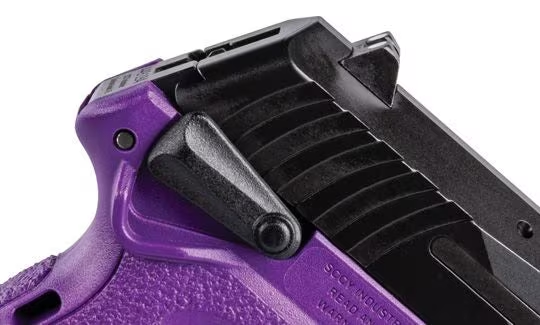
A manual safety is a button or lever that is designed to immobilize the firing mechanism of the gun, preventing it from firing. Manual safeties must be manually engaged and disengaged by the shooter.
Muzzle
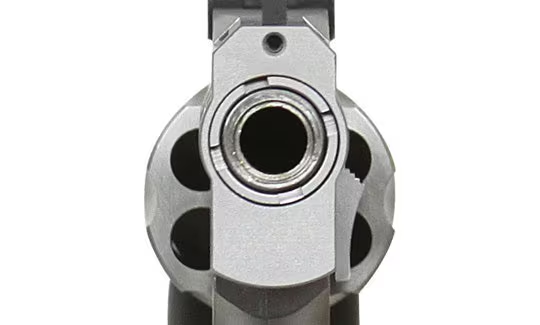
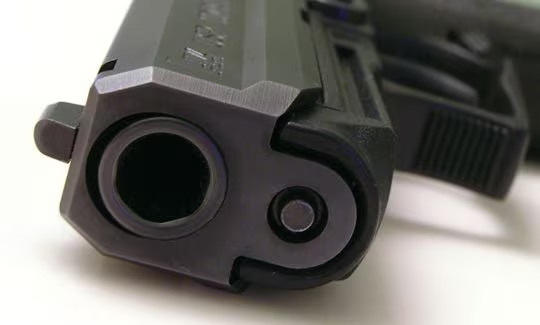
A muzzle is the front end of the barrel where the fired bullet emerges from the gun. Damage to this area can negatively affect accuracy.
Revolver Loading Mechanisms
Loading Gate
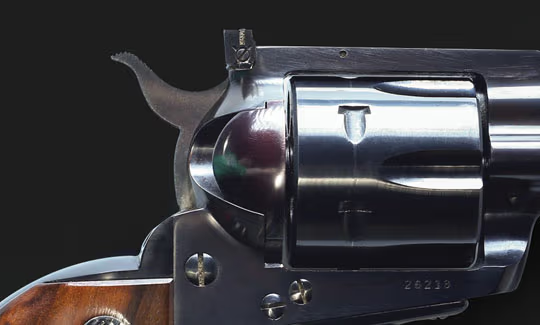
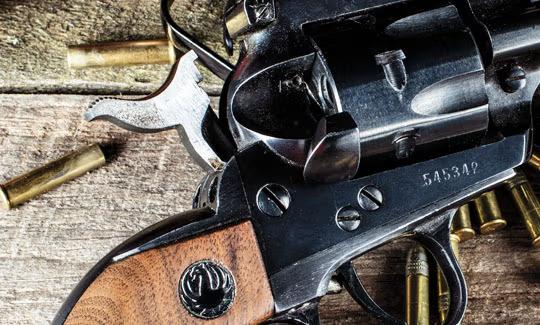
A single-action revolver with a fixed cylinder uses a loading gate at the rear of the cylinder that allows insertion of one cartridge at a time for loading, while a rod under the barrel can be pressed rearward to eject fired cases. The cylinder is rotated after each chamber is loaded or unloaded to bring the next chamber in line. The gate cover is closed after the desired chambers are reloaded or the gun is emptied.
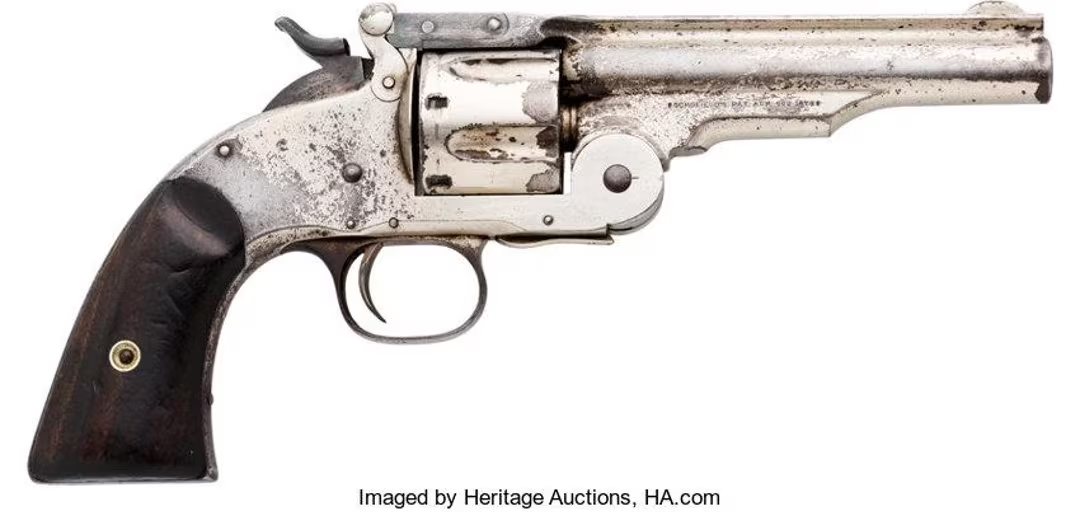
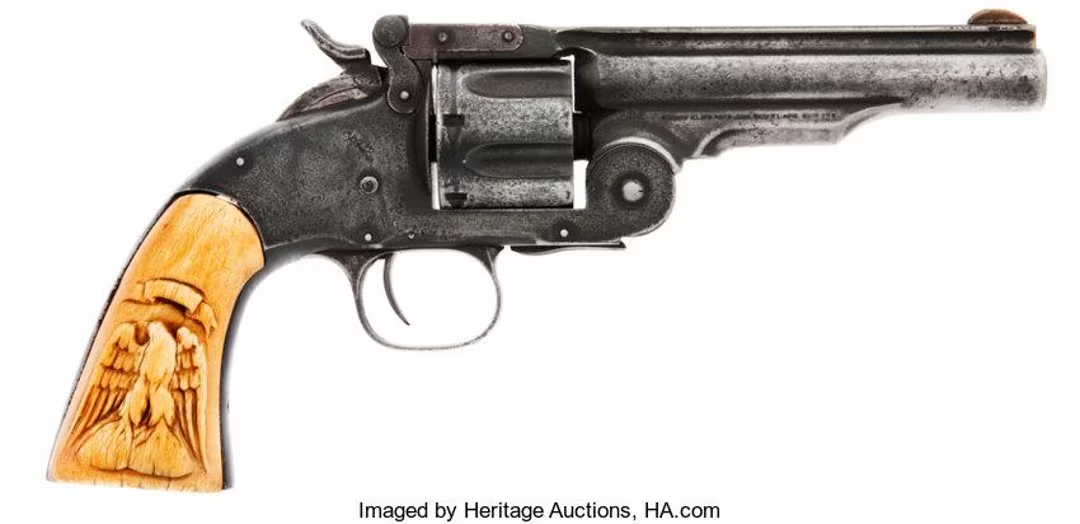
Top Break
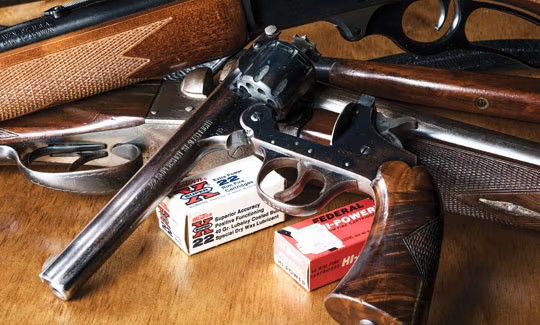
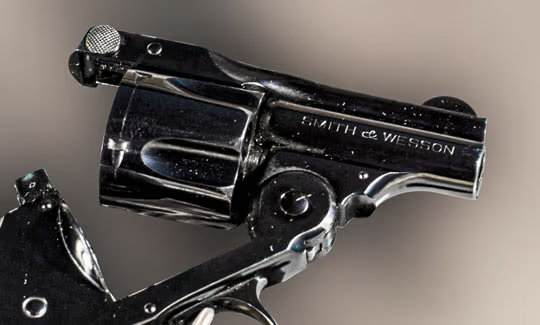
A top-break mechanism on a revolver is hinged near the front-bottom of the cylinder. The user can open the revolver and load new cartridges in quickly and easily. In many top-break revolvers, the action of breaking open also pushes an extractor lever upward, which ejects all the cartridges or empty cases or moves them far enough out of the cylinder that they can be pulled out easily.
Swing Out
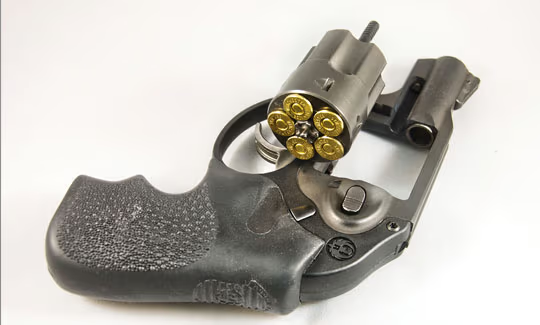
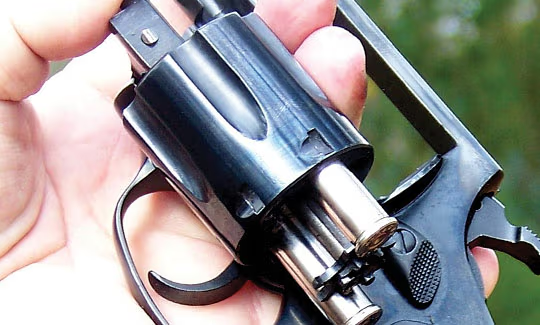
A revolver with a swing-out cylinder mechanism is one with a cylinder that is mounted on a pivot that swings out of and down from the frame. The rod on the front of the cylinder unlocks the mechanism and allows it to swing out. It can then be pushed in to operate the extractor and eject the contents of the chambers. Loading bullets can then be done one at a time or simultaneously using a speedloader. After loading, the cylinder is pushed back to the body of the revolver and locked in place.
Sear
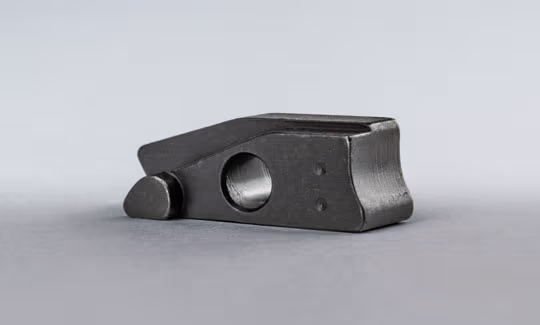
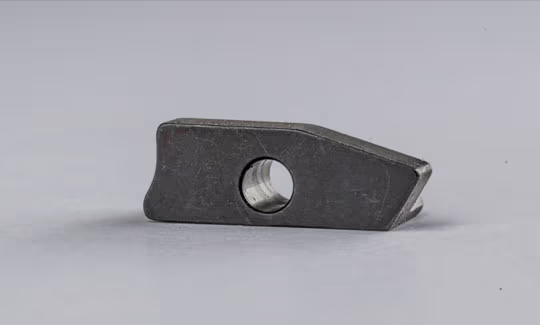
A sear is defined as the part of the trigger mechanism which holds the hammer, striker or bolt back until the correct amount of pressure has been applied to the trigger. At that moment, the hammer, striker or bolt is released to discharge the weapon.
Single-Stage/Two-Stage Triggers
Single-Stage Triggers
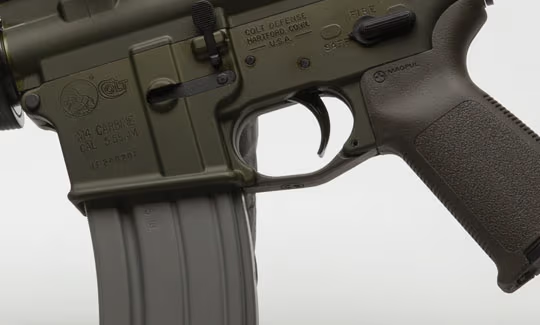
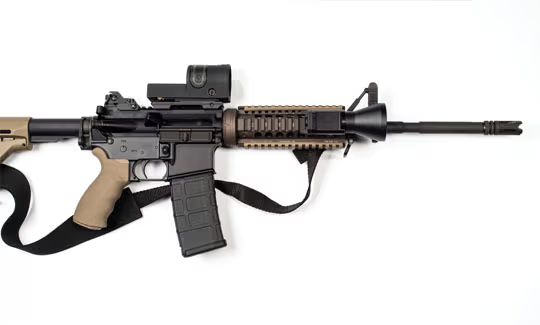
A single-stage trigger is designed to operate in one smooth range of motion, which can make accurate fire easier. Most single-stage triggers have lighter pull weights compared to two-stage triggers.
Two-Stage Triggers
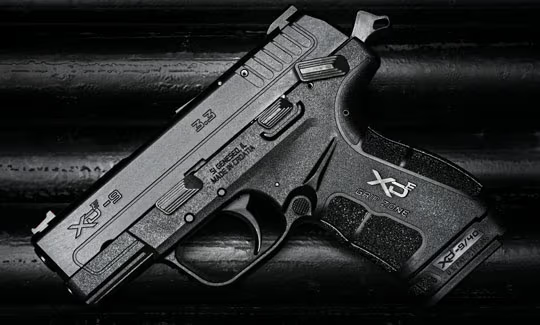
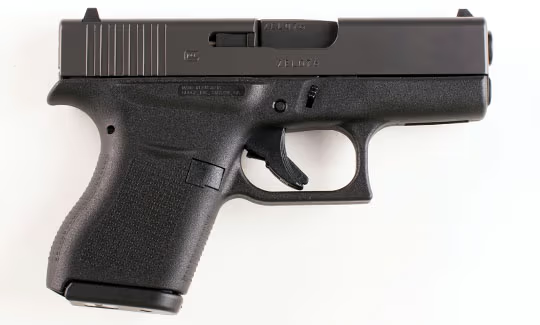
Instead of firing as one smooth range of motion like a single-stage trigger, a two-stage trigger requires an extra pull range to facilitate firing. The trigger is pulled until the trigger pull weight changes; pulling beyond that point discharges the firearm. (A two-stage trigger is not the same as a double-action trigger in a handgun.)
Slide
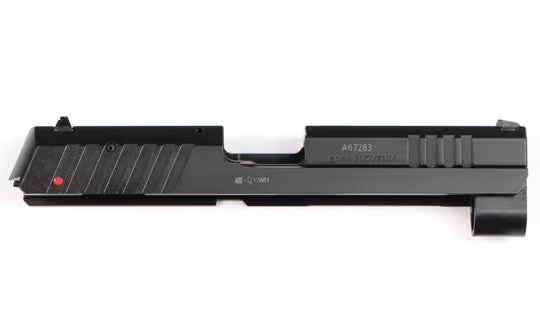
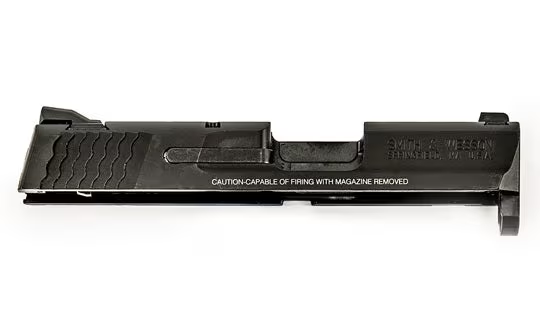
A slide is the piece of a pistol that slides or reciprocates along the top of the frame every time the pistol is fired. It forms the breech of the pistol and usually holds the barrel, ejector and firing pin mechanisms, and mounts the sights.
Slide Catch
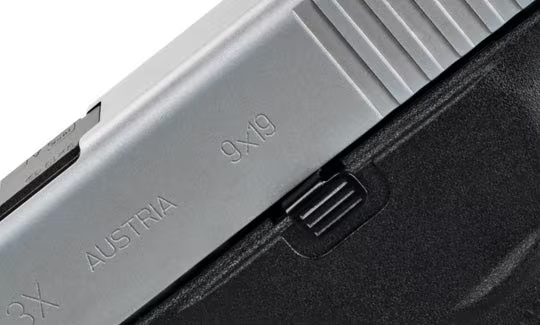
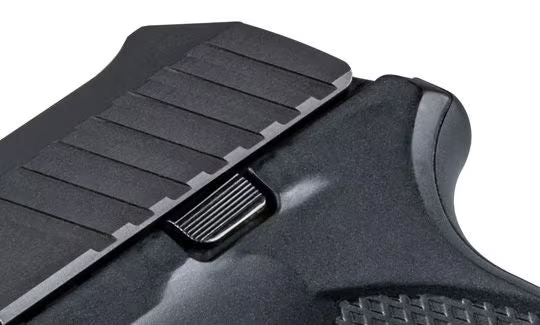
A slide catch is also called the slide stop. It is a lever in pistols that is raised by the magazine follower when the last round has been fired from the pistol. The slide catch locks the slide in a rearward and open position.
Striker
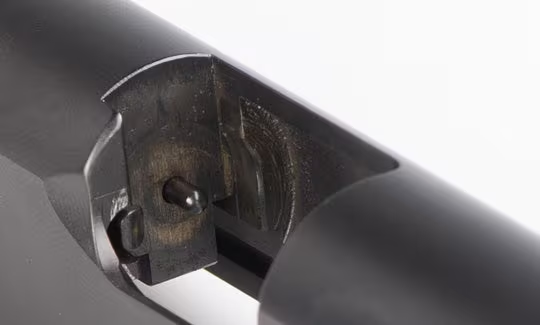
A striker is a striking mechanism that uses linear force by means of a compressed coil spring to fire the gun. The striker is usually the firing pin itself. More recently designed pistols tend to be striker fired and also tend to have smaller slides, not needing to make room for a rotating hammer. Think of a ballpoint pen. Pressing the button makes the pen emerge and lock in place, just like when a striker-fired pistol is loaded and cocked. Pressing the button again causes the pen to forcibly return upward, similar to the firing pin slamming forward to impact the cartridge primer.
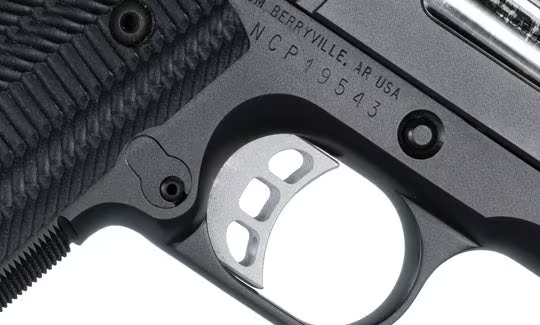
Trigger Guard
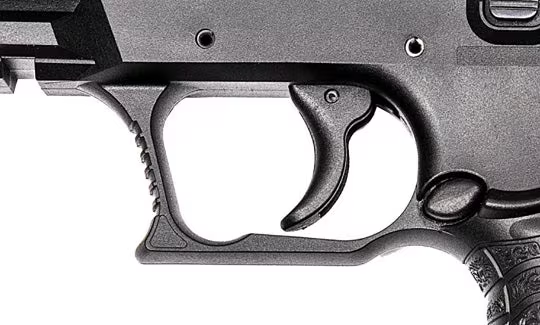
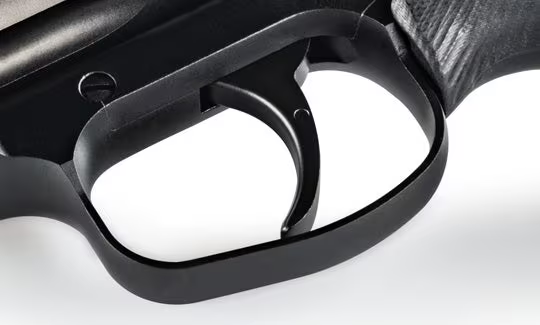
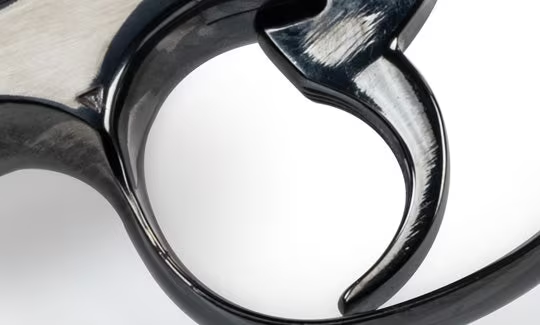
A trigger guard is a loop formed into the frame with the purpose to form an obstacle around the trigger. This helps to stop random objects (including fingers) from making contact with the trigger and helps to prevent negligent discharges.
Ventilated (Vent) Rib
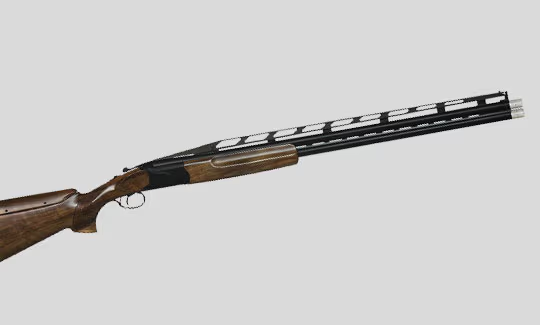
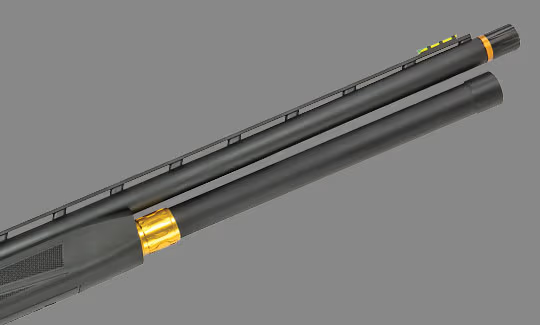
A ventilated (vent) rib is a flat plane that is raised above the barrel of a firearm — most commonly on shotguns. There are gaps between the barrel and the rib, which is supported over the barrel by a series of fastenings to provide better cooling and to eliminate glare on the barrel for the shooter as well as offer a straight sighting plane. Some handguns also have ventilated or solid ribs.
The information contained on this website is provided as a service to USCCA, Inc. members and the concealed carry community, and does not constitute legal advice. We make no claims, representations, warranties, promises or guarantees as to the accuracy, completeness or adequacy of the information disclosed.