Joseph McLain
Instructor # 4656024 | Premier Services
Certified with the USCCA since 9/20/2026
Certification Renewal Date 9/20/2027

USCCA Certifications
- Concealed Carry & Home Defense
- Countering the Mass Shooter
- Marksmanship Simplified: Foundations of Handgun Coaching
- Emergency & First Aid
- Children's Firearms & Safety Fundamentals
My Biography
I’m an Army veteran and certified instructor through both the USCCA and NRA. I believe good training should be safe, practical, approachable, and built around real understanding—not simply memorizing steps or copying what an instructor demonstrates. It's the fundamental difference between EDUCATING and INFORMING.
I’ve never been a fan of the “show-and-tell” approach to teaching. I want people to understand what they are doing, why they are doing it, and how the pieces fit together. When something makes sense, it is retained longer, applied more effectively, and adapted more confidently when circumstances change. That matters whether the subject is firearms, personal protection, emergency preparedness, or anything else.
My goal is not to simply deliver information or get someone through a class. I want people to leave with knowledge they can build on, skills they can continue developing, and the confidence in themselves and their ability to make sound decisions for themselves. To me, that is the difference between short-term instruction and long-term capability.
Current Classes Available
Request a Class
Working in real estate often means meeting people you don't know, entering unfamiliar or vacant properties, hosting open houses and working alone — sometimes in locations where help isn't immediately available.
Real Estate Agent Safety is designed around those real-world situations. This class will help you become more aware of potential warning signs, recognize situations that deserve extra caution and develop practical habits that can reduce your risk without making it harder to do your job.
The goal isn't to make you fearful of clients or properties. It's to help you recognize problems sooner, make better decisions when something doesn't feel right and have a plan if a routine appointment suddenly becomes unsafe.
Whether you're a new agent or have spent years in the profession, this class provides practical personal-safety information you can immediately apply to showings, open houses, client meetings and everyday work.
Somebody took you to the range the first time. A parent, an uncle, a friend who put a gun in your hands, covered a few safety rules and showed you how to hit the target. Or maybe nobody did, and you wonder whether a full day of class is more than you need just to get started. Or you’ve shot since you were ten, and a class with “basics” in the name sounds like it has nothing left to teach you.
Here is what most of us never got: The why. The people who taught us passed on what they do, not why they do it, because they learned it the same way. None of it matters on a sunny afternoon when everything is working. It matters when your shots won’t group, or when you hear a weak pop or a click and don’t know what it means.
This official NRA instructor-led course is built to educate you, not just inform you. It starts in the classroom and finishes on the range, and you’ll learn why each step works, because that changes what you can do. Across five lessons (Pistol Knowledge and Safe Gun Handling; Ammunition Knowledge and the Fundamentals of Pistol Shooting; Shooting Positions and Shooting Qualifications; Scoring Targets, and Selecting and Maintaining Your Pistol; and Continued Opportunities for Skill Development), you’ll cover the NRA Rules for Safe Gun Handling, how revolvers and semi-automatic pistols work, ammunition selection and storage, range safety and commands, and the fundamentals of accurate shooting. You’ll leave able to:
- Handle, load and unload any revolver or semi-automatic pistol with confidence, because you know what is happening inside it
- Recognize the dangerous malfunctions, like a squib load or a hangfire, and know what to do instead of guessing
- Shoot more accurately, and fix your own mistakes, because you understand why grip, stance, aim, breathing and trigger control work
- Choose a pistol that fits you, and store, clean and maintain it properly
- Know exactly what to practice next
You’ll practice live fire with an instructor coaching you, complete the NRA student examination and a shooting qualification, and earn an official NRA Basics of Pistol Shooting certificate of completion. Every student also takes home a textbook for future reference, so the answers are on your shelf long after class is over.
You can’t fix what you can’t see. Basics of Pistol Shooting is the NRA’s introductory handgun course, open to anyone regardless of shooting experience or NRA membership, and it shows you what is happening inside the gun and inside your own shooting. Shooting is more satisfying when you do it well. Whether you’re starting from nothing or from years of experience, you’ll find the gaps you couldn’t see and leave with a clear list of what to work on.
Save your seat, and start with the why.
The best self-defense situation is often the one you recognize early enough to avoid.
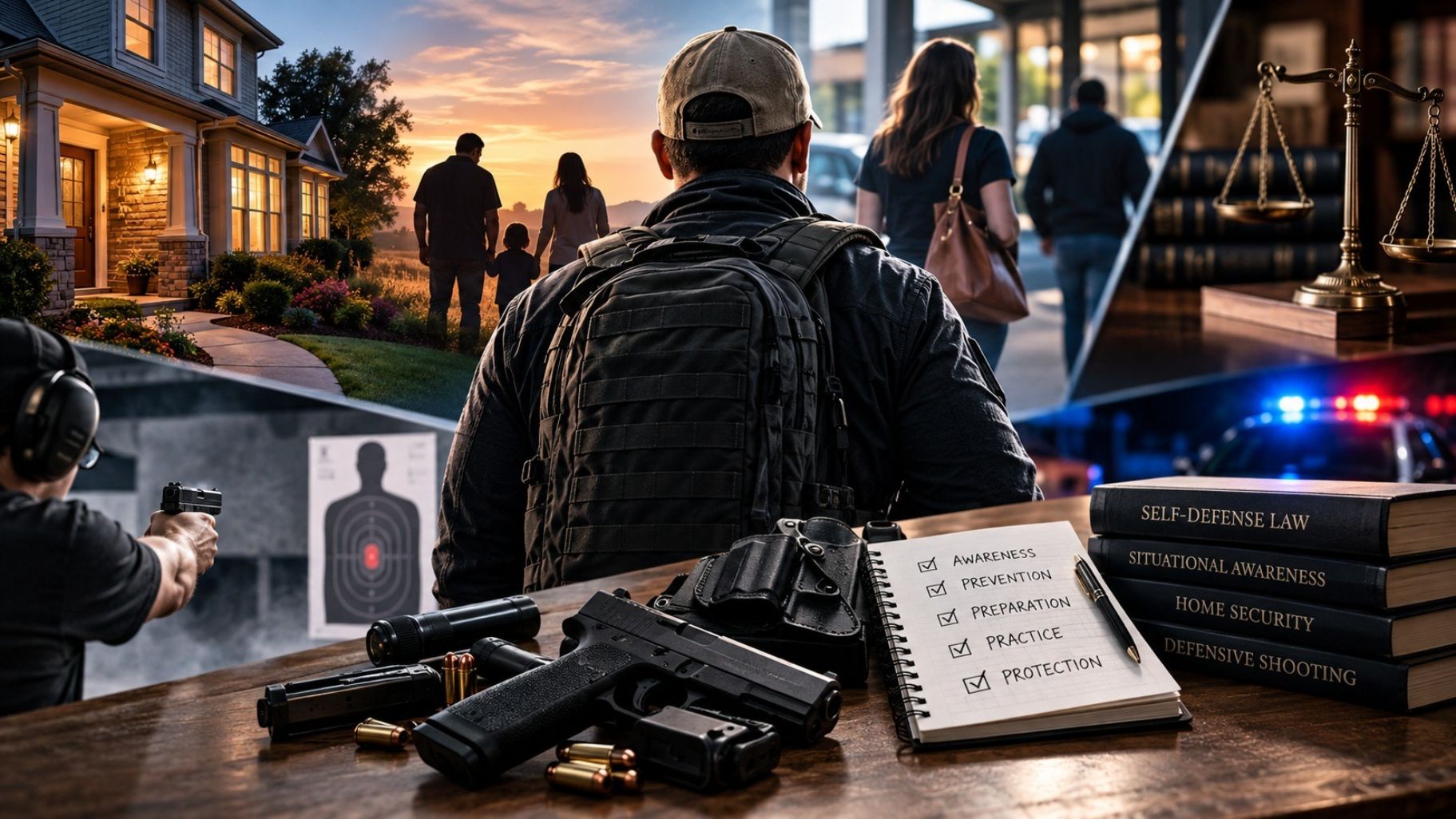
Developing a Personal and Home Protection Plan helps you take a deliberate look at how you protect yourself and the people who depend on you—at home and during everyday life. You'll learn to identify vulnerabilities, improve awareness, think through potential problems before they happen, and make practical changes that can reduce your chances of ever needing to use force.
We'll also look at your home from a security perspective and discuss how planning, habits, physical security and preparation can work together to create layers of protection.
This class is ideal for anyone who wants a practical, thoughtful approach to personal and home safety rather than simply reacting after something has already gone wrong.
Churches strive to create environments that are open, welcoming, and accessible. Those same characteristics can create unique security challenges. Protecting a congregation effectively requires thoughtful preparation that preserves the mission of the church while helping leaders and volunteers recognize potential threats and respond effectively when something goes wrong. Church Safety – Protecting Your Congregation is a USCCA classroom course designed for pastors, church leaders, ushers, greeters, safety and security team members, medical volunteers, trustees, and others who share responsibility for the safety of a house of worship. Students learn how to recognize behaviors that may indicate a developing threat, evaluate the current security posture of a church, and identify vulnerabilities involving entrances, exits, congregation areas, children's spaces, safe rooms, and other important parts of the facility. The course also introduces the process of developing an Emergency Operations Plan so church leaders and volunteers can establish responsibilities and make important decisions before an emergency occurs rather than during one. These elements are explicitly included in USCCA's current house-of-worship curriculum. USCCA The course addresses considerations that are unique to houses of worship, including maintaining a welcoming environment while improving security, recognizing potential threats, planning emergency responses, identifying safer locations within the facility, and preparing to assist people who may suffer traumatic injuries. Practical discussion and exercises help students apply these concepts to situations they could realistically encounter in their own congregation. USCCA This is not simply an armed-security course. Effective church safety involves awareness, planning, communication, medical preparedness, clearly understood responsibilities, and coordinated action throughout the congregation. Armed response may be one component of a church's overall security strategy, but it is only one component. No firearms experience is required, and no firearms are used in this class.
Severe bleeding can become life-threatening in minutes, and in a serious emergency the person standing nearby may be the only help available until EMS arrives. Save a Life: Control the Bleed is a practical, hands-on course designed to give ordinary people the knowledge and skills to recognize life-threatening bleeding and take immediate action. Students will learn how to identify serious bleeding, apply direct pressure and compression bandages, properly use commercial and improvised tourniquets, pack wounds, address penetrating chest injuries, and understand the priorities involved in caring for an injured person until professional medical help arrives. This is not just a lecture. Students will have the opportunity to practice critical bleeding-control skills using training equipment so they can become more comfortable performing them under pressure. These skills apply to far more than firearm-related injuries. Serious bleeding can result from farm and workplace accidents, vehicle crashes, hunting and outdoor accidents, falls, severe cuts and other everyday emergencies. In rural areas, where professional medical help may take time to arrive, knowing what to do during those first critical minutes can make an enormous difference. No prior medical training is required. This course is appropriate for responsible citizens, parents, hunters, farmers, outdoor enthusiasts, workplace personnel and anyone who wants to be better prepared to help during a serious bleeding emergency.
Youth Firearm Safety & Accident Prevention is an age-appropriate classroom course designed to give young people the knowledge and confidence to make safe decisions around firearms.
Combining the USCCA Accident Prevention & Safety Basics and Firearms Safety Rules mini-modules, this course teaches students what to do if they unexpectedly encounter a firearm, how firearm-related accidents can be prevented, and the fundamental safety rules everyone should understand when firearms are present.
Students will work through realistic, age-appropriate situations and learn not only what the safety rules are, but why they matter and how to apply them. The emphasis throughout the course is on accident prevention, responsible behavior, respect for firearms, and making good decisions.
This is an excellent introductory course for young people from both firearm-owning and non-firearm-owning households. No previous firearms knowledge or experience is required.
Good shooting begins with good fundamentals. This USCCA mini-class introduces young students to the seven fundamental skills involved in safe, accurate shooting and explains how those skills work together. Rather than simply telling students what to do, the course helps them understand why each fundamental matters and how consistent technique contributes to both safety and accuracy. This is an excellent foundation for children who may later participate in supervised dry-fire practice, recreational shooting, hunting or other shooting activities. No previous shooting experience is necessary.
For safety, no actual firearms will be allowed in the classroom at any time.
Youth Situational Awareness teaches young people how to pay attention to what is happening around them, recognize when something may not be right, and make better safety decisions before a situation becomes a problem.
Using age-appropriate examples and activities, students will learn practical techniques for becoming more observant without becoming fearful or anxious. The course introduces the USCCA's CODE process and Col. Jeff Cooper's Color Codes of Awareness, giving students simple tools they can use to understand different levels of awareness and recognize when a situation deserves greater attention.
Students will explore how situational awareness applies to everyday life — at school, stores, sporting events, parks, while walking or biking, and anywhere else they may find themselves. The emphasis is on developing good habits, recognizing changes in their surroundings, trusting appropriate warning signs, making thoughtful decisions, and knowing when to leave a situation or seek help from a trusted adult.
The goal isn't to teach children to be afraid of the world around them. It's to help them become confident, observant young people who are better prepared to make safe decisions.
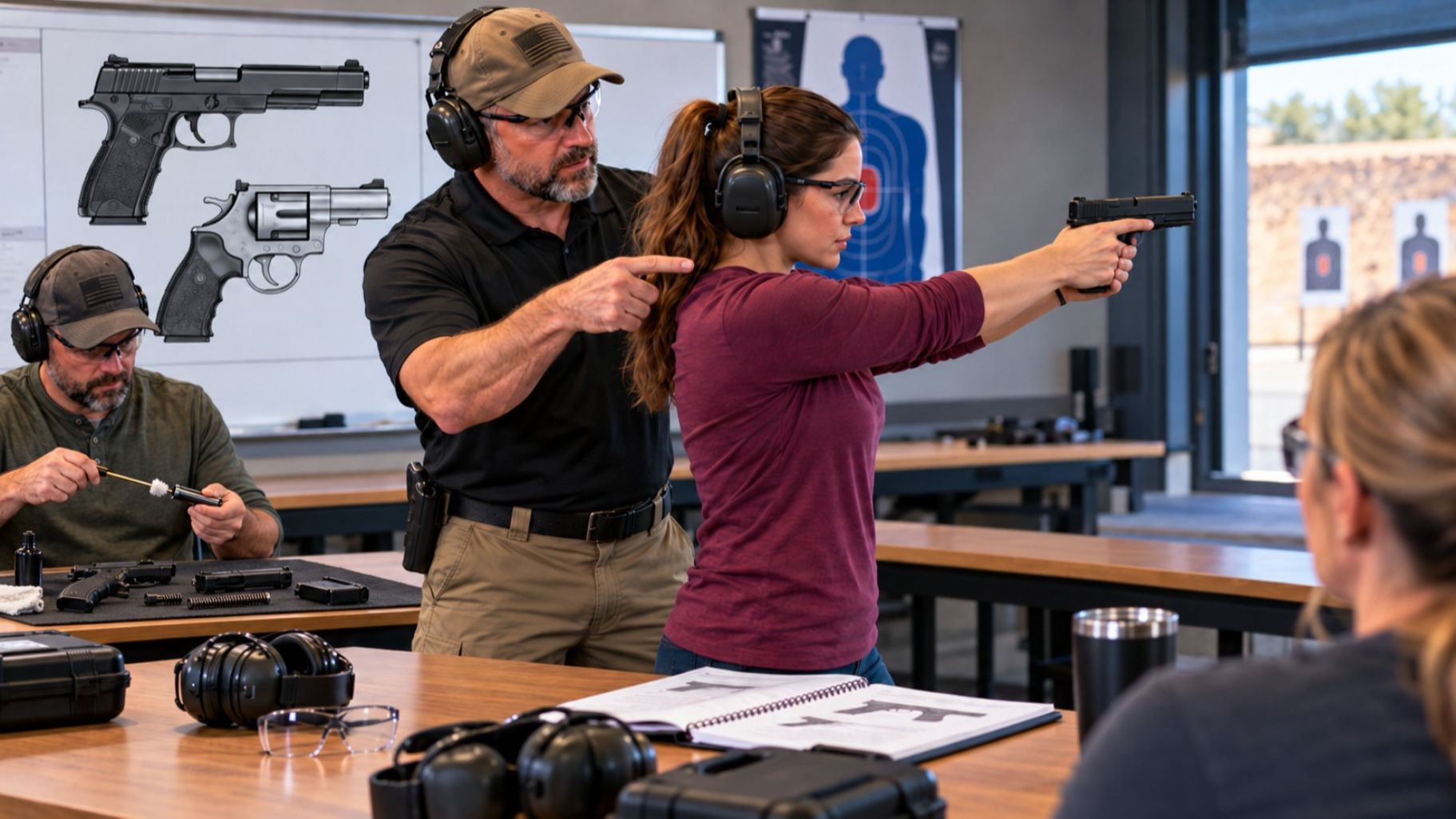
Women’s Basic Pistol is designed for women who are new to handguns or who want to build a stronger foundation in safe, confident handgun use. Whether you have never fired a pistol before, recently purchased your first handgun, or simply want professional instruction in the fundamentals, this course provides a comfortable and structured environment in which to learn.
Classroom instruction begins with firearm safety and responsible handgun handling, including how to safely clear and unload a semi-automatic pistol. Students then learn the fundamental skills required for safe and accurate shooting, including proper stance, grip, sight alignment, sight picture, trigger control and follow-through.
After developing these concepts in the classroom, students move to the outdoor range where they apply what they have learned through supervised live-fire exercises with individual coaching from a USCCA Certified Instructor.
The emphasis throughout the course is not speed or competition—it is building safe habits, sound fundamentals and confidence. Students leave with a better understanding of their handgun, stronger shooting fundamentals and a solid foundation for continued firearms training.
No previous shooting experience is required.
If you carry a firearm for protection, some of the most important questions have nothing to do with how well you can shoot.
When can you legally use force to defend yourself or someone else? When does a threat justify deadly force? How will fear and adrenaline affect you when decisions have to be made in seconds? When must you stop using force? What should you do immediately afterward? What should you expect when police arrive?
This course walks through a defensive encounter from beginning to end. We'll examine the legal principles surrounding the use of force, use realistic scenarios to work through difficult decisions, explore what happens to the body and mind during extreme stress, and discuss the critical actions that follow a self-defense incident.
Whether you already carry concealed, keep a firearm for home defense or are considering doing so, this class addresses the decisions and consequences every responsibly armed citizen should understand before they are ever faced with them.
In Iowa, you can carry a gun without a permit. Cross into Minnesota and the rules change, and most people never learn how until it matters.
Picture a drive you make every year, to the lake, to family, to a job across the line, with someone you love beside you and your gun with you. Then picture the deputy at the window, in a state whose rules you thought you knew. Being allowed to carry in one place doesn’t prepare you for the next. Understanding does.
This class is built to educate you, not just inform you. You’ll learn the why behind the law and the decisions, so you can reason through situations no class could ever script:
- When deadly force is justified, and when it is not
- How to notice trouble early and avoid it, and why walking away can be the strongest choice you have
- The legal ramifications of defending yourself and the people you love
- What happens in your body during a violent encounter, and how to keep thinking clearly through it
- What happens in the moments, and the days, afterward
- How to choose, carry and safely handle a defensive firearm, with Iowa law in mind
- Where Iowa and Minnesota differ, and why a small difference you don’t know about ahead of time can put you at risk
- What Minnesota requires, with live firing to earn your Minnesota certificate
Whether you’re considering carrying or have carried for years, you’ll leave more knowledgeable, more confident, and prepared in a way a permit alone can never make you. You’ll leave with the certificate you need to apply for an Iowa permit to carry, and by staying two more hours, the certificate to apply for a Minnesota permit from a Sheriff.
Save your seat, and learn the differences here, not the night it counts.
In Iowa, you can carry a gun without a permit. What the law doesn’t give you is any understanding of what it expects of you, and you can go to prison for doing the right thing.
Picture the few seconds when you’d have to decide, with someone you love beside you. Then picture the deputy at the door afterward, a county attorney reading every choice you made, and a jury that wasn’t there. Being allowed to carry doesn’t prepare you for any of that. Understanding does.
This class is built to educate you, not just inform you. You’ll learn the why behind the law and the decisions, so you can reason through situations no class could ever script:
- When deadly force is justified, and when it is not How to notice trouble early and avoid it, and why walking away can be the strongest choice you have
- The legal ramifications of defending yourself and the people you love
- What happens in your body during a violent encounter, and how to keep thinking clearly through it
- What happens in the moments, and the days, afterward
- How to choose, carry and safely handle a defensive firearm, with Iowa law in mind
Regardless whether you are considering or have been carrying concealed for years, you’ll leave more knowledgeable, more confident, and prepared in a way a permit alone can never make you. You’ll also leave with the certificate you need to apply for an Iowa permit to carry.
Save your seat, and let the first time you think it through be here, not the night it counts.