Thurston Moon
Instructor # 3800814 | Moon's Classes
Certified with the USCCA since 12/11/2024
Certification Renewal Date 12/11/2026

USCCA Certifications
- Concealed Carry & Home Defense
- Emergency & First Aid
- Children's Firearms & Safety Fundamentals
- Countering the Mass Shooter
My Biography
Thurston-Perry M. Mander Moon (he/him) | Hello, and thank you for considering me to meet your training needs. I prefer to be addressed as "Moon," and there's no need to put a title in front of that. I attended Hampton High School in Hampton, VA where I participated in band, wrestling, student government and drama before graduating in 1997. I am a Coast Guard veteran with a ribbon for pistol marskmanship. I earned my B.I.S. from Virginia State University in 2005, and while there I joined Iota Phi Theta Fraternity, Inc., and Kappa Kappa Psi Nat'l Honorary Band Frat., Inc. I was a Ranger Challenge member of the Trojan Warrior Battalion Army ROTC unit, and I became a lifeguard while enrolled there. I was also a Student Ambassador. I'm an Episcopalian, a married father of five, a licensed teacher, an advocate for marginalized peoples, an LGBTQ ally and I'm politically independent. In addition to being a firearms instructor I am also certified with the American Red Cross, Health and Safety Institutes and the American Heart Association to provide and certify for Advanced Cardiac Life Support, Emergency Medical Response, Lifeguarding, Basic Life Support, Adult and Pediatric CPR/AED and First Aid, Wilderness and Remote First Aid, Stop the Bleed, First Aid for Severe Trauma, Administering Emergency Oxygen, Babysitter Training, and more.
Current Classes Available
Request a Class
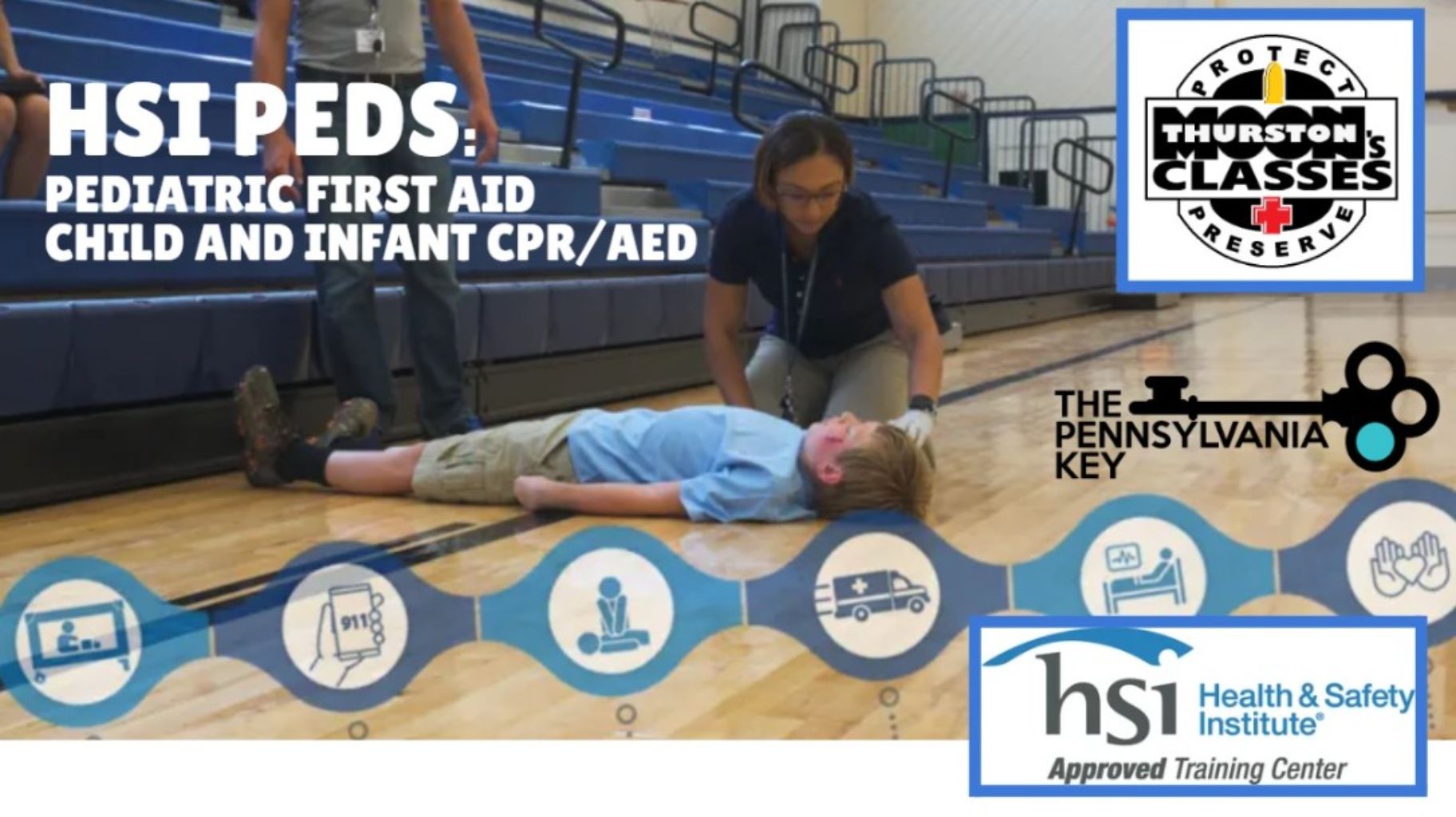
Training required by the PA Key for childcare staff.
Training required by the PA Key for childcare staff.
You may only have a fraction of a second to decide whether you have a justifiable NEED to use a firearm, but the judge, prosecutor and jury will have months to pick apart every detail of the weeks, days and hours before you took that action. This class is designed to help you develop and internalize a decision making algorithm that may save you from legal ruin in the aftermath of defending yourself and/or your loved ones.
This will be a two hour discussion about creating a plan to deal with a home invasion that keeps children safe both before, during and after an incident.
“We are dedicated to the legal, safe, and responsible use of firearms for self-defense of the sexual-minority community. We no longer believe it is the right of those who hate and fear gay, lesbian, bi, trans, or polyamorous persons to use us as targets for their rage. Self-defense is our RIGHT.” (Copied from the Pink Pistols Utility Manual)
Uncontrolled bleeding is the leading cause of preventable death from trauma. The First Aid for Severe Trauma (FAST) program provides participants with the knowledge and skills they need to respond to an emergency involving life-threatening bleeding, including how to: ■ Recognize a life-threatening bleeding emergency. ■ Ensure safety and communicate effectively in an emergency. ■ Control life-threatening bleeding using direct pressure, a tourniquet, or both. The program is designed to enhance participants’ ability to take decisive, lifesaving action to assist a person with a traumatic injury and life-threatening bleeding until professional responders arrive.
Creating a personal and home protection plan is about more than just knowing how to use a weapon. It’s also about staying aware, avoiding trouble, and being prepared, so you don’t end up in a situation where fighting an intruder is your only choice. By focusing on awareness and avoiding risky situations, you're less likely to face a dangerous encounter in the first place. This approach helps keep you and your loved ones safe, giving you greater peace of mind.
You may only have a fraction of a second to decide whether you have a justifiable NEED to use a firearm, but the judge, prosecutor and jury will have months to pick apart every detail of the weeks, days and hours before you took that action. This class is designed to help you develop and internalize a decision making algorithm that may save you from legal ruin in the aftermath of defending yourself and/or your loved ones.
This is a non shooting class.
This course is not specific to just firearms. We will explore concepts around awareness, avoidance and mitigation of threats to the wellbeing of you and/or your loved ones while out in public spaces, in your vehicle and in your home.
“We are dedicated to the legal, safe, and responsible use of firearms for self-defense of the sexual-minority community. We no longer believe it is the right of those who hate and fear gay, lesbian, bi, trans, or polyamorous persons to use us as targets for their rage. Self-defense is our RIGHT.” (Copied from the Pink Pistols Utility Manual)
This will be a two hour discussion about creating a plan to deal with a home invasion that keeps children safe both before, during and after an incident.
There was an immediate and unavoidable danger of death or great/grave bodily harm to an innocent person, where no other option existed other than the use of force.
You used the force necessary to end that threat.
Now what? Are you prepared for the legal, psychological and social impacts?
This class will help you take preemptive action to prepare for those impacts.
This class is a conversation encompassing risk factors, indirect indicators, and direct indicators that mass violence is being planned or about to take place. We will also review and discuss statistics from the last 20 years such as emergent patterns. The class will conclude with a discussion about suggested plans of action in response to mass violence.
In this class you will learn from a First-Aid Instructor Trainer, and EMT candidate how to treat traumatic wounds and stop traumatic bleeding. We will discuss means, methods and devices that could help you preserve life. This is a hands on class that will prepare you for the worst case scenarios.
In this class you will learn from a First-Aid Instructor Trainer, and EMT candidate how to keep oxogenated blood circulating to vital organs when someone's breathing or heart has stopped. We will discuss means, methods and devices that could help you preserve life. This is a hands on class that will prepare you for the worst case scenarios.
The American Red Cross Lifeguarding course prepares individuals to prevent, recognize, and respond to aquatic emergencies. It provides the knowledge and skills to perform professional-level care for breathing and cardiac emergencies, injuries, and sudden illnesses until emergency medical services arrive. The course covers accident prevention, guarding techniques, emergency systems, rescue skills, and first aid in aquatic environments.
The American Red Cross Lifeguarding course prepares individuals to prevent, recognize, and respond to aquatic emergencies. It provides the knowledge and skills to perform professional-level care for breathing and cardiac emergencies, injuries, and sudden illnesses until emergency medical services arrive. The course covers accident prevention, guarding techniques, emergency systems, rescue skills, and first aid in aquatic environments.
The American Red Cross Lifeguarding course prepares individuals to prevent, recognize, and respond to aquatic emergencies. It provides the knowledge and skills to perform professional-level care for breathing and cardiac emergencies, injuries, and sudden illnesses until emergency medical services arrive. The course covers accident prevention, guarding techniques, emergency systems, rescue skills, and first aid in aquatic environments.
The American Red Cross Lifeguarding course prepares individuals to prevent, recognize, and respond to aquatic emergencies. It provides the knowledge and skills to perform professional-level care for breathing and cardiac emergencies, injuries, and sudden illnesses until emergency medical services arrive. The course covers accident prevention, guarding techniques, emergency systems, rescue skills, and first aid in aquatic environments.
The Lifeguarding Instructor course trains instructor candidates to teach American Red Cross Lifeguarding courses including Lifeguarding Shallow Water Lifeguarding Aquatic Attraction Lifeguarding Waterpark Skills Waterfront Skills CPR/AED for Professional Rescuers and Bloodborne Pathogens Training. This class is taught in a blended learning format and the online portion (accessed via mobile desktop or tablet) must be completed prior to attending the first in-person session of the instructor course. Prerequisites: 1. Minimum age: 17 years 2. Possess a current Red Cross certificate for Lifeguarding with CPR/AED for Professional Rescuers and First Aid 3. Ability to successfully demonstrate all Lifeguarding and CPR skills including a precourse assessment to perform a water rescue (submerged drowning) extrication single rescuer CPR for 3 minutes.
The American Red Cross Lifeguarding course prepares individuals to prevent, recognize, and respond to aquatic emergencies. It provides the knowledge and skills to perform professional-level care for breathing and cardiac emergencies, injuries, and sudden illnesses until emergency medical services arrive. The course covers accident prevention, guarding techniques, emergency systems, rescue skills, and first aid in aquatic environments.
The American Red Cross Lifeguarding course prepares individuals to prevent, recognize, and respond to aquatic emergencies. It provides the knowledge and skills to perform professional-level care for breathing and cardiac emergencies, injuries, and sudden illnesses until emergency medical services arrive. The course covers accident prevention, guarding techniques, emergency systems, rescue skills, and first aid in aquatic environments.
The American Red Cross Lifeguarding course prepares individuals to prevent, recognize, and respond to aquatic emergencies. It provides the knowledge and skills to perform professional-level care for breathing and cardiac emergencies, injuries, and sudden illnesses until emergency medical services arrive. The course covers accident prevention, guarding techniques, emergency systems, rescue skills, and first aid in aquatic environments.
The American Red Cross Lifeguarding course prepares individuals to prevent, recognize, and respond to aquatic emergencies. It provides the knowledge and skills to perform professional-level care for breathing and cardiac emergencies, injuries, and sudden illnesses until emergency medical services arrive. The course covers accident prevention, guarding techniques, emergency systems, rescue skills, and first aid in aquatic environments.
The American Red Cross Lifeguarding course prepares individuals to prevent, recognize, and respond to aquatic emergencies. It provides the knowledge and skills to perform professional-level care for breathing and cardiac emergencies, injuries, and sudden illnesses until emergency medical services arrive. The course covers accident prevention, guarding techniques, emergency systems, rescue skills, and first aid in aquatic environments.
"The primary purpose of the American Red Cross Lifeguarding program is to provide participants with the knowledge and skills needed to prevent, recognize and respond to aquatic emergencies and to provide professional-level care for breathing and cardiac emergencies, injuries and sudden illnesses until emergency medical services (EMS) professionals take over." (ARC Lifeguarding Instructor Manual)
"The primary purpose of the American Red Cross Lifeguarding program is to provide participants with the knowledge and skills needed to prevent, recognize and respond to aquatic emergencies and to provide professional-level care for breathing and cardiac emergencies, injuries and sudden illnesses until emergency medical services (EMS) professionals take over." (ARC Lifeguarding Instructor Manual)
"A crossover course gives participants who hold a current lifeguarding certification from an approved equivalent training provider the opportunity to participate in an abbreviated course to earn American Red Cross certification in Lifeguarding (Including Deep Water) with CPR/AED for Professional Rescuers and First Aid..." (ARC Lifeguarding Instructor Manual)
"The primary purpose of the American Red Cross Lifeguarding program is to provide participants with the knowledge and skills needed to prevent, recognize and respond to aquatic emergencies and to provide professional-level care for breathing and cardiac emergencies, injuries and sudden illnesses until emergency medical services (EMS) professionals take over." (ARC Lifeguarding Instructor Manual)
"The primary purpose of the American Red Cross Lifeguarding program is to provide participants with the knowledge and skills needed to prevent, recognize and respond to aquatic emergencies and to provide professional-level care for breathing and cardiac emergencies, injuries and sudden illnesses until emergency medical services (EMS) professionals take over." (ARC Lifeguarding Instructor Manual)
"The primary purpose of the American Red Cross Lifeguarding program is to provide participants with the knowledge and skills needed to prevent, recognize and respond to aquatic emergencies and to provide professional-level care for breathing and cardiac emergencies, injuries and sudden illnesses until emergency medical services (EMS) professionals take over." (ARC Lifeguarding Instructor Manual)
"The primary purpose of the American Red Cross Lifeguarding program is to provide participants with the knowledge and skills needed to prevent, recognize and respond to aquatic emergencies and to provide professional-level care for breathing and cardiac emergencies, injuries and sudden illnesses until emergency medical services (EMS) professionals take over." (ARC Lifeguarding Instructor Manual)
During this 90 minute session you will explore Bleeding Control, Wound Care, Burn Treatment, Stabilizing Musculoskeletal Trauma, Manual In-Line Stabilization for Head/Neck/Spinal Injuries, and Trauma to the Eye.
The session is open to the public, but is being facilitated specifically for the LGBTQIA+ community.
This is the USCCA "You Got Your License... Now What" mini-lesson, with some clarification as to how the information applies to laws in the Commonwealth of Pennsylvania.
The goal of this training program is to assist our approved Training Centers and authorized Instructors to positively impact the lives of others by helping students acquire and improve their knowledge and skills to protect and preserve life, alleviate suffering, and promote recovery.
Training required by the PA Key for childcare staff. Please note, this is a Blended Learning class, meaning that participants MUST complete the online portion of the training prior to attending the in-person session.
The American Red Cross Lifeguarding course prepares individuals to prevent, recognize, and respond to aquatic emergencies. It provides the knowledge and skills to perform professional-level care for breathing and cardiac emergencies, injuries, and sudden illnesses until emergency medical services arrive. The course covers accident prevention, guarding techniques, emergency systems, rescue skills, and first aid in aquatic environments.
The Lifeguarding Instructor course trains instructor candidates to teach American Red Cross Lifeguarding courses including Lifeguarding Shallow Water Lifeguarding Aquatic Attraction Lifeguarding Waterpark Skills Waterfront Skills CPR/AED for Professional Rescuers and Bloodborne Pathogens Training. This class is taught in a blended learning format and the online portion (accessed via mobile desktop or tablet) must be completed prior to attending the first in-person session of the instructor course. Prerequisites: 1. Minimum age: 17 years 2. Possess a current Red Cross certificate for Lifeguarding with CPR/AED for Professional Rescuers and First Aid 3. Ability to successfully demonstrate all Lifeguarding and CPR skills including a precourse assessment to perform a water rescue (submerged drowning) extrication single rescuer CPR for 3 minutes.
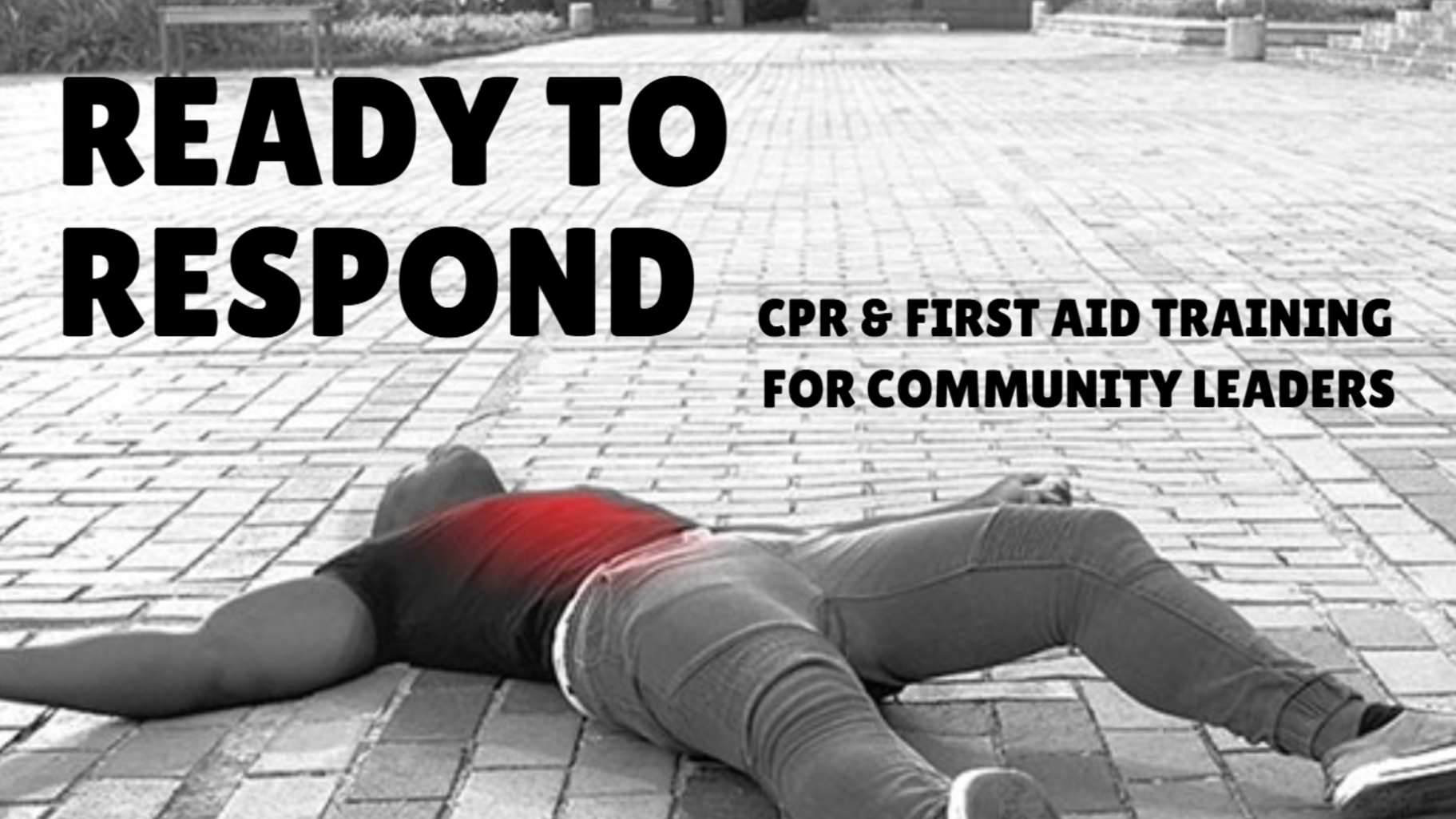
This is a BLENDED LEARNING class (which includes online training AND an in-person skills practice session) that is geared towards leaders in the community such as neighborhood watch captains, church leaders, school leaders, community association leaders, running coaches, tour guides and the like. Topics will include personal safety, mitigation of pathogens, patient assessment, fundamentals of physical trauma (with bleeding control), fundamentals of medical emergencies, CPR, AED, choking, building a first aid kit, and more.
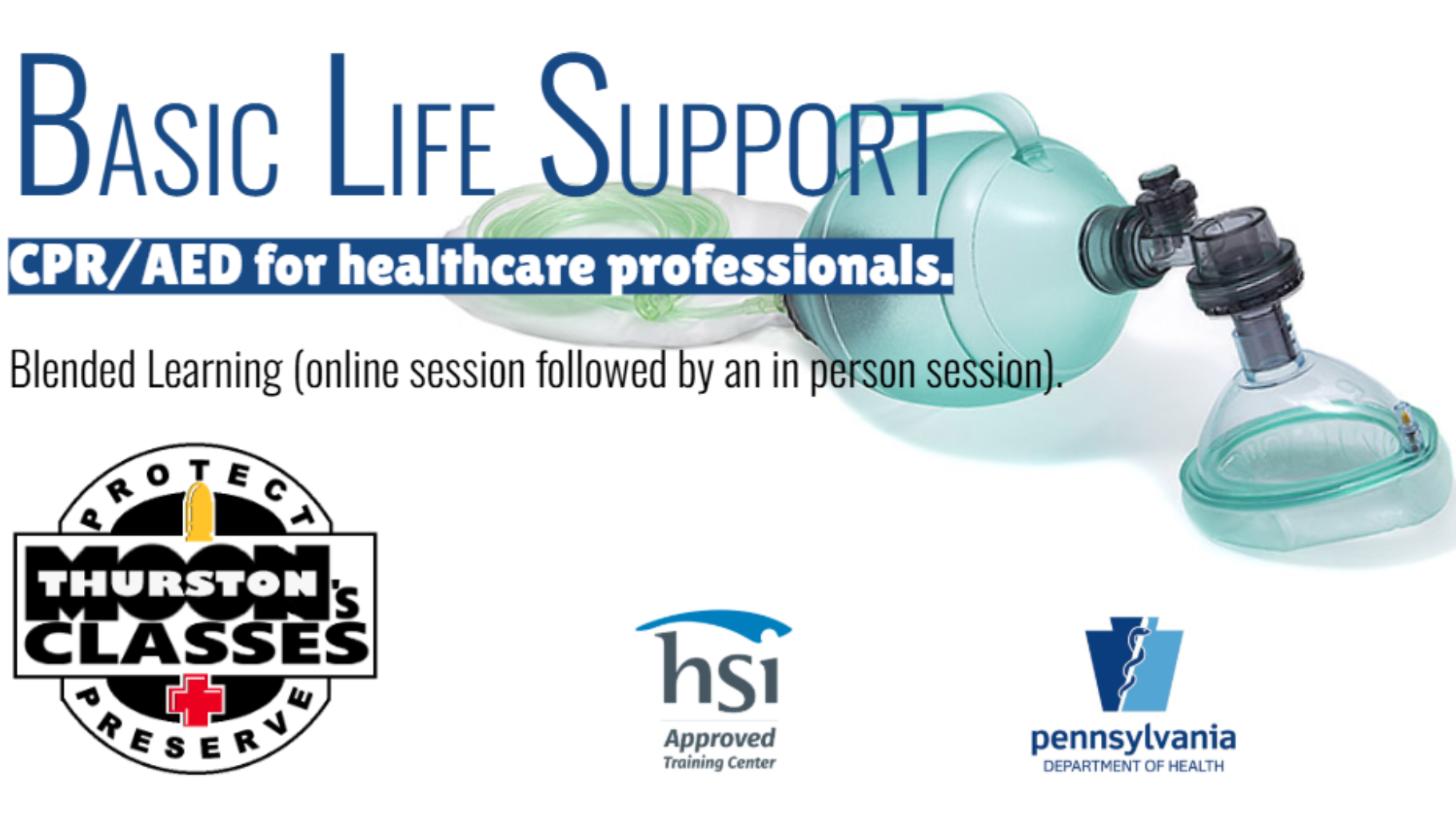
The HSI Basic Life Support (BLS) program is for participants to gain or improve knowledge and skill proficiency in high-quality CPR skills and teamwork for the adult, child, and infant.
HSI Basic Life Support (BLS) reflects the latest resuscitation science and treatment recommendations published by the International Liaison Committee on Resuscitation (ILCOR), and it conforms with the 2020 American Heart Association (AHA) Guidelines Update for CPR and ECC and the annual Guidelines Update. Continuing Education Hours Available: Emergency Medical Services (CAPCE) and Dental Professionals (AGD/PACE).
This blended learning Instructor recertification course is the required course for all Lifeguarding Instructors to re-certify. During this course Lifeguarding Instructors and Instructor Trainers will participate in an in-water practice and polish skills session and practice teaching in addition to a classroom-based review of Red Cross administrative policies and procedures.
A printed Instructor manual, 2 CPR masks, and a one way valve are ALL included with this class that will certify YOU to teach CPR/AED and First Aid to others with the most respected and trusted name in helping others: The American Red Cross.
The Lifeguarding Instructor course trains instructor candidates to teach American Red Cross Lifeguarding courses including Lifeguarding Shallow Water Lifeguarding Aquatic Attraction Lifeguarding Waterpark Skills Waterfront Skills CPR/AED for Professional Rescuers and Bloodborne Pathogens Training. This class is taught in a blended learning format and the online portion (accessed via mobile desktop or tablet) must be completed prior to attending the first in-person session of the instructor course. Prerequisites: 1. Minimum age: 17 years 2. Possess a current Red Cross certificate for Lifeguarding with CPR/AED for Professional Rescuers and First Aid 3. Ability to successfully demonstrate all Lifeguarding and CPR skills including a precourse assessment to perform a water rescue (submerged drowning) extrication single rescuer CPR for 3 minutes.
The American Red Cross Lifeguarding course prepares individuals to prevent, recognize, and respond to aquatic emergencies. It provides the knowledge and skills to perform professional-level care for breathing and cardiac emergencies, injuries, and sudden illnesses until emergency medical services arrive. The course covers accident prevention, guarding techniques, emergency systems, rescue skills, and first aid in aquatic environments.
The Lifeguarding Instructor course trains instructor candidates to teach American Red Cross Lifeguarding courses including Lifeguarding Shallow Water Lifeguarding Aquatic Attraction Lifeguarding Waterpark Skills Waterfront Skills CPR/AED for Professional Rescuers and Bloodborne Pathogens Training. This class is taught in a blended learning format and the online portion (accessed via mobile desktop or tablet) must be completed prior to attending the first in-person session of the instructor course. Prerequisites: 1. Minimum age: 17 years 2. Possess a current Red Cross certificate for Lifeguarding with CPR/AED for Professional Rescuers and First Aid 3. Ability to successfully demonstrate all Lifeguarding and CPR skills including a precourse assessment to perform a water rescue (submerged drowning) extrication single rescuer CPR for 3 minutes.
This blended learning Instructor recertification course is the required course for all Lifeguarding Instructors to re-certify. During this course Lifeguarding Instructors and Instructor Trainers will participate in an in-water practice and polish skills session and practice teaching in addition to a classroom-based review of Red Cross administrative policies and procedures.
During this 90 minute session you will explore Bleeding Control, Wound Care, Burn Treatment, Stabilizing Musculoskeletal Trauma, Manual In-Line Stabilization for Head/Neck/Spinal Injuries, and Trauma to the Eye.
Special guest will be Clara Elliott, Founder and Lead Instructor of (Arm Trans Women) ATW Firearms Instruction.
https://www.atwfi.com/
This blended learning Instructor recertification course is the required course for all Lifeguarding Instructors to re-certify. During this course Lifeguarding Instructors and Instructor Trainers will participate in an in-water practice and polish skills session and practice teaching in addition to a classroom-based review of Red Cross administrative policies and procedures.