Many shooters have used red-dot technology on long guns for upward of 30 to 40 years. Since Aimpoint AB’s introduction of the first electric red-dot sight in 1975, micro red-dot sights have exploded in popularity.
Now rugged, compact and reliable enough for everyday carry, these optics are showing up on concealed carry guns everywhere.
What Is a Red-Dot Sight?
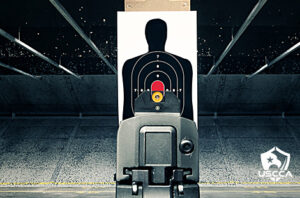
A red-dot sight is an electronic optic that projects an illuminated dot (or reticle) on a lens within an enclosed or open emitter housing. Unlike iron sights that require alignment of front and rear posts, red-dots project a single aiming point that sits directly on the target.
Miniaturized red-dot sights (MRDS) offer a significant tactical advantage by allowing you to acquire targets faster and shoot more accurately under stress. Red dots are particularly helpful for shooters with aging eyes or diminished vision and can eliminate sight alignment errors.
There are two primary types of red-dot sights.
Reflex (Open-Emitter) Sights: These are lightweight and have an open design where the LED emitter is exposed behind a single lens. The open field of view offers quick target acquisition and minimal visual obstruction, making these optics a favorite for concealed carry setups.
However, because the emitter is exposed, reflex sights are more susceptible to dirt, moisture or lint, which can disrupt visibility.
Enclosed Emitter Sights: These feature a sealed design with the emitter enclosed between two lenses, providing excellent protection from the elements. They’re more resistant to water, dust and impact, making them ideal for duty or harsh environments.
While typically bulkier than open-reflex sights, enclosed emitters are highly regarded for reliability in adverse conditions.
MRDS have been enhanced in recent years to overcome earlier concerns around durability and battery life, allowing their expanded use on semi-automatic handguns and even some revolvers.
Ready to Protect Your Home Like a Pro?
Choosing the right home-defense firearm is just the first step. With proper training, you’ll gain the confidence and skills to use it effectively as a self-defense tool — empowering you to better protect your home and loved ones.
The USCCA’s expert-led classes cover everything from firearms fundamentals and home-security planning to legal considerations and conflict avoidance — giving you the skills to respond responsibly and decisively.
Over 1 million students have been trained nationwide. Find a USCCA Certified Instructor in your area and take the next step in your protector journey.
Find Home-Defense Classes Near You →
Benefits of Red-Dot Sights for Defensive Use
Faster target acquisition: A single focal plane allows faster sight alignment
Accuracy under stress: Ideal in high-adrenaline scenarios
Low-light adaptability: Adjustable brightness helps maintain visibility in poor lighting
Easier for compromised vision: Eliminates focus shift between rear and front sights
Improved peripheral awareness: Red dots encourage both-eyes-open shooting
Natural point-of-aim techniques, such as punching out with a neutral stance, allow accurate hits even without sights. A red dot enhances this natural pointing ability by overlaying a reference on your target.
Pros and Cons of Red-Dot Sights on Concealed Carry Pistols
One of the biggest advantages of a handgun red-dot sight is the improvement in accuracy and speed once you’ve put in some training. A red dot does not make you instantly faster.
In fact, most people are slower until they train with it. But after repetition, the red dot will beat iron sights almost every time in speed and accuracy.
Beyond accuracy, red dots also provide consistency across lighting conditions. And battery life, once a concern, is now a strength.
Many micro red-dot sights now run continuously for years at a medium setting. However, it’s a good idea to change the battery annually to be safe.
Motion-activated systems in newer optics also stretch battery life further, ensuring the dot is ready when you draw.
Drawbacks and Tradeoffs of Carrying a Pistol with a Red Dot
The tradeoffs come with concealment and carry comfort. Mounting a red dot adds height to your pistol.
It can add up to an inch in height. This won’t matter at appendix, but may be a factor in other locations.
Holster fit can also be an obstacle. Some holsters won’t accommodate a pistol with an optic, but more companies are making optic-ready holsters every month.
For many concealed carriers, this means replacing or modifying a holster before adding a red-dot sight to a daily carry setup.
Adding a red dot doesn’t automatically make you a better shooter. The dot can highlight movement.
Many shooters complain that the red dot dances around too much to be useful. The truth is that your iron sights are moving just as much — the dot just makes you more aware of it.
That’s why training is so important. Every movement (and possibly every imperfection) may seem even more exaggerated when you’re using a red dot.
This means dry-fire practice, presentation drills and live-fire training are essential. Without them, the red dot can slow you down instead of speeding you up.
Sometimes a shooter will spend more time than necessary attempting to hold the dot completely still.
Finally, while modern battery life is excellent, it’s still a system dependent on electronics. Annual battery changes and regular checks must become part of your carry routine.
How to Choose a Red Dot for Concealed Carry
With so many pistol optics on the market, it’s important to know what matters most before mounting one on your carry gun. A red-dot sight can be a game-changer for self-defense, but only if it’s built to handle the realities of daily use.
Durability and Glass Quality
Concealed carry guns live in a harsh environment — sweat, lint, dirt, rain, recoil and constant holster wear. That’s why the glass itself is critical.
If you’re going to trust your life to a miniature red-dot sight, then you had better trust the glass that protects the emitter. A cheap optic with inferior glass is a weak link.
Low-quality lenses scratch or smudge easily, scattering light and distorting the reticle. Scratches, chips and smudges can scatter or distort the dot.
At best this makes target acquisition slower; at worst it could make your sight unusable when you need it most. Look for optics with durable glass and protective coatings that reduce glare, sharpen clarity and make the dot visible in both bright sun and low light.

The ROMEOZero Micro Reflex Sight.
Battery Life and Reliability
Battery performance is another make-or-break factor. Early pistol optics struggled here, but modern designs have solved many of those problems.
Battery life has improved drastically. Many micro red-dot sights can now run continuously for years.
Durable models like the Trijicon are trusted for daily carry. Other optics stretch runtimes even further.
Modern red dots boast 20,000 to 50,000 hours of life. Motion-activated systems like Holosun’s Shake Awake save power and ensure the dot is ready instantly.
When choosing, check whether the optic uses motion activation, auto-shutoff or a side-loading battery tray. These features reduce downtime and make battery swaps easier without removing the sight.
Fit and Practical Carry Considerations
Even the best optic won’t matter if it doesn’t fit your gun and holster. Mounting options vary.
You can replace the rear sight with an adapter plate, but the best option is to have your slide milled or buy an optic-ready pistol. And remember, an optic will add height to your pistol — about an inch with dovetail mounts or less with a milled slide — which may affect concealment and holster compatibility
The Bottom Line
Choosing a red dot means balancing clarity, durability, battery life and compatibility with your everyday carry setup. Invest in high-quality glass, long-lived power and a design meant for carry pistols.
Those details may be invisible at the gun counter, but they’re the ones that will matter most if you ever need the sight in a fight.
What Size Red Dot Is Best?
The “best” size depends on how you carry and shoot. Larger optics like the Leupold DeltaPoint Pro provide a bigger window, which makes it easier and faster to acquire the dot.
But that extra size can make concealment harder.
Micro red dots are designed for slim pistols and everyday carry. Optics like the Holosun EPS Carry and Primary Arms CLX Micro are built to fit subcompacts while still giving a clear, bright aiming point.
They trade a smaller window for better concealability.
As for reticle size, most carry optics use a 2 to 3.25 MOA dot. This strikes a balance between precision at distance and visibility up close.
Larger dots (6 MOA and above) are faster to pick up at defensive ranges but may obscure small targets at longer distances.
Choose a micro red dot with a 2 to 3 MOA dot for most concealed carry pistols. If you want faster acquisition and don’t mind more bulk, a larger window optic with a bigger dot may be the better choice.
Mounting compatibility: Optics must match the slide cut or use an adapter plate.
Battery life & placement: Top-access batteries make replacements easier.
Durability: Consider enclosed emitters like Holosun EPS Carry or Aimpoint ACRO.
Dot size: Choose smaller MOA (1 to 3 MOA) for precision or larger (5 to 6 MOA) for fast acquisition.
How to Zero a Red-Dot Sight on a Handgun
Zeroing ensures the dot aligns with where the bullet impacts at a specific distance.
Recommended Zero Distance:
- 10 to 15 yards for most defensive handgun setups
Steps to Zero:
- Use a stable rest (bench or bags) to minimize movement.
- Fire a three- to five-round group at your target distance.
- Adjust windage and elevation:
- Most red dots adjust in 1 MOA increments = about 1 inch at 100 yards (about 0.25 inch at 25 yards).
- Use the tool provided with the optic.
- Fire another group to confirm, then fine-tune as needed.
Tips:
- Use a clearly marked target.
- Adjust brightness to clearly see the dot without blooming.
- Always reconfirm zero after mounting or changing batteries.
Popular Models of Red-Dot Sights
With so many optics on the market, it can be tough to know which red dot is right for your handgun setup. Below are just some of the best red-dot sights available today to help you make an informed choice.
| Model | Dot Size (MOA) | Battery Life | Type | Best For |
| Holosun EPS Carry | 2 MOA | Up to 50,000 hours | Enclosed | Concealed carry |
| Trijicon SR02 | 2 MOA | ~ 3 years | Open reflex | Competition, home defense |
| Primary Arms SLx RS-10 | 3 MOA | ~ 40,000 hours | Open reflex | Budget/first red dot |
| Crimson Trace CTS-1250 | 3.25 MOA | 50,000 hours | Open reflex | Budget/concealed carry |
| SIG Sauer ROMEO 1PRO | 3 MOA | 20,000 hours | Open reflex | Duty/concealed carry |
| Docter Red Dot | 3.5 or 7 MOA | Up to 4 years | Open reflex | Custom fit |
| Bushnell RXS-100 | 4 MOA | 5,000 hours | Open reflex | Budget |
Crimson Trace CTS-1250
The CTS-1250 is a prime example of a quality red-dot reflex sight. Mounting the CTS-1250 was very easy since the Smith & Wesson M&P 2.0 Compact 4-inch pistol comes with mounting directions that are straightforward.
Battery installation was also quickly accomplished because of the included CTC tool. I like its solid screw down cover, which provides watertight integrity.
CTS-1250 Features:
- Aluminum construction
- Three-year warranty
- Free lifetime battery replacement
- 3.25 MOA aiming dot
- User accessible windage and elevation adjustment slotted screws
- Shock, impact, fog, water and vibration resistant design
- Rubber protective cap included
- 50,000-hour (5.7 years) battery life at medium setting
The CTS-1250 is turned on by pushing and holding the dot intensity increase button for three seconds. Doing the same to either the increase or decrease buttons shuts the dot off.
Once activated, the dot stays illuminated for 10 hours before automatically shutting off. With 50,000 hours of battery life, forgetting to turn off the power isn’t a big deal.
The CTS-1250 is a high-quality red-dot sight yet has an MSRP of only $229.99. Crimson Trace is located right here in the U.S. and is one of the most trusted optics companies in the industry.
SIG Sauer ROMEO1PRO 1x30mm Reflex Sights
The ROMEO1PRO is built to a Navy Seal level of ruggedness and operational capability. What really makes the ROMEO1PRO stand out is its Motion Activated Illumination System (MOTAC).
MOTAC powers up when it senses motion and powers down when it is stationary. This removes the need to activate a separate on/off switch.
ROMEO1PRO Features:
- Point Source Emitter with 12 Settings (10 daytime, two night vision)
- TruHold lockless zeroing system
- 20,000 hours (2.28 years) of battery life
- IPX-7 1 meter immersion rating
- Limited five-year warranty
- Protective steel shroud for durability
Additional features like these up the cost some. The ROMEOPRO1 has an MSRP $439.99.
It is an optic you can bet your life on.
Docter Red-Dot Sights
Docter USA is one of the oldest providers of red dot reflex pistol sights and the only U.S. repair center for Docter sights. They offer more of a personal touch when you call in or email about products.
Docter Sights Features:
- Sights available in black or earth brown
- 3.5 or 7 MOA red dot available
- Stainless steel and anodized aluminum construction
- Automatic brightness control
- Five-year no-questions-asked warranty
- Custom milling is available for precise sight mounting
Docter sights can be “bulletproofed” for an additional $125 if you buy the sight from Docter USA. This makes them more resistant to the effects of shock generated by the motion of the slide during firing.
Docter USA has a “buyback plan” for broken reflex sights as long the glass isn’t broken.
For more information about Docter sights, call or email them.
Bushnell RXS-100 Reflex Sight
Bushnell offers a very affordable red-dot option. The RXS-100 is a reflex sight that can be mounted on pistols, rifles and shotguns.
While the RXS-100 doesn’t have all the features of the previously mentioned sights, it certainly has enough to make it a viable choice. Especially since it’s priced at $99.99.
Bushnell RXS-100 Features:
- 4 MOA dot with eight brightness settings
- Top loading CR2032 battery with 5,000-hour (208 days) battery life
- Aircraft-grade aluminum housing
- Five-year lifetime “Ironclad” warranty
- 12-hour auto-shutoff
Primary Arms CLX Micro Red Dot
The CLX Micro is designed for concealed carry pistols, with rugged construction and a compact footprint. It’s affordable and dependable, giving new and experienced carriers an entry-level optic without compromising performance.
CLX Features:
- Compact, slide-mounted red-dot designed for CCW pistols
- Rugged aluminum housing
- Shake-Awake motion activation
- Side-loading battery compartment
- Clear glass with crisp dot
- Battery Life: 25,000 to 30,000 hours on a medium setting
Holosun EPS Carry
The EPS Carry is purpose-built for slim pistols like the SIG P365 and Glock 43X & G48. Its fully enclosed emitter protects the reticle from sweat, lint and environmental debris — a major advantage for concealed carry.
EPS Carry Features:
- Fully enclosed emitter for reliability in daily carry
- Compact size for subcompact and micro-compact pistols
- Multiple reticle options (2 MOA dot, 32 MOA circle or circle-dot)
- Shake-Awake technology with motion activation
- Side-loading CR1620 battery tray
- Battery Life: 50,000 hours (dot-only setting at medium brightness)
Vortex Viper
The Viper offers a larger window than many micro red dots, making it a good choice for those who want more glass for faster target acquisition. Its low-profile design helps it ride comfortably on a carry pistol.
Viper Features:
- Wide sight window for rapid target acquisition
- Anti-reflective, multi-coated lens
- Top-loading brightness controls
- Lightweight, compact footprint
- Shockproof aluminum housing
- Battery Life: 30,000+ hours (on medium brightness)
Trijicon SR02
The SR02 is built with Trijicon’s trademark durability. It’s engineered to endure the recoil and abuse of daily carry while maintaining zero over thousands of rounds.
SR02 Features:
- Rugged aluminum housing with reinforced lens protection
- Crisp 3.25 MOA red dot
- Large sight window for faster acquisition
- Designed for subcompact and compact carry pistols
- Waterproof and shock resistant
- Battery Life: Over two years continuous use at medium setting
Be sure to factor in your gun’s footprint, concealability and intended use when choosing your red dot.
Red Dots vs. Lasers vs. Iron Sights
When it comes to sighting systems for concealed carry pistols, shooters often debate between traditional iron sights, laser modules and modern red dot optics. Each option brings its own advantages and limitations.
Red Dots vs. Iron Sights
The biggest difference between iron sights and a pistol red-dot optic is simplicity. With a red dot, there’s just one thing: put the dot on what you want to hit.
By comparison, iron sights require you to align the front post, rear notch and the target before pressing the trigger.
Some shooters worry about the dot’s movement, but training reveals that the dot simply makes existing motion more visible. This heightened awareness can improve fundamentals, assuming the shooter avoids the temptation to chase the dot.
Iron sights remain a reliable fallback. Co-witnessing with tall iron sights is the smart choice.
Optics can fail, but iron sights will always be there.
Red Dots vs. Lasers
Lasers bring a different kind of utility. A red or green laser projects a visible aiming point onto the target itself, which can be useful in unconventional shooting positions.
But lasers also have drawbacks compared to red dots. You can see red dots in bright sunlight and use them at longer ranges than a laser.
They appear to get “on sight” for you more quickly and naturally than a laser as well.
Lasers are more affordable and flexible across handgun models. Lasers allow for off-axis aiming and can be integrated into the gun more easily.
However, they can also encourage poor technique. Visible lasers tend to induce slower target acquisition, lead to poor trigger discipline and result in lower hit accuracy.
In short, iron sights are dependable but require alignment under stress, lasers offer off-axis aiming but risk slower hits, and red dot sights give the fastest, most precise aiming system once the shooter trains with them.
| Feature | Red Dot Sight | Iron Sights | Laser Sight |
| Target Focus | Allows you to focus on the threat, not the sight | Requires focus shift to front sight | Projects aim directly onto target, even without alignment |
| Speed | Faster acquisition after training | Fast for experienced shooters | Instant visual reference — fastest for some users |
| Learning Curve | Steeper at first, especially during presentation | More familiar to most shooters | Easy to understand but requires steady grip to avoid dot bounce |
| Vision Aid | Excellent for aging or impaired vision | May be difficult for aging eyes | Good for compromised vision, especially in low light |
| Battery Reliant | Yes | No | Yes |
| Low-Light | Adjustable brightness, better visibility | Often hard to see | Visible in low light but may give away position |
| Durability | High on quality optics, but electronics can fail | Extremely durable | Generally durable but lens and diode can be obstructed or damaged |
Training with Red Dots
Switching from iron sights to a pistol red dot isn’t as simple as mounting the optic and heading out the door. It takes time, repetition and focused practice to unlock the advantages.
Seasoned instructors and shooters will highlight the same truth: The red dot doesn’t make you faster right away.
Presentation and “Finding the Dot”
The first hurdle most shooters face is presentation. Instead of aligning a front sight, rear sight and target, the goal with a red dot sight is to bring the optic into your eyeline so the dot appears naturally in the window.
You must practice presentation until the dot appears in your window without hunting for it.
Dry-fire and structured range drills are the only way to make the optic an advantage instead of a liability. Accepting the natural wobble and pressing the trigger smoothly is the real key.
Don’t Chase the Dot
Many shooters make the mistake of trying to hold the red dot perfectly still on target. It can then feel frustrating that the red dot seems to bounce around.
Learning to accept that movement and focus on trigger control is essential.
Practical Drills
Drills accelerate this learning curve. The “Dot Torture Drill” is a perfect tool to evaluate skills with a red-dot sight.
It involves drawing, strong-hand and weak-hand shooting, target transitions, and speed reloads while aiming for small 2-inch circles. This drill will help you to evaluate your skills, determine your limitations and focus your training where it is most needed.
Begin by facing the target with your pistol in the holster. This is not a timed drill, so it should be completed at a slow and controlled pace.
The goal is to have all 50 rounds land within their designated 2-inch circle. Each of the 10 circles, dots or pair of dots has their own course of fire that must be completed as such:
Dot 1: Draw your pistol and fire a string of five consecutive rounds into the first dot. The goal is to get the tightest shot grouping within the circle.
Dot 2: Draw your pistol and fire a single round into the second dot. Repeat the sequence four more times. The total number of rounds fired into Dot 2 is five.
Dots 3 and 4: Draw and fire a single round into each Dot 3 and 4 in succession. Repeat this course of fire four times for a total of eight rounds.
Dot 5: Draw your pistol and fire five rounds using your strong hand only.
Dots 6 and 7: Draw your pistol and fire two rounds into Dot 6 and then two rounds into Dot 7, transitioning between the two. Repeat this sequence four times for a total round count of 16.
Dot 8: Start with the pistol in your support hand from the ready position and fire five shots using your support hand only.
Dots 9 and 10: Draw your pistol and fire one round on Dot 9, perform a speed reload and fire one round on Dot 10. Repeat this string of fire two more times for a total of six rounds.
If you complete this entire sequence at 3 yards and all 50 rounds are within the 10 dots, push the target back to 5 yards, repeat and then move the target out to 7 yards if still no misses.
From Dry-Fire to Live-Fire
Dry-fire is where the work begins. Practice presentation from the holster first.
Remember to properly move your handgun to acquire a sight picture by bringing the red-dot sight up to your eyes, not the other way around.
Once the presentation is consistent, add live-fire to reinforce skills. Watching how the dot moves under recoil can teach you about your grip and stance.
Focus on follow-through. Watch the dot lift and return under recoil.
This teaches you how well your grip and stance are managing the gun.
A red-dot optic can absolutely increase speed and accuracy, but only if you put in the training. dry-fire, structured live fire, and drills like the “Dot Torture Drill” will ensure the dot becomes an advantage instead of a distraction.
Advanced Tips and Considerations
Mounting Considerations: Optics-ready slides or adapter plates (e.g., for Glock MOS) simplify mounting. Consider machining your slide for low-profile fits.
Brightness Settings: Overly bright dots bloom and obscure the target; too dim and they disappear. Adjust per environment.
Astigmatism & Color Blindness: Some shooters may struggle with dot clarity. Green dots or larger MOAs can help.
Why More Concealed Carriers Are Choosing Red Dots
Red-dot pistol optics are no longer just for competition or duty guns or part of a trend. It’s a practical upgrade for concealed carry handguns with real defensive advantages.
With durability and battery life vastly improved, and with more pistols now sold “optic-ready,” adding a red dot is easier than ever.
When paired with proper training, it offers faster target acquisition, greater accuracy and improved visibility. Red dots work especially well for aging eyes, low-light conditions and high-stress encounters.
While you may need to adjust holsters or presentation, the advantages are worth the effort.
For anyone serious about self-defense, a quality red-dot sight can make a carry gun even more capable when it matters most. If you’re thinking about joining the red-dot revolution, invest time in mounting, zeroing and consistent training.
Whether for home defense, concealed carry or range training, red-dot sights can enhance your ability to respond when every second counts.
This article is a compilation of CCM articles and previous blog posts authored by Beth Alcazar, Scott W. Wagner, Kevin Michalowski, George Harris, Chip Eberhart, Bob Campbell, David Workman, Mark Jacobs and Ed Marshman.
❓ Red-Dot FAQs
Are red-dot sights good for self-defense?
Yes. A red dot sight allows faster target acquisition and more accurate hits under stress. Modern optics are built to withstand recoil and the elements. Models with motion activation like “Shake Awake” reduce user input needs.
What is the best red dot for concealed carry?
Top options include the Trijicon RMR (durability), Holosun EPS Carry (compact, enclosed emitter), Primary Arms CLX Micro (budget-friendly) and Leupold DeltaPoint Pro (larger window for fast sighting).
Should I put a red dot on my carry gun? Do I need backup iron sights?
If you’re willing to train, yes. Iron sights are highly recommended in case of battery failure or lens obstruction. If your red dot dies, co-witnessed iron sights keep you in the fight.
How do I learn to use a red-dot sight effectively?
Practice with consistent dry-fire and live-fire drills. Use visual and tactile feedback to learn consistent presentation angles.
How accurate are red-dot sights on pistols?
Very accurate. The dot floats right where you want the bullet to land.
Are red-dot sights reliable in low light?
Yes. In low light, a red-dot sight is easier to pick up than night sights, making them reliable for defensive encounters.
What size red dot is best for self-defense?
For concealed carry, a micro red dot with a 2 to 3 MOA dot offers the best balance of concealability, speed and accuracy, while larger-window optics trade discretion for faster acquisition.
What are the pros and cons of red dot sights on pistols?
Pros: Faster target acquisition, greater accuracy under stress, works well in low light, long battery life
Cons: Requires training to master, may need a new holster, adds bulk to the gun, depends on battery power