Buying a suppressor involves working with a licensed dealer, submitting an ATF application and receiving a tax stamp. Wait times have improved significantly, often taking days to weeks. Suppressors can reduce noise, recoil and muzzle flash, making them useful for both training and home defense.
The expense, paperwork and wait time associated with owning a suppressor under the National Firearms Act may have discouraged many shooters. That’s unfortunate as there are many valid reasons to consider a suppressor for self-defense as well as general shooting use.
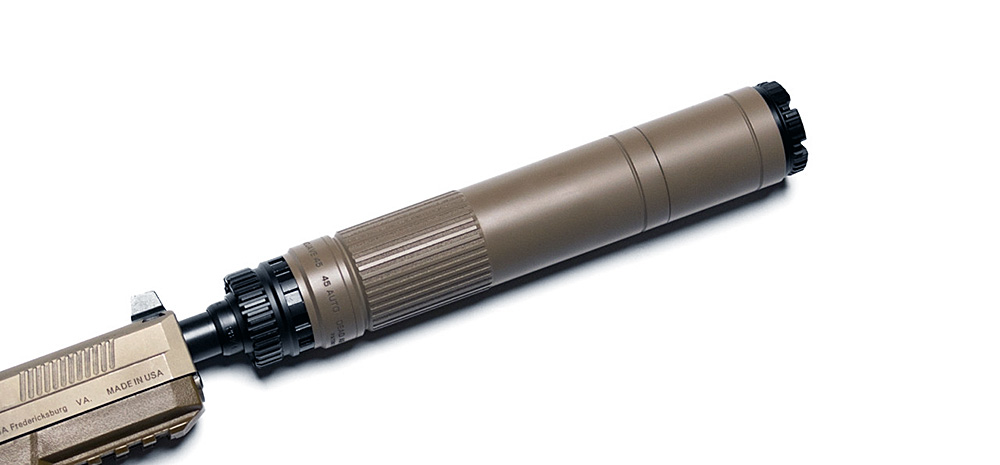 Why Consider a Suppressor for Self-Defense?
Protecting your hearing during training is an obvious benefit. In a home-defense scenario, reducing muzzle blast and flash can also be a real advantage. Owning a suppressor out of simple curiosity is also valid.
A friend of mine likes to say, once you begin using them, they tend to multiply. I don’t consider myself a “gearhead” or tend to overly focus on technology, but I do keep up with modern developments. My daily carry is polymer-framed, striker-fired 9mm with a carry optic and combat light. I do follow the latest firearms technology and pay attention to what works.
So, I am not a pioneer in suppressors, and they were new territory until recently. My perspective may be helpful as many shooters are in the same position. Let’s approach the process step-by-step.
How to Buy a Suppressor
Applying for a suppressor tax stamp was once a daunting process, but buying a suppressor has changed significantly. Under the National Firearms Act (NFA), there was a $200 fee, and approval could take up to 10 months. Today, the tax stamp is still required, but the passage of the One Big Beautiful Bill significantly reduced or eliminated the fee and considerably shortened the wait time.
The first step to buy a suppressor is working with a dealer licensed to sell suppressors. The dealer will photograph the buyer and help establish the required ATF account. Each suppressor requires its own approval, but again, wait times have dramatically improved.
In my experience and among shooters I trust, approvals now range from a few days to a couple of weeks. That is a far cry from the delays once expected, especially considering applications jumped to 150,000 per day in January from 2,500 on a good day last year.
Once you’re approved and have obtained the tax stamp, the suppressor is transferred using the standard Form 4473. Suppressor ownership remains regulated and is still prohibited in some states. Be certain to verify and follow local laws.
Tax stamp documentation must be kept with you whenever the suppressor is in use. You cannot loan the suppressor to another person or transfer it privately. In practical terms, this means you should choose your suppressor carefully.
Choosing the Right Suppressor
Because of the regulatory process, selecting the right suppressor the first time is important. You do not want to cut corners or chase the lowest price. A quality suppressor from a reputable manufacturer will provide better performance and long-term value.
Before making a decision, consider how you plan to use the suppressor. For many shooters, that includes a mix of home defense, range use and possibly outdoor applications. Caliber compatibility and firearm type will play a major role in narrowing down the options.
In my case, I focused on suppressors for three types of firearms: 9mm handgun, 9mm carbine and .22 LR carbine. Choosing suppressors for these firearm options allowed me to evaluate versatility as a quality 9mm suppressor can serve double duty on both a pistol and a carbine.
Most carbines will function reliably with a suppressor attached if proper ammunition is used. The handgun presents a different challenge. Modern locked-breech design handguns require additional consideration when adding a suppressor.
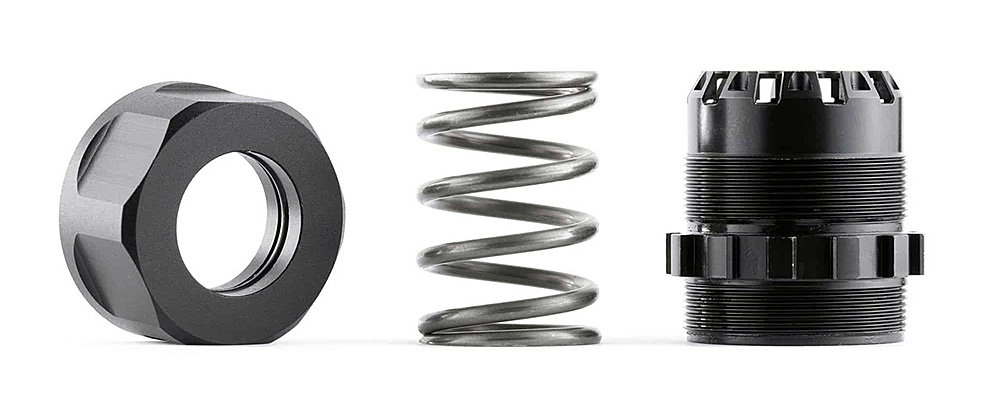
Pistol vs. Carbine Suppressors
A pistol suppressor must have a Nielsen device, also known as a muzzle booster, to ensure reliable function. This device counters the added weight of a suppressor by trapping some of the gas from firing. The built-up pressure assists in cycling the action. Without a Nielsen device, many semi-automatic pistols will fail to cycle properly.
A carbine, though, does not require a Nielsen device. When using the same suppressor on both a pistol and a carbine, it is best to remove the booster assembly when mounting. This will improve durability.
It isn’t difficult to adapt a single suppressor for use on 9mm carbine or pistol platforms, but attention to setup and maintenance is important. Proper lubrication of the booster assembly ensures reliable operation. If not operated properly, you may damage the suppressor.
Suppressor Comparison: What to Look For
After narrowing down what I was looking for, I considered several suppressors from a variety of manufacturers. A suppressor is not a piece of gear you want to look at cost alone. The investment in time and paperwork make it worthwhile to choose a high-quality unit. Most suppressors weigh less than 1 pound, but some may be made of aluminum and others of titanium.
The Silencio BTM 600 deserves consideration. It is supplied with a Nielsen device, making it compatible with handguns. It is constructed of titanium and stainless steel, with a 1.25-inch diameter. Its 1.5-inch sound moderator extends the total length to 7.5 inches.
Rugged Suppressor’s Sub9 was praised by several experienced shooters. It is intended for long-term use on a carbine. At just 6.8 inches, it remains relatively compact.
SureFire’s Ryder 9Ti was another option. SureFire has been around a while and earned a reputation for quality. This 7.6-inch suppressor comes at a higher price point, but the durability of the brand is worth it.
| Suppressor | Caliber Rating | Length | Weight | Sound Reduction (dB Estimate) |
Material | Nielsen Device | Mount Type |
|---|---|---|---|---|---|---|---|
| Dead Air Mojave 45 | .45 ACP (adaptable to 9mm) | 6.8 to 8.6 inches | 10.44 to 12.7 ounces | ~30 dB | Titanium | Yes (included) | .578-28 Mojave Piston |
| Silencio BTM 600 | 9mm | 7.5 inches | – | – | Aluminum/steel mix | Yes (included) | Thread-on or 3-lug |
| Rugged Suppressors Sub9 | 9mm | 6.6 to 6.8 inches | 11.9 to 14.1 ounces | – | Stainless steel/aluminum | Yes (modular system) | 3-lug |
| SureFire Ryder 9Ti | 9mm | 7.6 inches | 9.5 ounces | ~28 dB | Titanium | Yes | Thread-on |
| Dead Air Mask (.22 LR) | .22 LR | 5.1 in | 6.6 ounces | ~25 dB | Stainless steel/titanium | No | Thread-on |
Why I Chose the Dead Air Mojave 45
After looking over the options and consulting with experienced shooters, I chose the Dead Air Mojave 45 due to its versatility. The Mojave is shipped as a .45 ACP suppressor. However, it can be easily fitted to a 9mm — carbine or pistol — with appropriate end caps. This single suppressor can serve multiple roles.
The Mojave 45 is also equipped with a Nielsen device, making it suitable for handgun use. Though shipped as one piece, its modular design means the front section can be unscrewed and the end cap changed over for a shorter unit. This flexibility is valuable for close-quarters applications like home defense.
 Mojave 45 Suppressor Specifications
Rating: Full auto
Length: 6.8 to 8.6 inches
Diameter: 1.148 inch
Weight: 10.44/12.7 ounces
Material: Titanium / black or FDE Cerakote finish
*Rated for cartridges of up to 1,900 foot-pounds of energy
Best Suppressors for 9mm by Use Case
Best for home defense: Dead Air Mojave 45
Best for handgun use: Silencio BTM 600
Best for carbines: Rugged Sub9
Best lightweight option: SureFire Ryder 9Ti
Best rimfire suppressor: Dead Air Mask
Ammunition Considerations for Suppressed Firearms
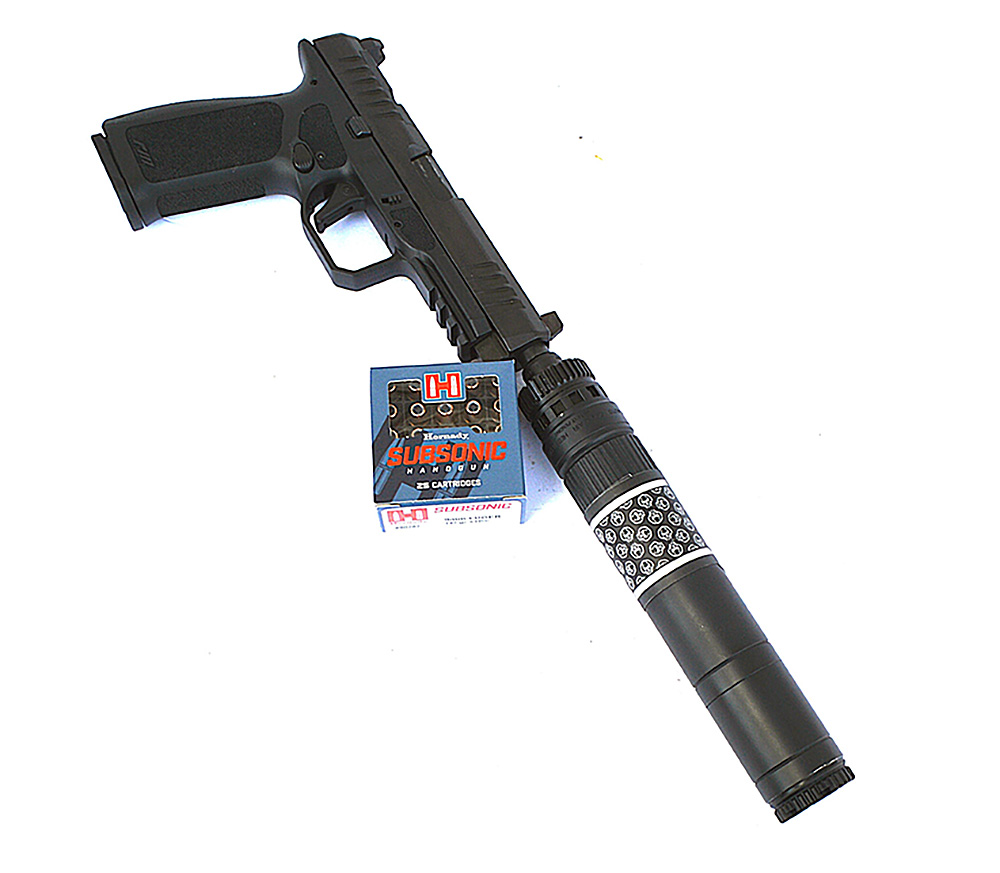
The suppressor must be mated with proper ammunition for reliable performance. I used 147-grain 9mm loads in both the pistol and carbine. Heavier bullets tend to remain subsonic, avoiding the sharp crack associated with lighter loads.
The faster 115- to 124-grain loads break the sound barrier. So while a suppressor will reduce muzzle blast, the supersonic crack negates most of the advantage of a suppressor.
As for noise reduction, a 9mm carbine that typically measures 160 decibels will be reduced to 135 decibels with a suppressor. A pistol that breaks at 167 decibels will be reduced to the same level, which is well below the threshold of hearing damage. That’s enough to make training more comfortable.
Results were excellent. Accuracy was not negatively affected, and in fact, the pistol seemed easier to shoot with the added weight and reduced blast, contributing to better control. As important as noise reduction, muzzle blast was reduced, and there was no muzzle flash at all. That would be a significant advantage in low-light defensive situations.
Suppressed Firearm Performance
I conducted most of my testing with the Rost Martin RM1F Tactical, a 9mm well-suited to suppressor use with a threaded barrel and suppressor-height sights. The taller sights are necessary to maintain a clear picture over the suppressor body.
The Dead Air Mojave 45 performed well on the RM1F. The suppressed handgun was very pleasant to fire with reduced blast and improved control.
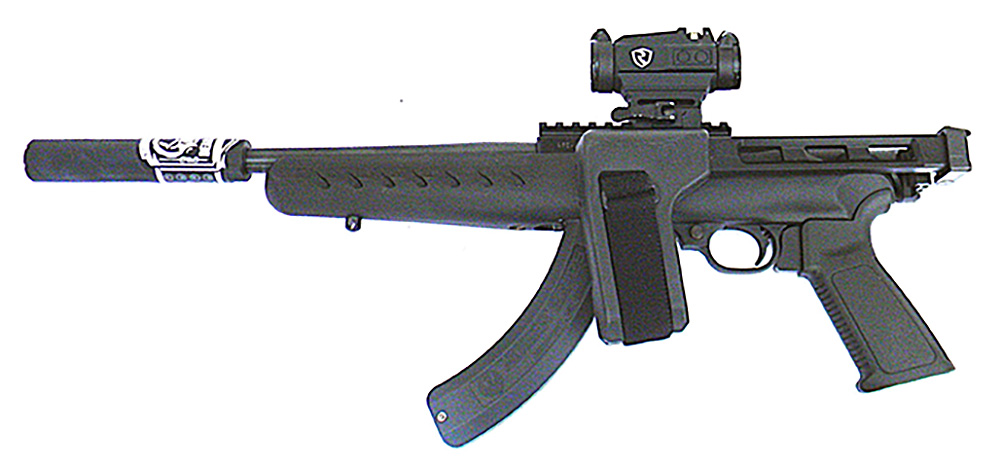
Mounted on a Ruger 9mm carbine, the suppressor’s benefits were even greater. Though a pistol caliber carbine (PCC) is already easy to like, with the suppressor installed it was actually docile, with minimal recoil and muzzle flash.
Velocity wasn’t affected. Most loads will actually exhibit a slight increase in velocity when used with a suppressor. At 25 yards, the suppressed Ruger will easily land 147- to 150-grain loads into an inch or less.
Rimfire Suppressors
I also tested the Dead Air Mask .22, a compact and well-built suppressor designed specifically for rimfire use.
The .22 LR cartridge is inherently dirtier than centerfire ammunition due to the slow-burning powder and lead bullet. A rimfire suppressor will require more frequent cleaning. A well-made suppressor will be easier to maintain, so don’t go cheap.
Performance was impressively quiet. Fitted to a .22 rifle and used with subsonic ammunition like the CCI Quiet 22, the only sound was the bolt cycling. This makes an ideal setup for training, small-game hunting and pest control.
Are Suppressors Worth It? Practical Benefits for Self-Defense and Training
Suppressors are no longer the niche items they once were. Improvements in the purchasing process and broader availability have made them more accessible. More importantly, their practical benefits are clear.
For training, they reduce fatigue and protect hearing. For home defense, they limit muzzle blast and flash. In outdoor use, they provide a more controlled and less disruptive shooting experience.
There is a learning curve, particularly in selecting the right suppressor and configuring it properly. However, with a bit of research and attention to detail, the results are worthwhile.
I am still exploring suppressor use, but the advantages are evident. For those willing to navigate the process, a suppressor is a useful addition to a defensive firearm.
FAQs
How do you buy a suppressor in the United States?
To buy a suppressor, you must work with a licensed dealer, submit an ATF application and receive approval under the National Firearms Act. This includes a background check and a tax stamp.
Are suppressors legal for civilian ownership?
Suppressors are legal in most states, but not all. Laws vary by location, so it is important to check your state and local regulations before purchasing.
Is a suppressor good for home defense?
A suppressor can be useful for home defense. It reduces muzzle blast and flash, which can help maintain situational awareness in confined spaces. It also helps protect hearing, especially indoors.
Do suppressors make a gun completely silent?
No. Suppressors significantly reduce noise but do not eliminate it. With most centerfire firearms, the sound remains similar to a loud clap. Using subsonic ammunition can further reduce noise by eliminating the supersonic crack.
What is a Nielsen device and why is it important?
A Nielsen device, or booster, is used in most pistol suppressors. It helps the firearm cycle properly by counteracting the added weight of the suppressor. Without it, many semi-automatic pistols may fail to function reliably.
Can you use one suppressor on multiple firearms?
Yes, many suppressors are designed to work across multiple firearms and calibers with the proper mounts or end caps. However, compatibility and setup must be carefully managed to ensure safe and reliable operation.
What is the best suppressor for a 9mm handgun?
The best suppressor depends on your needs. Look for a quality unit with a Nielsen device, durable construction and compatibility with your firearm. Versatile suppressors that can also be used on carbines offer added value.