The old adage of “buy once, cry once” is everywhere in gun media. The idea is simple: You pour every penny into a gun one time, then you’re set for life.
Conversely, if you go cheap, you’re clearly going to regret it and possibly get killed.
What’s the truth about the cost of a defensive handgun? Do you really need to buy only a high-end gun, or is it OK to go the budget route?
Today’s handgun market offers everything from used pistols for under $200 to custom-built guns costing more than $5,000. Somewhere between those extremes is the handgun that’s right for you.
How Much Does a Good Defensive Handgun Cost?
Handguns come in range of models and prices.
A quick search online delivers listings for a used Ruger LCP for $170.99 and a new Staccato HD C3.6 for $2,799. Want to spend even more? A single-stack Nighthawk Sand Hawk is currently going for $5,199.
For those focused on guns for concealed carry and home defense, the sweet spot will be something like a $500 Glock. However, not everyone likes polymer pistols, and there’s a lot more to the gun market than Glocks or high-end custom guns.
The trick isn’t spending the most money possible. It’s knowing where spending more actually benefits you and where it doesn’t.
What Is Considered a Budget Handgun?
“Budget” means something different to everyone. For some, it will mean a gun under a grand. For others, it will mean staying below $200. It’s all a matter of perspective.
Generally, people consider a budget gun to be around $500 or less. You can find a lot of firearms in that price range, especially now as the market shifts.
Today’s budget market isn’t just Hi-Points and unknown brands anymore. You can get a brand-new Canik, Glock, Ruger, Rost Martin or Smith & Wesson in that price range.
The idea of budget guns automatically mean poor quality has largely disappeared. It’s easier than ever for me to recommend a low-cost pistol that’s high quality enough to surpass its price point. This is a good thing for anyone looking for a reliable defensive handgun.
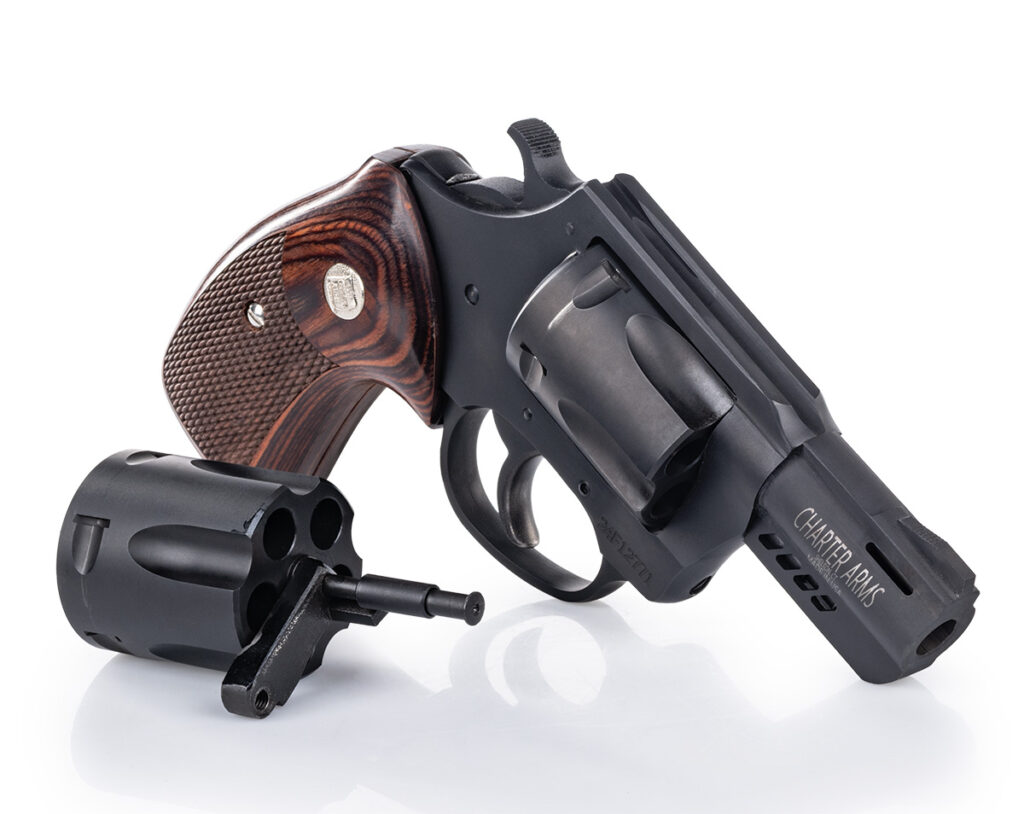
You can get an American-made revolver chambered in anything from .22 LR to .45 Colt from Charter Arms. The “Double Dog” pictured includes cylinders for both 9x19mm and .357 Magnum, making it an exceptionally versatile revolver. MSRP: $636.90.
How to Tell if a Budget Handgun Is Worth Buying
So, you’re at the gun store perusing the used or new guns that come in at a reasonable (or reasonable-adjacent) price, and you’re wondering where to start. Maybe it’s your first gun, or perhaps you just don’t have much experience outside of your hunting rifle or shotgun.
How can you tell if a lower-cost handgun is worth it? Price alone won’t tell you whether the handgun is a good purchase.
Read Reviews From Trusted Sources
Reviews from reliable sources are a great way to learn more about a specific model.
Don’t simply go to a random YouTuber or social-media influencer, though. Take care to stick to sources who know what they’re talking about, have put the gun through its paces and deliver balanced reviews.
Social media can also be a great resource if you’re careful to take it all with a grain of salt. Look for repeated reports of specific issues or details from people you know are experienced gun owners. (And no, just being around guns for years or being in the military or law enforcement doesn’t make someone an experienced gun person.)
Stick With Proven Models
You’d be smart to hesitate on new, untested models. Even big-name, trusted brands can have problems, and when you’re trying to get a handgun for a low price, you’re even more likely to run into issues.
If you want the best-case scenario for your dollars, go with a model that’s already been proven over a significant period of time.
Shoot It Before You Buy
And, of course, hands-on time can’t be forgotten.
If you’re able to either rent the same model at the range or try out one that belongs to a friend, do so. Holding an empty gun and dry-firing it at the counter isn’t remotely the same as live-fire time.
Don’t Overlook Used Guns
Buying used can be a smart way to save money.
Before purchasing, however, it’s a good idea to have someone who knows what he or she is doing take a look at it before you invest. It never hurts to ensure there’s no major wear on a used gun that could negatively impact its performance.
Common Myths About Budget Handguns
While affordable doesn’t always mean inferior, there are some things to keep in mind.
Smaller Isn’t Always Easier to Shoot
Caliber and size matter. It isn’t worth saving a few dollars if you’re stuck with a short-barreled pistol with a ridiculous trigger pull and crazy muzzle rise.
Many people assume tiny pistols are great for beginners. Your average subcompact .380 ACP or snub-nosed .38 Special can be great. But it won’t be fantastic for everyone.
Spoiler alert: That tiny little pistol is probably going to be more punishing to shoot and harder to shoot well than a larger gun in a bigger caliber.
Brand Reputation Isn’t Everything
Brand matters only to a point.
Quite a few brands that were once considered “less than” have upped their games. This includes Taurus and Canik.
You don’t want a $100 blue-light special, but you shouldn’t outright dismiss a gun with a surprisingly low price. This goes back to doing your homework and learning what you can before buying.
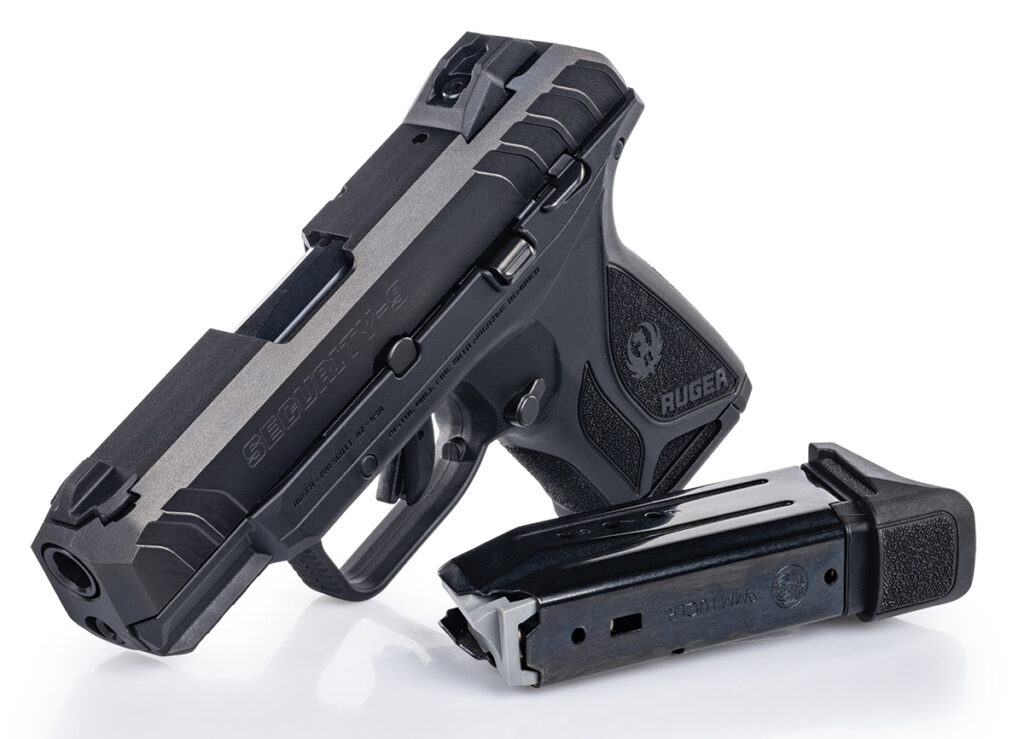
If you’d rather have a semi-automatic pistol, the Ruger Security-9 has an MSRP of $389. It’s an American-made compact pistol with a 10+1 capacity at a price many shooters can afford.
Do Expensive Handguns Offer Better Reliability?
The two most obvious downsides of a budget gun are the risk of the gun failing when you need it most and the potential for it to be more challenging to operate than a higher-end model.
Here’s the thing: I’ve run a high-end pistol with an incredible price point that had failures to feed in the first magazine, and I’ve shot a lower-cost pistol that fired reliably.
Whether you spend a little or a lot, you should put enough ammunition through it before carrying to be confident in its performance. Ideally, that would be 500 rounds, but realistically you should try for at least 150 rounds.
Some of those rounds should be the defensive ammunition you intend to carry. Yes, that ammunition is more expensive, but it’s vital that you know what your carry gun can do. Some pistols are ammunition-finicky, and that’s not something to discover the moment you need the gun to defend your life.
As for a gun being more difficult to run, that’s model-dependent and also heavily influenced by your own experience (and hand size). This is why it’s smart to try different types of handguns before you buy. Knowing in advance how a double-action-only trigger feels or whether you prefer a striker-fired gun without an external safety is important.
Should You Carry an Expensive Gun?
Some gun owners intentionally carry a less expensive pistol because they worry an expensive firearm could be taken as evidence after a defensive shooting and never returned.
It’s true that the gun will likely be taken as evidence, and it’s also accurate that you might or might not get it back (and if you do, it could be years).
Personally, I find that logic flawed.
Buying a cheaper handgun simply to avoid risking a more expensive one gets dangerously close to putting a price tag on your own life. Would I be unhappy to lose a favorite pistol because it’s taken as evidence? Sure, but I’d also be happy I was alive, and my survival might have hinged on that specific gun.
The Most Important Factor Isn’t Price
Instead of choosing a carry gun by its price, make that choice by carrying the handgun you shoot with the greatest level of skill and accuracy. Improving your odds of survival if you’re ever forced to defend your life seems well worth whatever price.
There’s an idea in the gun world that the gun you have is better than no gun at all, and while it’s technically true, it isn’t precisely accurate.
I’ve seen an older lady with arthritic hands trying to pull the trigger on a Magnum revolver and a new shooter struggling to fire a snappy .380 ACP.
Here’s the reality check: The gun you have does you no good if you can’t operate it properly. If you can’t run it well, you increase the risk of missed shots, poor decisions or even having the gun taken away from you.
Of course, there’s also a feeling among some that guns can be used as de-escalation tools. Basically, you don’t have to be intending to pull the trigger when you draw.
Some respected trainers acknowledge that a displayed firearm can occasionally de-escalate a confrontation, but that should never be your plan.
For me, this comes back to a willingness to use your gun. If you’re going to carry it, let alone draw it, you need to be willing and able to pull the trigger.
You must be competent with your handgun. Simply having a gun isn’t enough; you need to be capable of using it correctly. While a handgun can end up de-escalating a situation, it can also do the opposite. Don’t draw your gun thinking it’s a negotiating tool, because it isn’t.
Don’t Shame Budget Gun Owners
Finally, a friendly reminder not to shame people for owning or carrying budget guns. There’s a distinct possibility that such a person can outshoot you with your high-dollar gun.
Say it with me: Just because you don’t like a brand or model doesn’t mean it’s a bad gun.
Furthermore, that pistol might be that person’s only option at this moment in time. Help rather than hinder.
Choose the Handgun You Shoot Best
The price tag on a handgun doesn’t determine whether it’s the right defensive firearm for you.
A quality budget pistol may serve you better than a premium handgun that doesn’t fit your hands or your shooting style. Likewise, an expensive pistol is only worth the investment if it helps you perform better and you’re willing to verify its reliability.
Instead of focusing on cost alone, choose the handgun you shoot with the greatest confidence, skill and accuracy. If you’re ever forced to defend your life, those qualities will matter far more than what you paid for the gun.
Sources:
Canik USA: CanikUSA.com
Glock: US.Glock.com
Hi-Point Firearms: Hi-PointFirearms.com
Nighthawk Custom: NighthawkCustom.com
Rost Martin: RostMartin.com
Smith & Wesson: Smith-Wesson.com
Staccato 2011: Staccato2011.com
Sturm, Ruger & Co., Inc.: Ruger.com
Taurus USA: TaurusUSA.com
*This article originally appeared in the May/June 2026 edition of Concealed Carry Magazine and has been modified for the web.