When I evaluate any life-saving tool, I consider its application and performance under real conditions. Only hands-on testing answers questions. My evaluations draw on personal experience as well as documented manufacturer testing. Short-term range sessions are only a starting point, while extended firing in adverse conditions tells the real story.
That brings us to a review of the Glock Generation 6. Glock has evolved its pistols incrementally over the years. Previous modifications include improved grip texture, interchangeable backstraps, forward cocking serrations, optics plates and, in the Generation 5, the Marksman Barrel. Though useful, these didn’t affect the heart of the pistol.
The Glock Gen 6 9mm brings significant changes as compared to previous modifications. The proven locked-breech, striker-fired system remains, but this generation introduced meaningful mechanical and ergonomic changes. These changes are significant enough that the Gen 6 requires thorough re-testing.
After extensive evaluation, I find the Glock Generation 6 to be a genuine improvement over previous Glock models. Long-term reliability in a service weapon is important, and Glock’s reliability remains.
Without sacrificing the reliability and simplicity Glocks are known for, the company refined the optics mounting system, grip design and trigger geometry to enhance shootability. Glock offers the Generation 6 in compact 19, full-sized 17 and hybrid 45 versions.
For this evaluation, I tested the Glock Gen 6 models, Glock 17, 19 and 45, comparing them against my existing battery of Generation 5 pistols — the 17, 19 and 19X — all equipped with MOS plates.
Despite the mechanical revisions, the Glock Gen 6 remains true to its operating system. The barrel locks at the hood and unlocks via angled camming surfaces. The striker-fired action remains consistent with previous models: partially cocked by racking the slide, fully tensioned and released by the trigger press. Disassembly procedures are unchanged.
Anyone who fired a Glock 40 years ago will be able to operate and field strip the Gen 6 without hesitation. That continuity matters.
Gen 6 Glock Specifications
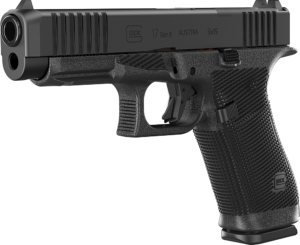
| Glock | 17 | 19 | 45 |
| Caliber | 9mm | 9mm | 9mm |
| Overall length | 7.95 inches | 7.28 inches | 7.44 inches |
| Barrel length | 4.49 inches | 4.02 inches | 4.02 inches |
| Weight (unloaded) | 23.99 ounces | 22.58 ounces | 23.10 ounces |
| Capacity | 17 | 15 | 17 |
| MSRP | $745 | $745 | $745 |
What’s New With the Glock Generation 6
The Glock Gen 6 introduces meaningful changes, beginning with its optics-ready system. The slide is cut for direct mounting and supports RMR, DeltaPoint Pro and C-More footprints. Glock redesigned the extractor and extractor tunnel to make the pistol more optics friendly. This system is more secure than the previous plate design.
The most noticeable change is in the frame. The pistol sits more comfortably in the hand with its elongated grip. Redesigned grip also features palm swells and an improved texture that balances abrasion to aid control and comfort during long firing sessions.
Combining the new grip with a cut behind the trigger guard creates a low bore centerline that allows the optic to sit closer to the hand, improving sight acquisition.
A roughened area in front of the trigger guard encourages proper trigger finger discipline. Glock retains its proven trigger lever safety system, helping to prevent negligent discharges, but improved the Generation 6 with a flat-face trigger. Pull weight remains consistent with previous models, averaging 5.6 to 5.8 pounds in my testing. The slightly shorter trigger reach improves leverage and enhances control.
Enhanced protective fences, introduced with the Generation 5, surround the ambidextrous slide locks. The magazine release remains reversible for left-handed shooters.
Glock also revised the rear of the slide and internal components to prevent users from installing illegal auto-conversion devices. While this doesn’t affect normal operation, it reflects Glock’s attention to maintaining service-grade integrity. The modification is integrated cleanly into the design without compromising function.
Pros and Cons of the Glock Gen 6
No matter how good a product is, there are always tradeoffs.
Pros
- Glock’s proven reliability remains proven in the Gen 6.
- Grip design offers a better balance of speed and adhesion
- Trigger has slightly shorter reach and better leverage than previous generations.
- The pistol features a low on-deck optics set up
- Sights are standard Glock and easily replaced.
- New features on the Gen 6 are beneficial for concealed carry.
Cons
- Some may not like the new texture of the grip.
- The trigger is still the same striker-fired double-action-only some have difficulty managing.
- It may be some time before the pistol is available with mounts for every optic.
- Factory sights are not best for precise shooting.
- Aftermarket barrels and triggers that fit previous generations will not fit the Gen 6 Glocks.
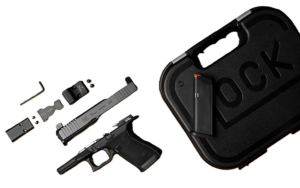
Glock Gen 6 Optics System
The Glock Generation 6 pistol reflects a desire for the pistol to be service grade, engineered from the start as optics-ready. Unlike previous MOS plate systems, the Gen 6 uses a direct-mount optic system, featuring a removable slide cover and polymer compression washer. These polymer sleeves use recoil studs to help precisely position the red-dot sight.
As mentioned above, the system supports RMR, DeltaPoint Pro and C-More footprints. Glock eliminated the traditional mounting plate and lowered the optic deck height, resulting in faster sight acquisition, improved co-witness potential and a more natural presentation from the holster.
In previous configurations, long screws and plate movement were weak points. Having tested more than 20 concealed carry optics over the past year, I found that sights loosening under recoil was almost always related to the mounting plate rather than the sight itself.
The Generation 6 Glocks address that concern with the direct mount system, creating a more secure and simplified mounting method. The extractor and extractor tunnel were redesigned to accommodate this system, so Gen5 barrels and extractors are not interchangeable with Gen 6 pistols.
This significant mechanical revision warranted substantial evaluation. In my testing, it proved stable and reliable. I would be surprised if there were any problems.
Build the Skills to Run Your Defensive Pistol With Confidence
Choosing your firearm is just the first step. Proper training transforms you from a gun owner into a confident protector.
USCCA’s expert-led classes cover everything from firearm fundamentals and accuracy training to legal considerations and conflict avoidance, giving you the confidence and skills to protect what matters most.
Join more than 1 million students trained nationwide and take the next step in your protector journey.
Gen 6 Firing Test and Accuracy Results (Glock 19, 17 & 45)
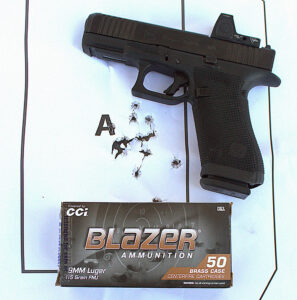 I fired the Glock 17 and 19 Generation 6 pistols extensively, with even more rounds through my personal G45. The Glock 17, being heavier, shoots fast and handles well. The Glock 19 requires more attention to recoil control.
Of the three, I preferred the Glock 45. It has a full firing grip and shorter slide that was easy to control and cleared the holster quickly. With a carry optic mounted, sight radius becomes less important.
The Glock Gen 6’s optics system offers that advantage in speed. Its lower deck height improves presentation and target-focused shooting with both eyes open. For those who train consistently, a red-dot-equipped pistol offers measurable advantages.
I mounted the Trijicon RMR Green on my personal pistol. This optic remains one of the most proven service-grade optics available. The green dot provides an interesting contrast in varied lighting conditions.
Over the past several months, I have fired more than 800 rounds through my personal Gen 6 Glock 45. I intend to replace my long-serving Glock 19 in my carry rotation if performance justifies the change. Reliability, certainly, is confirmed.
Glock Gen 6 vs. Gen 5: What’s Different?
The improvements to the Gen 6 are incremental but add up. I found I was able to shoot the Generation 6 Glock more accurately than Generation 5.
- Lower optics deck allows for a faster first shot.
- Grip treatment aids in recoil management.
- Perceived recoil feels reduced, likely due to bore center line and elongated grip tang.
- Trigger isn’t lighter at 5.6 to 5.8 pounds, but the flat trigger face and shorter trigger reach improve control.
From benchrest at 25 yards, the Gen 6 Glock demonstrates slightly improved mechanical accuracy. The difference is modest and not as important as the improvement in off-hand defensive shooting, where speed and control matter most.
Glock maintained parts compatibility across generations, reflecting a thoughtful evolution rather than a wholesale redesign. Standard Glock sight cuts remain unchanged, so shooters can upgrade without abandoning existing aftermarket support. Glock handguns lend themselves well to resource management. There should be no need to replace a current supply of magazines and holsters.
But the Generation 6 is more than a cosmetic change. Extractors and barrels are not interchangeable with previous generations due to the new optics system. However, slides and frames may be matched within the Generation 6 line despite varying lengths and weights by model. Each Gen 6 Glock features the same recoil assembly.
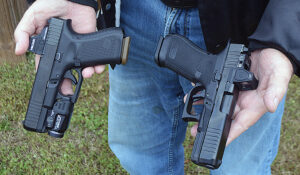
Gen 5 Glock 19, left, vs. a Gen 6 Glock 45, right
Best Glock Gen 6 Model for Concealed Carry
Of the Generation 6 models I tested, I prefer the 45 for concealed carry. Its full firing grip and shorter slide balance well and clear the holster quickly. The Glock 19 requires more attention to recoil control, and while the Glock 17 tracks fast due to its weight, the 45 offers an ideal compromise of shootability and carry comfort.
Holster compatibility remains unchanged from previous generations. Gen 6 Glocks will fit whatever holster assembly you have squared away for your current Glock. I currently carry my Gen 6 G45 in a Falco Carbon Fiber outside-the-waistband.
Glock Generation 6 vs. Gen 5: Is the Upgrade Worth It?
The Glock Generation 6 represents meaningful refinement rather than reinvention. The proven locked-breech, striker-fired system remains intact, but the improved optics interface, revised grip geometry and flat-face trigger enhance practical shootability. Reliability, important for any service pistol, has been confirmed through extended firing.
The differences between the Generation 5 and Generation 6 are incremental, but they are cumulative. A lower optics deck height, improved grip treatment and more efficient trigger geometry translate into faster first shots and better control in defensive shooting. That is where improvement matters most.
After extensive evaluation, I consider the Glock Generation 6 a genuine advancement of the platform. It maintains the simplicity and durability Glock is known for while incorporating practical enhancements for modern carry use. For those considering an upgrade, the Generation 6 warrants serious consideration.
USCCA’s Glock Gen 6 Video Review with Phil Morden
Glock: US.Glock.com
Take Your Protection to the Next Level
Join over 860,000 USCCA Members for leading self-defense education, training and legal protection benefits.
Glock Gen 6 FAQs
Is the Glock Generation 6 reliable?
In testing, reliability has been confirmed. I have fired more than 800 rounds through my personal Generation 6 pistol without issue. The proven locked-breech, striker-fired system remains intact, and Glock’s established reliability appears unchanged.
What is different about the Glock Gen 6 compared to the Gen 5?
While the core operating system remains the same, the Generation 6 incorporates a revised optics mounting system, redesigned extractor components, an elongated grip tang, improved grip texture and a flat-face trigger. The optic sits lower on the slide, improving presentation speed.
Are Gen 5 parts compatible with the Glock Gen 6?
Some components remain compatible. Standard Glock sight cuts are unchanged. However, barrels and other components are not interchangeable due to revisions supporting the new optics system.
What optics fit the Glock Gen 6?
The Generation 6 supports direct mounting for RMR, DeltaPoint Pro and C-More footprints. The redesigned extractor system and mounting interface provide a more secure setup than previous plate-based systems.
Which Glock Gen 6 model is best for concealed carry?
Of the models tested, I prefer the Glock 45. Its combination of a full firing grip and shorter slide offers good balance, efficient recoil control and fast holster clearance. Holster compatibility remains unchanged from previous generations.