In the latter half of the 20th century, classifying handgun frame sizes was simpler because there were so few models available. Especially when examining semi-automatic pistols, narrowing down the size of handgun was easier. You were typically deciding between a full-size duty pistol, a compact version of that same gun or a small “pocket pistol.” The lines were clear.
Today, handgun sizing is less clear. The modern concealed carry market has introduced new categories: compact, subcompact and micro-compact. There is no universal standard that defines exactly where one size ends and another begins. That leaves many shooters wondering: What is the real difference between a compact and a subcompact? And where does a micro-compact fit in?
Before Micro-Compacts: How Handgun Frame Sizes Were Originally Defined
To understand how we got here, it helps to look back at how handgun sizes were originally defined. In the earlier days of semi-automatic handguns, there were basically three frame sizes available for either open carry or concealed carry with varied levels of effort involved: full-size, compact or pocket pistols. Let’s take a look at these, using Colt’s lineup as the example.
Full-Size Handguns
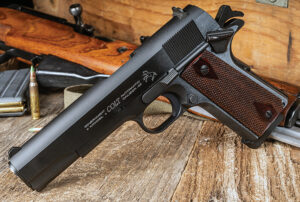
The Colt 1911 Government model would be considered a full-sized handgun, with a 5-inch barrel and weighing more than 32 ounces when loaded. It was manufactured and still available today in .38 Super, 9mm and the classic .45 ACP.
Compact Handguns
Colt’s Commander and its lightweight aluminum-framed model are compact handguns. It was designed for easier plainclothes officer carry with a 4.25-inch barrel. The Combat model weighs around 33 ounces, while the Lightweight Commander weighs 27 ounces.
Both Commanders are available in .38 Super, 9mm and .45 ACP.
Pocket Pistols
Pocket pistols were so named because they were small enough to fit in a pant, coat or vest pocket of a standard suit from the era. These weren’t designed for modern blue jeans.
Pocket pistols had blowback operating systems, meaning the strength of the recoil spring and weight of the slide hold the action closed just long enough to let the pressure drop to safe levels when the cartridge is fired. With the technology at the time, these couldn’t be chambered for any high-powered cartridges. Popular calibers of the time included .22LR, .25 ACP, .32 ACP and .380 ACP.
Interestingly, pocket pistol sizes varied greatly. The .25 ACP Baby Browning was likely the smallest semi-auto pocket pistol with a 2-inch barrel and 6+1 capacity. On the larger end were the .32 or .380 ACP Walther PP, PPK and PPK/S, considered pocket pistols due to their caliber and blowback action but with barrels ranging from 3.3 to 3.9 inches.
Those all-steel pistols are heavy when compared to 21st-century counterparts like the .32 ACP Kel-Tec P32. With a 2.7-inch barrel and weighing only 6.9 ounces, it’s so light you have to be careful not to leave it in your clothing at day’s end.
Modern Handgun Sizes: Defining Compact, Subcompact and Micro-Compact Pistols
The handgun market today offers more choices than at any point in history. Semi-automatic pistols now come in multiple frame sizes, operating systems and capacity configurations. Despite the modern levels of variety, one problem remains the same: choosing the pistol that is right for you.
There is no universal standard defining compact, subcompact or micro-compact pistols. The terms are used somewhat loosely. The best way to sort it out is to look at barrel length, grip height, magazine capacity and intended role.
Get confident choosing (and carrying) the right handgun size for your lifestyle.
Understanding handgun sizes is just the first step. Proper training transforms you from a gun owner into a confident protector.
USCCA’s expert-led classes cover everything from firearm fundamentals and accuracy training to legal considerations and conflict avoidance – giving you the confidence and skills to protect what matters most.
Over 1 million students trained nationwide. Find certified instruction in your area and take the next step in your protector journey.
Compact Pistols
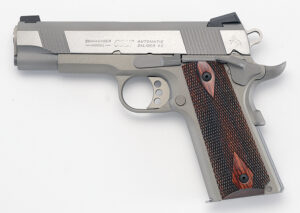
Compact pistols are the easiest to define, as these have been around for decades and remain one of the most practical handgun sizes available. Just as in the 20th century, these pistols have shorter barrels and sometimes grip frames for a lower profile.
Traditionally, a compact pistol features:
- A barrel length around 4 inches to 4.25 inches
- A shortened grip frame compared to full-size models (in many designs)
- Slightly reduced magazine capacity
- A balance between concealability and shootability
The Colt Commander is a classic example, with its 4.25-inch barrel.
A modern example in this category would include the Glock 19, with its shortened barrel and grip frame as compared to the Glock 17. The Glock 19 typically carries 15 rounds. Importantly, Glock 17 magazines will function in the Glock 19, adding versatility.
Smith & Wesson’s M&P Compact models follow the same philosophy: slightly reduced dimensions while retaining strong capacity and controllability.
Why Compact Pistols Remain So Popular
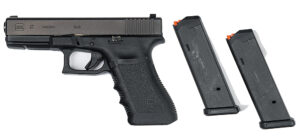
For many shooters, compact pistols represent the “sweet spot” of handgun sizing:
- Longer sight radius than subcompacts, improving practical accuracy
- Full firing grip, which helps control recoil
- Higher magazine capacity than smaller categories
- Still concealable with proper holster selection
In fact, many law enforcement officers prefer compact models for both uniform and off-duty carry because they provide nearly full-size performance in a slightly trimmer package.
For most average-sized shooters using a belt holster (inside-the-waistband or outside-the-waistband), a compact handgun often conceals just as effectively as a smaller pistol but offers better control and comfort during extended shooting sessions.
Subcompact Pistol
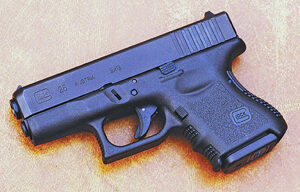
While compact handguns are often shortened versions of full-sized guns, subcompact semi-autos are designed from the ground up for easier concealed carry. Their primary mission is concealment, even if they share operating systems with larger models.
The Glock 26 is a classic example. It uses the same operating system as the Glock 17 but features a shorter barrel and significantly reduced grip height. The grip reduction is the key difference because grip height is often the hardest part of a handgun to conceal.
What Defines a Subcompact Pistol?
While there is no universal size standard, most subcompact pistols typically feature:
- Barrel lengths around 4 to 3.5 inches
- Shortened grip frames (often requiring magazine extensions for a full firing grip)
- Reduced magazine capacity compared to compact models
- Compatibility with larger magazines from the same platform
For example, a Glock 26 can accept Glock 17 magazines if additional capacity is desired. That flexibility adds versatility to the platform.
Concealment vs. Shootability
Subcompact guns are easier to conceal than compact firearms, but pistols in this size range are not “pocket pistol” sized. These were not designed to be carried in a pocket, though concealment clothing now exists with specialized pockets for concealed carry guns. Attempting to pocket-carry a subcompact like a Glock introduces unnecessary risk of a negligent discharge during the draw.
Unlike compact pistols, subcompact pistols can be carried in ankle holsters. While you can carry a subcompact in an ankle holster, that doesn’t mean you should. Comfort quickly becomes a factor, as I learned when I bought a well-padded ankle holster for my Glock 27.
I found the 27 better carried on the belt, whether inside-the-waistband or outside-the-waistband. But if you are carrying on the belt, the advantage of a subcompact vs. compact narrows. Carrying the similarly sized Glock 19 rather than the Glock 27 offers a longer sight radius, higher magazine capacity and fuller grip for more control.
For many shooters, the higher magazine capacity and improved control outweigh the slight reduction in size.
Micro-Compact Pistols
The modern micro-compact pistol differs greatly from the 20th-century pocket pistol.
Traditional pocket pistols relied on blowback operating systems and were limited to lower-powered cartridges like .22 LR, .25 ACP, .32 ACP and .380 ACP. Modern micro-compacts instead feature locked-breech systems, like those on 1911s and Glock pistols, and are chambered for the much higher-pressure 9mm Luger cartridge.
That mechanical difference gives today’s micro-compacts a distinct advantage over earlier pocket-sized handguns. As well, newer micro-compact 9mms tend to have magazine capacities ranging from 10 to 12 rounds.
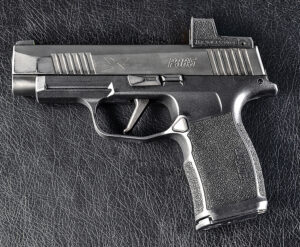
What Defines a Micro-Compact Pistol?
Most micro-compact 9mm pistols feature:
- Barrel lengths around 3 inches
- Very short grip height
- Slim “stack-and-a-half” magazine designs
- Capacity in the 10- to 12-round range
- Weights often under 20 ounces unloaded
That combination of small footprint and double-digit capacity is what separates micro-compacts from older pocket pistols.
Power in a Small Package
The advantage of modern micro-compact 9mms becomes especially important when facing determined threats or during cold-weather months when heavy layers of clothing may reduce the effectiveness of lower-powered cartridges. Though I regularly carry my Walther PPK in .32 ACP, modern micro-compacts offer significantly more ballistic capability in roughly comparable overall size.
The key tradeoff is shootability. Shorter barrels and abbreviated grip frames increase felt recoil and reduce sight radius. Micro-compacts are easy to conceal but demand solid fundamentals to shoot well.
The Rise of the Micro-Compact 9mm
The micro-compact is all the rage these days. The SIG Sauer P365 defined the micro-compact category when it was introduced in 2018. It was amazingly compact, weighing only 17.8 ounces, but delivered 10 to 12 rounds, something previously unheard of in that size class.
It quickly gained popularity among concealed carriers and law enforcement and was an instant favorite for me as well. Interestingly, once the P365 established the micro-compact market, demand grew for a larger version. Today, there are 14 P365 variants available on the SIG website, most of which could be considered subcompacts. That evolution was driven by customer demand.
The Springfield Armory Hellcat followed a similar path, entering the market as a direct competitor to the P365 and achieving similar instant popularity. Springfield has not expanded the Hellcat line as much as SIG has with the P365, but it does offer the Hellcat Pro, designed with full-sized features.
These handguns demonstrate the same trend: Shooters want micro-compact concealability but with compact-level shootability and control. The Kahr X9 is another micro-compact example, one I will be testing and reviewing soon.
| Feature | Compact | Subcompact | Micro-Compact |
|---|---|---|---|
| Barrel length | 4″–4.25″ | 3.4″–3.5″ | ~3″ |
| Grip height | Full grip | Reduced grip | Very short grip |
| Capacity (9mm) | 15+ rounds | 10–12 rounds | 10–12 rounds |
| Best For | Balance of shootability & concealment | Dedicated concealed carry | Maximum concealment |
Compact vs. Subcompact vs. Micro: Final Thoughts
The handgun world has evolved dramatically and continues to make advancements, largely driven by concealed carry permit holders who demand better performance in compact packages. Having 40 years of experience in law enforcement, I can say that law enforcement alone never pushed handgun development this far.
Today, we have more choices than ever in compact, subcompact and micro-compact pistols that each serve a specific role. Compact pistols often provide the best balance of control, sight radius and magazine capacity. Subcompacts offer easier concealment while still maintaining service-caliber performance. Micro-compacts push the market to new limits but demand more discipline from the shooter.
The challenge is not finding a good handgun. The challenge is finding the right size handgun for how you actually live. You may find, like m,e that one gun won’t meet all your needs. (That simply means you will need to purchase more!)
Take Your Protection to the Next Level
Join over 860,000 USCCA Members for leading self-defense education, training and legal protection benefits.
Sources
Glock: Glock.com
Colt: Colt.com
Walther: Walther.com
SIG Sauer: SIGSauer.com
Smith & Wesson: Smith-Wesson.com
Springfield Armory: Springfield-Armory.com
KelTec: KelTecWeapons.com
What is the difference between compact and subcompact pistols?
Compact pistols typically have 4-inch barrels and maintain a full firing grip, while subcompacts shorten the grip and barrel for easier concealment. Subcompacts are designed specifically for concealed carry, while compacts balance concealability with shootability.
What is a micro-compact handgun?
A micro-compact is a modern 9mm pistol with a roughly 3-inch barrel, slim profile and 10- to 12-round capacity. Unlike older pocket pistols, micro-compacts use locked-breech systems and fire full-power 9mm ammunition.
Which handgun size is best for concealed carry?
It depends on body type, clothing and experience level. Compact pistols offer better recoil control and accuracy. Subcompacts conceal more easily. Micro-compacts are easiest to hide but require more skill to shoot well.
Are micro-compact 9mm pistols harder to shoot?
Yes. Their shorter barrels and reduced grip size increase felt recoil and reduce sight radius.
Is a compact pistol too big for concealed carry?
For many people, no. With a quality inside-the-waistband holster, a compact pistol like a Glock 19 often conceals very well while offering improved control and higher capacity.