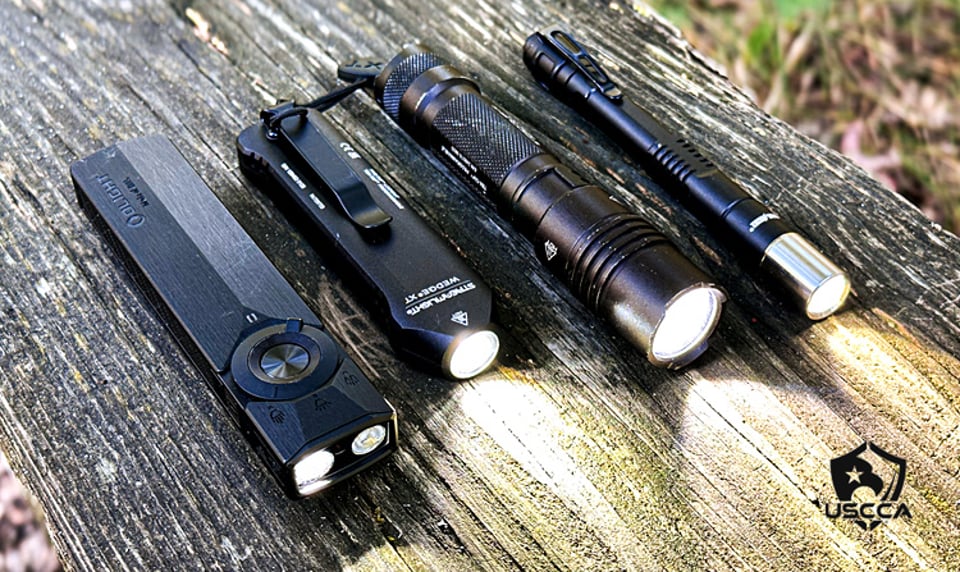
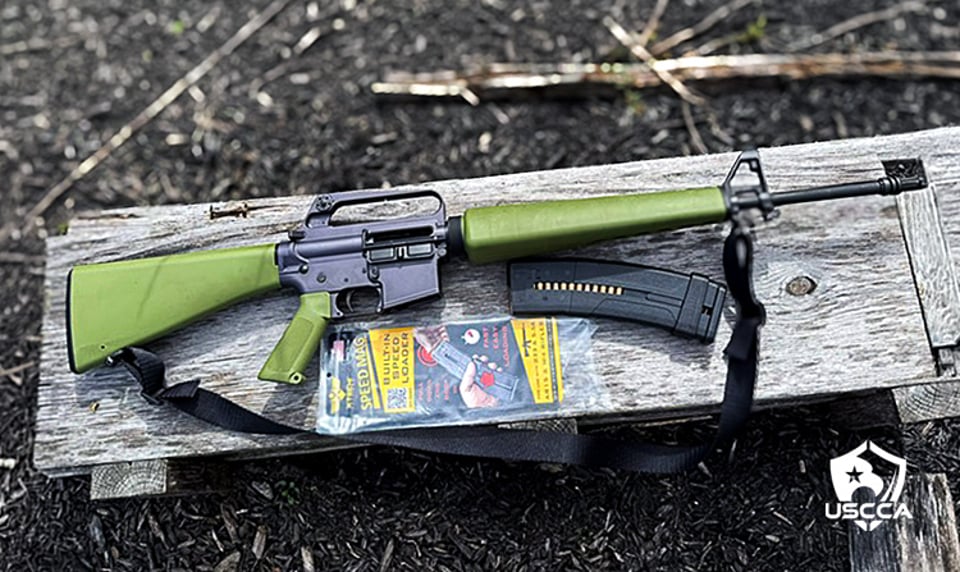
Low-light training is often a forgotten factor in a person’s overall skillset. Compared to defensive encounters in broad daylight, the veil of darkness presents a world of opportunity for things to go wrong, or, at the very least, gives assailants an edge in the overall outcome of a situation. Whether you carry a firearm for personal protection or keep one staged for home defense, identifying a potential threat in low-light conditions is critical.
This brings us to the debate over lights and whether firearm owners should be equipped with a weapon-mounted light or a handheld flashlight. While both options have loyal followings within the concealed carry community, each offers its own advantages and disadvantages in real-world use.
What Is a Weapon-Mounted Light?
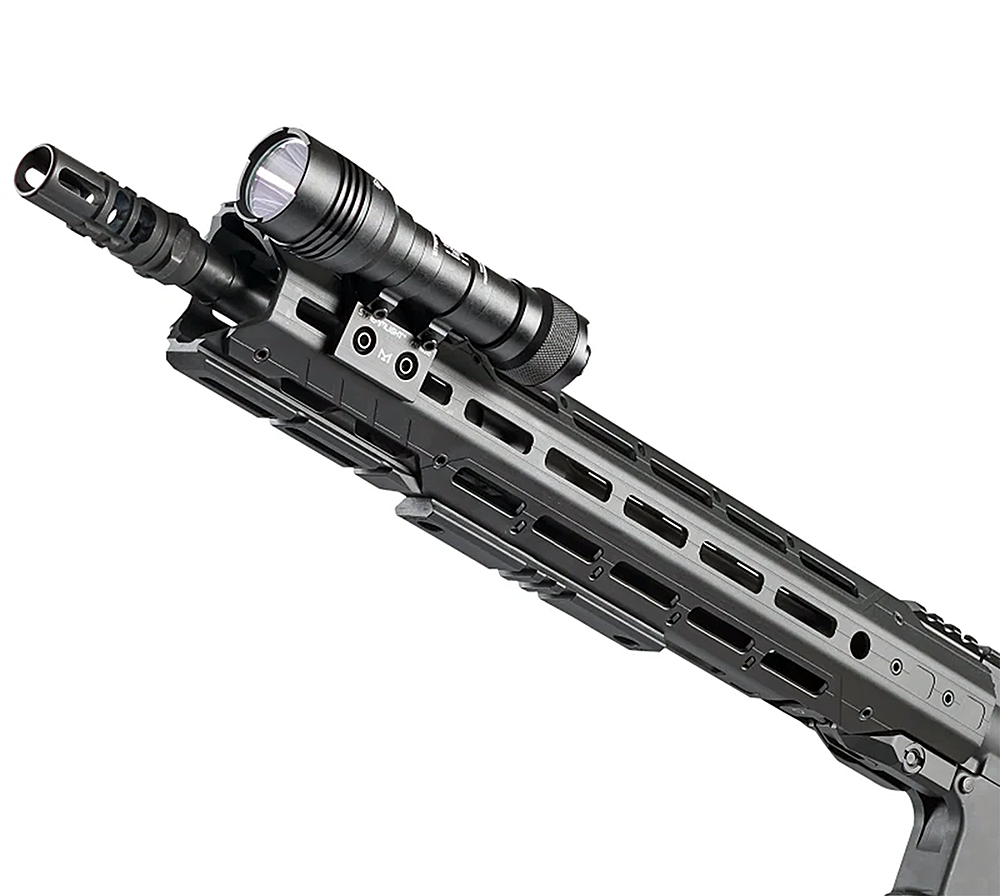
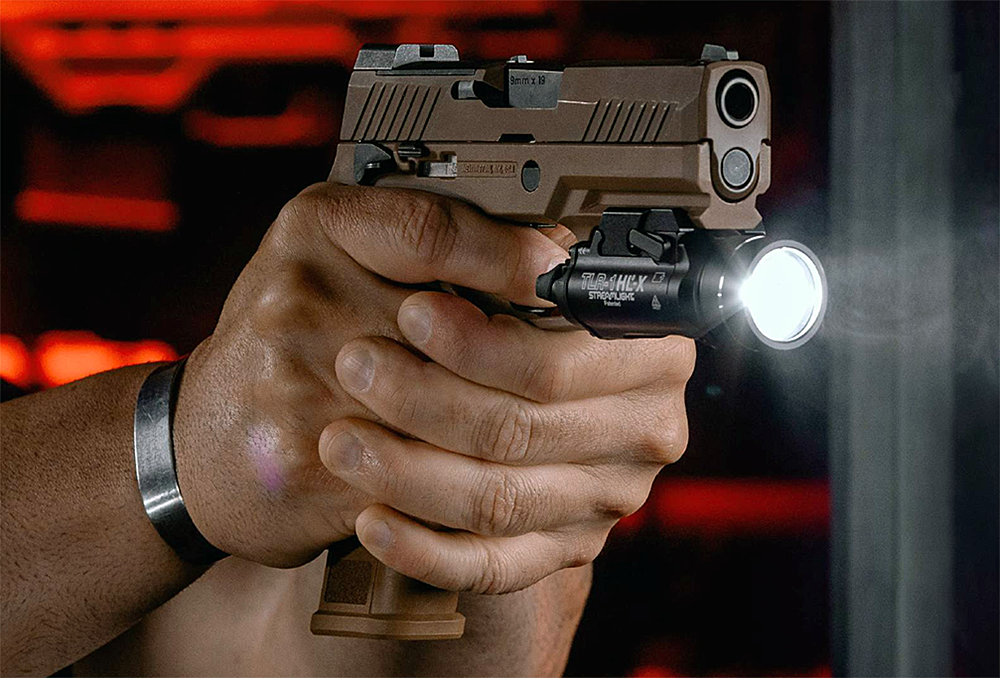
Weapon-mounted lights attach directly to your firearm’s rail or along the handguard and are designed specifically for defensive applications. A key benefit of weapon lights is that they allow shooters to identify and engage potential targets while keeping both hands on their guns.
Often paired alongside the light are battery packs and pressure switches. There are a variety of alternate mounting options available for those who wish to customize placement and operational capabilities. Depending on the exact model you choose, you can expect your light to emit a solid beam of light or even incorporate other options such as a strobing effect.
Common Uses for Weapon Lights
Weapon-mounted lights are designed to support firearm use in low-light conditions. Once attached to a handgun or long gun, they provide illumination that follows the direction of the muzzle, allowing the shooter to maintain visibility while keeping both hands on the firearm.
Weapon lights are commonly used in home-defense setups. In a high-stress situation, having both hands available to control the firearm can improve stability and weapon manipulation. This becomes especially important when navigating low-light environments, using cover or managing unconventional shooting positions.
Many shooters appreciate the speed and simplicity of a weapon-mounted light during defensive use. Once a threat has been identified and the firearm is needed, the light is already aligned with the gun, helping streamline the process of illuminating and engaging the target.
Modern weapon lights may also include features such as multiple brightness settings, pressure switches or strobing functions depending on the model.
What Is a Handheld Tactical Flashlight?
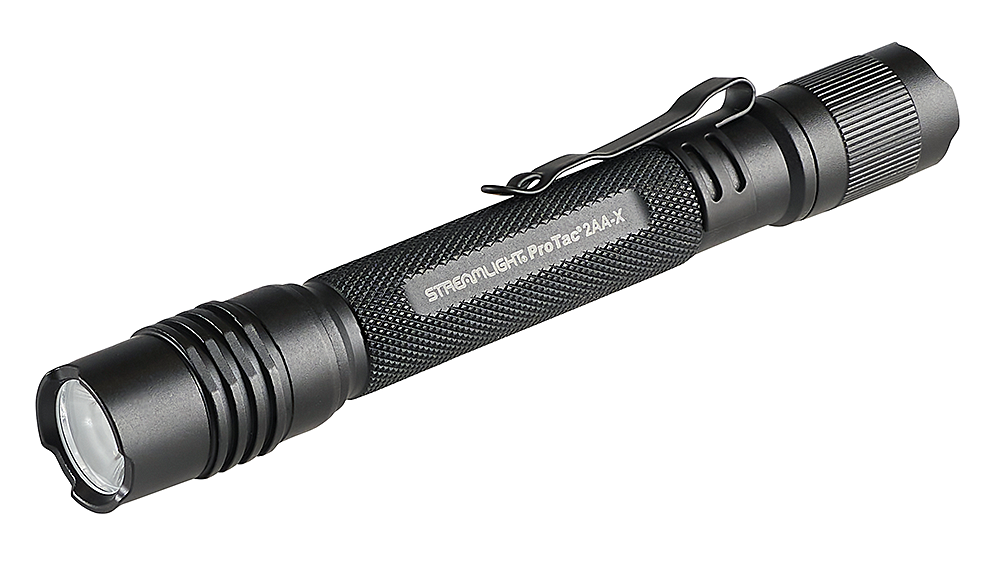
Handheld flashlights are standalone units carried separately from the gun itself, adding to the gun’s versatility but not without limitations. Many options are compact enough to carry in your pocket as part of your EDC kit.
When used in conjunction with a firearm, a number of techniques can be used, such as the Harries Technique, the Rogers Technique, the FBI Modified Technique and several others.
Why Many Concealed Carriers Carry Flashlights
For many responsibly armed citizens, a flashlight is just as important to everyday carry as a wallet, phone or pocketknife. A quality flashlight can help you navigate dark parking lots, locate dropped items, identify suspicious activity and safely move through low-light environments.
More importantly, it gives you the ability to assess a situation without immediately involving your firearm. If someone is approaching you in a dark area, a flashlight allows you to illuminate the individual’s hands and movements while maintaining distance and awareness. In many cases, simply directing a bright beam toward a person communicates that you are alert and paying attention.
Another advantage is versatility. Unlike a weapon-mounted light, a handheld flashlight can be used for countless non-defensive tasks throughout the day. It can also serve as a signaling device, a distraction tool or even an improvised impact weapon in an emergency.
For these reasons, many experienced carriers choose to keep a flashlight on them regardless of whether they also carry a weapon-mounted light.
Handheld Flashlight vs. Weapon-Mounted Lights Pros and Cons
Before making your final decision, it is important to consider the pros and cons of each method. Factors such as ease of use, concealability and certain safety considerations are just a few of the things that may impact your decision. Below is a breakdown of the strengths and weaknesses of each option so you are well-informed when deciding which low-light defense is best.
Advantages of a Handheld Flashlight
- Ideal for searching & investigating without muzzling everything in your path
- Multi-use, able to be utilized in defensive scenarios & everyday tasks
- Provides illumination in a non-threatening manner without possibly pointing your gun at someone
- Often easier to conceal
Disadvantages of a Handheld Flashlight
- Requires one-handed shooting or the use of specialized techniques
- Risk of dropping during high-stress situations
- Training in specialized techniques is a must
- Potentially less stable grip on the gun
Advantages of Weapon Lights
- Allows both hands to remain on the gun
- You don’t have to worry about misplacing it, as it’s always attached to the gun.
- Highly disorienting, as it points where your muzzle points
- Rapid engagement upon identification of the threat, as you’re already pointed at the target
Disadvantages of Weapon Lights
- Muzzle discipline concerns, as your muzzle will be pointing at anything you illuminate (which may or may not be a threat)
- Limited utility outside of defensive use
- Adds bulk to carry handgun setups
- Potential holster compatibility issues
The Safety Concern of Weapon-Mounted Lights
The biggest concern with a weapon-mounted light is simple: The light points where the muzzle points. That can be helpful when a threat has been identified, but it can create real safety concerns if the light is used for general searching.
If you illuminate an unknown person with a weapon light, you may also be pointing a loaded gun at that person. That unknown figure could be an intruder, but it could also be a family member, neighbor or someone who does not present a deadly threat.
This does not mean weapon-mounted lights are bad. It means they need to be used with discipline and purpose. A weapon light should not replace good judgment, safe gun handling or a handheld flashlight.
Which Low-Light Option Is Better for Concealed Carry?
Unfortunately, there is nothing predictable about a threat that presents itself and the manner in which it behaves. For this reason, many people opt to utilize both methods of illumination in order to be fully prepared and more well-rounded in their approach to defending themselves and their loved ones.
While each option offers a unique set of strengths and weaknesses, using both allows them to play off each other, picking up where the other may fall short. Another reason for learning how to safely and effectively use both methods is that, in the unlikely event that one of your lighting methods fails, you have a backup option ready to go.
When both illumination methods are used, you are armed with a layered approach that lets you adjust your response on the fly. Now, you are able to start with a non-threatening light source while retaining full ability to transition to your weapon-mounted light if the situation warrants escalation. As you can see, this combination of methods bridges the gap between defensive and everyday use.
Low-Light Training Matters More Than Gear
In the end, it’s not about arguing with one another about which option is better, as the choice is dependent on several factors, such as the person’s particular situation, how much training he or she has had and much more.
Whichever you choose, it is important to realize that how effective it is will directly correlate with how much time you are willing to put in, as far as training is concerned. Whether you choose a weapon-mounted light, a handheld flashlight or both, your goal remains the same: be able to positively identify what you are looking at in low-light conditions. Invest time in your safety by attending quality training courses, understanding the limitations of you and your gear and coming up with a defensive game plan for the protection of yourself and those you hold dear.