In recent years, the term “assault rifle” has become a focal point of debate in discussions about firearms and gun control. However, it’s important to clarify what constitutes an assault weapon.
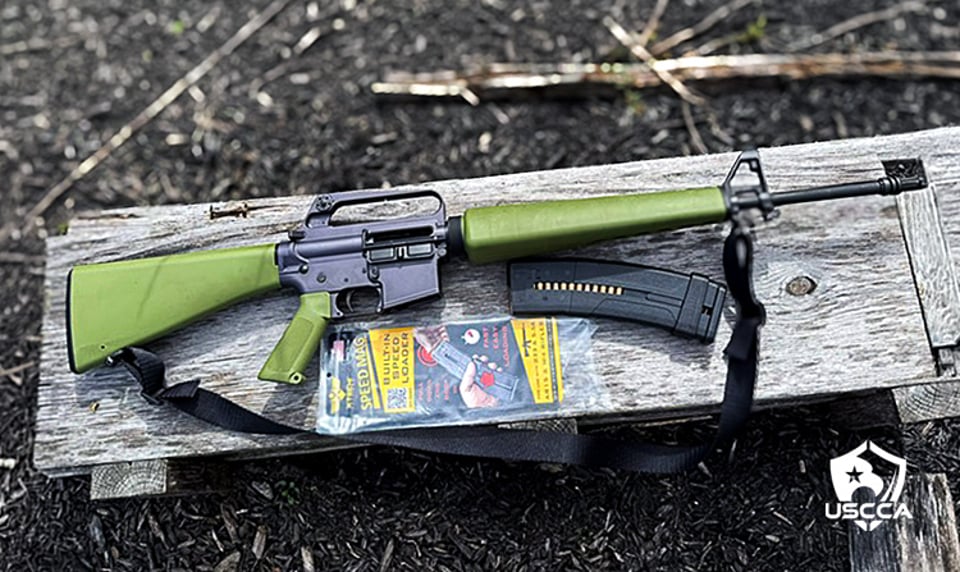
What many deem an assault rifle is more accurately a modern sporting rifle or MSR. While these may look similar to military rifles, they function differently.
MSRs like the AR-15 have been used by law-abiding gun owners since the ’60s.
What Is an “Assault Rifle”?
Assault rifles are often misunderstood and misrepresented in public discourse. Technically speaking, an assault rifle is defined as a fully automatic weapon, which means it can continuously fire rounds as long as the trigger is held down.
These weapons are designed for military use, providing soldiers with the firepower needed in combat situations. Key characteristics include selective fire options (semi-automatic and fully automatic), an intermediate cartridge and a detachable magazine.
The two guns most concerning to the anti-gun crowd are variants of the AR-15 and AK-47 designs. The AR-15 is a cousin to, but not the same as, the U.S. Military’s M16 and M4 rifles.
In both cases, the commercially available rifles are mechanically neutered versions of their military cousins. Military “assault rifles” are capable of firing automatic bursts — more than one round comes out with each press of the trigger — but the civilian versions of those rifles are not.
What Is Considered an Assault Rifle?
In the United States, the legal definition of an assault rifle varies. The term is often confused with “assault weapon,” a category defined by specific features rather than function.
MSRs are not machine guns and are subject to all local, state and federal regulations including the 1968 Gun Control Act and the 1934 National Firearms Act.
Federal and state gun laws differ in their classifications.
Assault Rifle vs. Assault Weapon
The distinction between assault rifles and assault weapons is significant. Assault rifles are fully automatic and used by the military, while assault weapons are semi-automatic firearms that share some aesthetic features with military rifles.
This distinction is often blurred in media and legislative discussions, leading to confusion. The term “assault weapon” is largely a legal and political term used to describe firearms with certain cosmetic features that do not impact their functionality.
In 1994, Congress passed — and President Clinton signed — an “Assault Weapons Ban.” It defined an “assault weapon” as any rifle that could semi-automatically cycle the next bullet after firing, accept a detachable magazine and had some other trait, such as a bracket for the attachment of a bayonet, a hand grip that was separate from the stock or a stock that could fold.
However, none of those characteristics contribute to how “dangerous” or powerful a gun is. This ban expired in 2004.
What Is an Assault Weapon?
Assault weapon classifications are determined by various features such as barrel length, stock type, and muzzle devices. Under the National Firearms Act (NFA), certain modifications and accessories can reclassify a firearm, imposing additional regulations and requirements.
Current gun laws significantly impact the classification and ownership of assault rifles. Federal regulations, including the NFA and ATF regulations, impose strict controls on fully automatic firearms and certain modifications.
State laws vary widely, with some states imposing additional restrictions on semi-automatic firearms categorized as assault weapons.
The Second Amendment and Assault Weapons
The Second Amendment’s protection of the right to bear arms is a cornerstone of American values. While some argue that the Founding Fathers did not envision modern firearms like assault rifles, the fundamental right to self-defense and resistance against tyranny extends to contemporary arms.
Legal challenges and court cases continue to shape the interpretation of the Second Amendment.
Key Takeaways
Understanding the difference between assault rifles and modern sporting rifles is crucial for informed discussions about firearms policy. True assault rifles are fully automatic military weapons, while most civilian firearms are semi-automatic and function very differently.
The ongoing debate highlights the importance of precise terminology and understanding the actual capabilities and legal classifications of different firearm types.
This article is a compilation of previous blog posts authored by Beth Alcazar and Jim Doyle.