The search for more effective handgun self-defense ammunition has been ongoing for years. As more civilians carry firearms for personal protection, and law enforcement continues to seek the most effective equipment, demand for safer and more powerful bullet designs has only increased.
The Evolution of Self-Defense Ammunition
When I entered law enforcement in 1980, most deputies at our Licking County Sheriff’s Office carried blued-steel, cocked-and-locked Colt .45 pistols they had purchased themselves. I learned that, at the time, the options for reliable .45 ACP hollow-point loads were limited.
The early Colt 1911s were designed to run FMJ ball ammunition and little else. Though .45 ball ammo was effective for self-defense, it easily over-penetrates, posing a risk to bystanders.
I once worked a case where a WWII .45 loaded with ball ammo passed completely through the victim’s skull and the exterior and interior walls of the next mobile home before getting lodged in a piece of firewood with no deformation to the slug.
To reliably run hollow-point ammunition through Colt .45’s in the 80s, you had to rely on a gunsmith to have the feed ramp polished and other critical modifications. Thankfully, our department had a capable gunsmith as those modifications were essential to reliably run the 185-grain Winchester Silvertip .45 chosen by the department as our official duty load.
Featuring a large hollow cavity, the Silvertip was able to achieve 1,000 feet per second, inspiring confidence in officers that it would perform when it mattered most.
From Hollow-Points to New Bullet Designs
With the passage of shall-issue concealed carry permit laws, more civilians started carrying handguns for personal defense. Manufacturers responded with a wide range of new firearms designs, ammo choices, carry methods and a myriad of accessories.
Many companies began working toward improving velocity for effectiveness while being easy for all shooters to control.
As a result, we began to see a wave of innovation in 9mm self-defense ammo and other handgun calibers. Some designs proved effective, others less so.
But every so often, a new concept stands out. The Lehigh Defense 90-grain XD-C is one of those designs.
Overview of Lehigh Defense 90-Grain XD-C 9mm
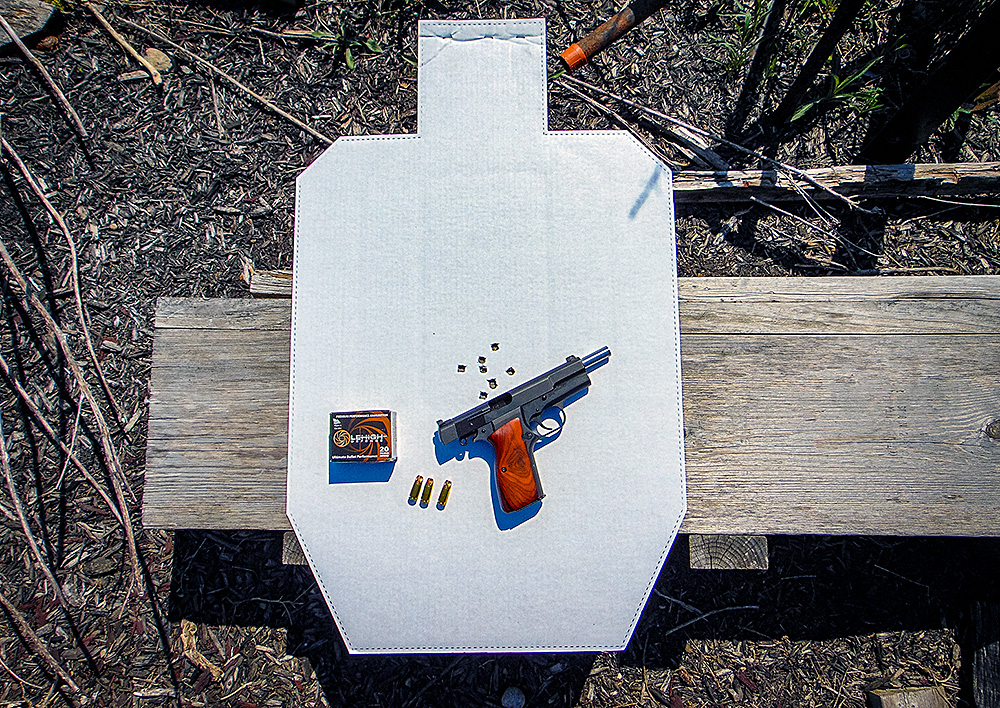
Lehigh Defense Ammunition operates alongside of Wilson Combat, one of the best-known manufacturers of guns and ammo. I’ve worked with Wilson Combat over several years and have never been disappointed.
The Lehigh Defense 90-grain XD-C, with “C” denoting compact pistols, uses a lightweight, solid copper projectile with a four-fluted flat point design in a plain brass case. The flutes meet at the tip, forming a flat “X.”
Muzzle velocity is listed at 1,300 feet per second from a 4-inch barrel.
The combination of a relatively high velocity for a 9mm and the projectile’s unique shape contribute to an effective terminal performance. In my testing, recoil was also slightly reduced as compared to XD loads with heavier slugs.
Build Defensive Shooting Skills With Professional Training
Understanding self-defense ammunition and defensive shooting fundamentals is just the first step. Proper training transforms you from a gun owner into a confident protector.
USCCA’s expert-led classes cover everything from firearm fundamentals and accuracy training to legal considerations and conflict avoidance – giving you the confidence and skills to protect what matters most.
Over 1 million students trained nationwide. Find certified instruction in your area and take the next step in your protector journey.
How Fluted Bullets Work
The key advantage of a solid projectile is that it can’t be plugged up and prevented from expanding. Hollow-points rely on a cavity that opens upon impact, increasing the bullet’s diameter as it moves through a threat’s body.
The expansion is intended to create a larger wound channel, stopping the fight more quickly.
Though ammunition has become more effective and reliable over the years, a hollow-point’s performance is not always guaranteed. Clothing, debris or other barriers can sometimes clog the cavity and prevent proper expansion.
Even a projectile that reliably expands in ballistic testing can fail when real-world variables are introduced.
The Lehigh XD-C takes a different approach. As a solid projectile, it cannot clog or lose structural integrity.
If you take a look at the FMJ slugs lying around the backstop of an outdoor range or even embedded in railroad ties, you’ll notice they are still recognizable as pistol bullets and the caliber can still be identified.
Instead of relying on expansion, the XD-C’s fluted design creates a terminal effect through fluid displacement and directional force. Even if the bullet passes through clothing or other materials before reaching its target, the XD-C is designed to maintain its shape and continue delivering its intended effect as long as it remains nose-forward.
Range Performance: Accuracy, Recoil and Reliability
I am fortunate enough to have a friend with a private range nearby. Though not a formal setup with no fixed shooting bench or pistol rest, it works well for practical 9mm ammo testing.
I used my Springfield Armory SA-35 to evaluate the Lehigh 9mm ammo. It is my most accurate 9mm pistol, and the only modifications are the XS Sights and custom wood grips from House of Grips.
The sights provide excellent visibility in both bright and low-light conditions, and the pistol’s smooth trigger and easy slide operation make it a solid test platform.
I loaded eight rounds of the Lehigh Defense 90-grain XD ammo into the magazine. This is the lightest bullet I’ve run through this pistol to date.
From 25 feet, I fired from a two-handed standing position at a standard cardboard target.
The results were impressive. Recoil was noticeably light in this all-steel pistol, and the eight-shot group measured 2 ½ by 2 ½ inches, with two rounds in one hole.
There were no malfunctions. All rounds fed and ejected smoothly despite their unique profile.
Looking more closely at the target, I noticed distinct marks around each bullet hole at the 12, 3, 6 and 9 o’clock positions. These were created by the flutes and indicated the flutes would play an active role in damaging the clay block in the next stage of testing.
Clay Block Tests: Terminal Performance of the XD-C Bullet
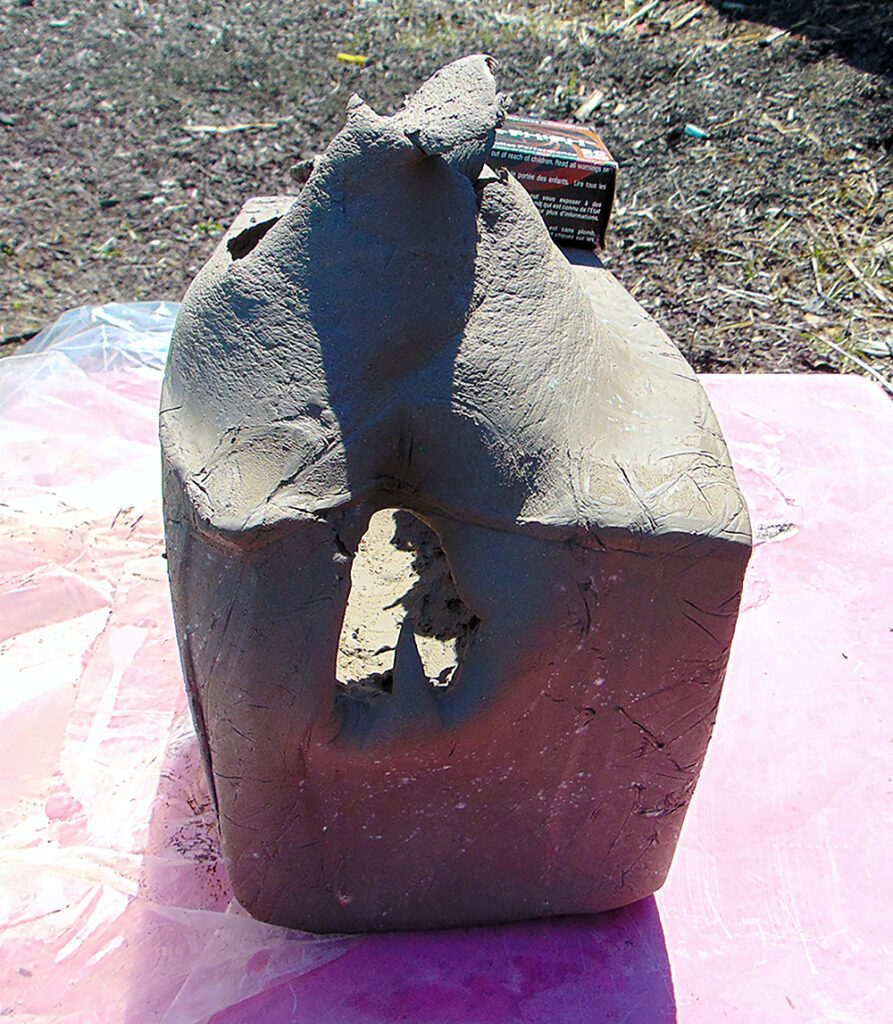
Due to space limitations and our range setup, I use a clay block on a portable patio table for terminal performance testing. I fire from a cross-legged seated position using a two-hand grip.
It’s not a perfect set-up, so sometimes the block hits aren’t dead-on, but it allows for consistent ballistic testing of handgun ammunition.
On this shot, I pulled to the left, striking the block off-center. In this case, it worked in my favor.
The angled impact gave an excellent side viewing port of the damage and eliminated the need to saw the block in half.
The results were unlike any path I’ve seen in previous testing, whether a direct or angled hit. The Lehigh XD-C entered left of center and exited the side, near the rear of the block.
The wound channel measured 10 inches in length, with a maximum cavity width of just over 5 inches.
Viewed from the side, the cavity had a sawtooth-edged appearance, with jagged tears in the clay at the top and bottom of the cavity. The tearing along the path was due to the fluted design, contrasting the more uniform cavity typical of expanding bullets.
The terminal effect of this round is evident, with a design unlike conventional 9mm self-defense ammunition.
Is the Lehigh XD-C Ammo Good for Self-Defense?
The Lehigh Defense 90-grain XD-C 9mm represents a different approach to self-defense ammunition. Instead of relying on expansion like a traditional hollow-point, it uses a solid copper, fluted design to create terminal effect through directional force.
The round performed reliably and accurately in testing, producing a tight group at 25 feet with no malfunctions and generating light recoil. The clay block test created a wide, jagged channel, measuring roughly 10 inches in length and over 5 inches at its widest point.
Lehigh’s XD bullet offers a viable alternative to traditional hollow-point ammunition. It delivers reliable function, manageable recoil and a unique terminal effect that does not depend on expansion.
However, there are a few important considerations. Because the XD-C uses a solid copper projectile, Lehigh Defense warns against firing it at steel targets at distances closer than 50 yards due to ricochet risk.
This ammunition may be legal in jurisdictions where hollow-points are restricted, such as New Jersey, but that should always be confirmed with a qualified firearms attorney before relying on it for concealed carry.
Lehigh Defense offers three XD 9mm bullet weights in addition to lines of Controlled Fracture and Maximum Expansion in a range of calibers. MSRP for the 20-round box of 9mm XD ammo as tested is $31.95.
Lehigh Defense XD-C 9mm stands out as an innovative defensive ammunition design, offering a consistent alternative to traditional expanding rounds. Whether it is the right choice for concealed carry depends on the shooter, but it clearly earns consideration in the 9mm self-defense ammo category.
Take Your Protection to the Next Level
Join over 860,000 USCCA Members for leading self-defense education, training and legal protection benefits.
Sources:
- Lehigh Defense Ammunition: LehighDefense.com
- Springfield Armory: SpringfieldArmory.com