When discussing handguns and ammunition, one topic that often surfaces is the FBI ammunition testing protocol, the standardized system used to evaluate duty ammunition performance. While this standard is central to law enforcement duty loads, civilian self-defense often emphasizes a different balance: prioritizing immediate threat-stopping ability while reducing the risk of overpenetration in homes or public spaces.
Many people have heard of the FBI protocol in passing but aren’t quite sure what it entails or why it carries such weight. In reality, it represents far more than a technical checklist. It’s a system born out of hard lessons and tragic events, designed to ensure ammunition performs reliably when lives are on the line.
What Is the FBI Ammunition Testing Protocol?
The FBI ammunition testing protocol is a standardized method for evaluating handgun ammunition using calibrated 10 percent ballistic gelatin. It requires bullets to penetrate between 12 and 18 inches, even after passing through barriers like heavy clothing, drywall or auto glass. The goal is consistent, reliable penetration to reach vital organs under real-world conditions.
Origins of the FBI Ammunition Testing Protocol

The FBI’s modern testing protocol traces back to the infamous 1986 Miami shootout. Eight agents armed with revolvers, semi-automatic pistols and shotguns faced two heavily armed suspects. Despite multiple hits, one suspect continued fighting because a 9mm bullet failed to penetrate deeply enough to reach his heart. The result was devastating: two agents were killed, and five others were wounded.
For law enforcement, this tragedy underscored the need for ammunition that could defeat barriers and still reach vital organs. Officers often face suspects behind auto glass, sheet metal or interior walls, so their ammunition must be versatile enough to perform under unpredictable conditions. Civilian defenders, however, rarely encounter such barriers. Their priority is stopping a threat quickly without endangering family members or neighbors through excessive penetration.
The FBI’s 12- to 18-Inch Penetration Standard Explained
In response, the FBI developed a protocol using calibrated 10 percent ballistic gelatin to simulate human tissue. After extensive study, they set the acceptable penetration range at 12 to 18 inches.
- Minimum of 12 inches: Ensures bullets can reach vital organs even after passing through clothing, arms or bone.
- Maximum of 18 inches: Reduces the risk of bullets exiting the body and harming bystanders.
For duty ammunition, this range balances officer survival with public safety. Civilian ammunition often leans toward the lower end or slightly below to reduce the chance of rounds traveling through walls or striking unintended targets. In short, the FBI’s standard is designed for the battlefield of the street, while civilian ammunition is tuned for the battlefield of the living room.
The FBI ammunition testing protocol does not attempt to measure “stopping power,” but rather ensures sufficient penetration to reach vital organs from a wide range of angles and conditions.
FBI Ammunition Testing Protocol
To evaluate real-world performance, the FBI ammunition testing protocol measures how handgun rounds perform in calibrated ballistic gelatin both before and after passing through common barriers. Each test is designed to simulate conditions officers may encounter during a shooting.
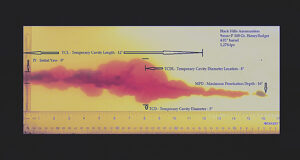
9mm 100 gr HoneyBadger +P bare gelatin test results. Photo by Black Hills Ammunition
FBI Test Events
Under the FBI ammunition testing protocol, handgun ammunition is evaluated across a series of standardized events:
- Bare gelatin: Establishes baseline penetration and expansion in calibrated 10% ballistic gelatin.
- Heavy clothing: Gelatin covered with layered fabric to test whether hollow-points expand reliably after passing through clothing.
- Wallboard (drywall): Simulates interior walls commonly found in homes and buildings.
- Plywood: Represents structural materials such as doors or furniture.
- Sheet metal: Mimics thin metal barriers like vehicle body panels.
- Auto glass: Angled laminated windshield glass designed to test bullet deflection, penetration and integrity.
Each round must still penetrate within the FBI’s 12- to 18-inch standard after passing through these barriers.
Real-World Barriers: Why Testing Is Central to the FBI Ammunition Standard
The FBI’s ammo testing also requires testing against barriers such as heavy clothing, drywall, plywood, sheet metal and auto glass. These replicate the unpredictable conditions officers encounter in the field. Heavy clothing can clog hollow-points, auto glass can deflect rounds and sheet metal simulates car doors.
Civilian ammunition, by contrast, is often designed with the assumption that such barriers are less relevant. Loads marketed for home defense emphasize reliable expansion in soft tissue rather than barrier penetration. A homeowner defending against a break-in is unlikely to need a bullet that can punch through a windshield, but they do need one that will stop an intruder without continuing into the next room.
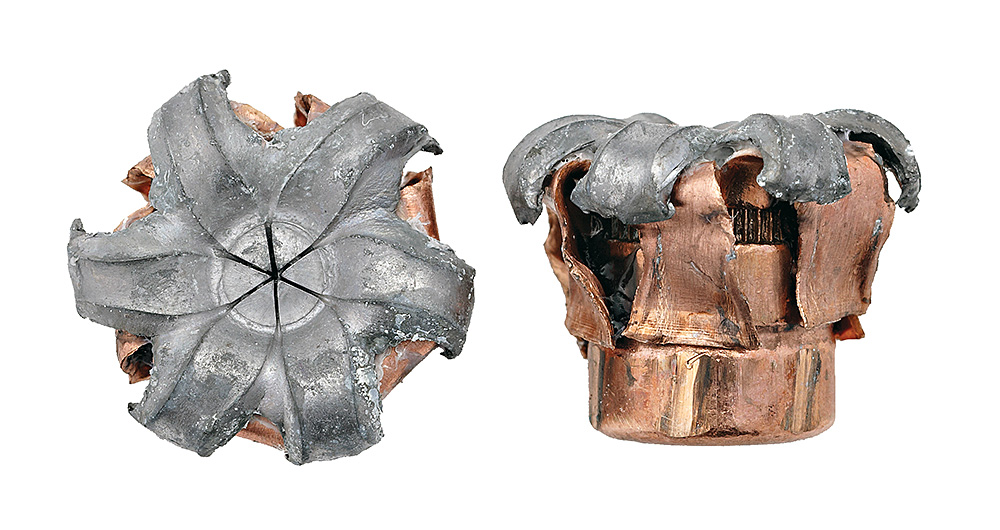
Hornady 9mm +P 135-grain FlexLock Critical-Duty expanded bullet after passing through wallboard. Photo be Hornady.
How FBI Ammunition Testing Shaped Modern Ammunition
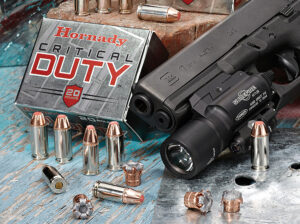
The 12- to 18-inch standard became the benchmark for law enforcement and influenced civilian defensive ammunition as well. Manufacturers redesigned hollow points to expand reliably while still penetrating within this window. Duty loads such as Federal HST, Speer Gold Dot and Hornady Critical Duty are engineered specifically to meet FBI criteria.
Civilian-focused lines, like Hornady Critical Defense, intentionally limit penetration to reduce risks in domestic or public settings. These rounds expand reliably in soft tissue but without the deep penetration required to defeat barriers. This distinction shows how the same science can be tuned for different missions: One for officers who may need to shoot through a car door, and one for civilians who need to stop a threat in a hallway.
Non-Traditional Bullet Designs
Not all modern defensive ammunition relies on hollow-point expansion. Solid copper fluted bullets use machined grooves to redirect tissue and fluid outward, creating consistent wound channels without mushrooming. These non-expanding designs maintain their shape while producing predictable penetration, often within the FBI’s 12- to18-inch window. Examples include the Black Hills HoneyBadger and Lehigh Defense Xtreme Defense.
Another innovative approach is the ARX copper polymer bullet. Instead of relying on expansion or heavy mass, the ARX uses a lightweight copper polymer blend and unique nose geometry to harness fluid dynamics. As the bullet travels through tissue, its fluted design channels material laterally, creating wide wound paths while limiting penetration depth. Its lighter weight also generates less recoil, which can be advantageous for civilian shooters using compact handguns.
For civilians, both solid copper-fluted and copper polymer designs offer consistency. They do not depend on cavities opening up, so performance is less affected by clothing or barriers. Critics caution that some of these rounds can penetrate toward the deeper end of the FBI’s standard, raising concerns about over penetration in confined environments. Supporters counter that their predictable behavior makes them safer than hollow-points that fail to expand and penetrate unpredictably.
Balancing Effectiveness and Safety
The FBI’s penetration window highlights the delicate balance between effectiveness and safety. Too shallow (less than 12 inches) and a bullet risks failing to incapacitate. Too deep (more than 18 inches) and the chance of hitting unintended targets rises. Within 12–18 inches, ammunition provides consistent incapacitation potential while minimizing collateral risk.
 Experts often cite 14 to 16 inches as the “ideal zone.” For civilians, though, the “ideal” may shift slightly downward, reflecting the importance of stopping a threat without endangering neighbors or family members. This is why many civilian-focused loads are designed to expand aggressively and stop closer to the 12-inch mark.
Common Myths About Duty Ammunition
Several myths persist about duty ammunition and its relevance to civilian defense. One common belief is that hollow-points always prevent overpenetration. In reality, expansion isn’t guaranteed. Barriers like auto glass or heavy clothing can clog cavities, causing bullets to behave like full metal jackets. However, many modern hollow-point designs have been engineered to address this issue through features such as polymer inserts or improved cavity geometry.
Another assumption is that any penetration within the FBI’s 12- to 18-inch range is ideal. While acceptable, the ideal zone varies depending on whether the round is intended for duty or civilian defense. For officers, deeper penetration may be necessary. For civilians, shallower penetration may be safer.
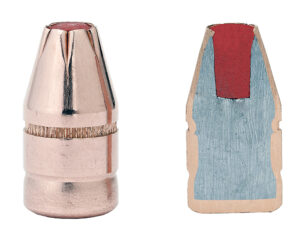
Hornady 9mm 135-grain FlexLock Critical-Duty sectioned bullet, adopted by FBI.
Why FBI Ammo Standards Don’t Always Translate to Civilian Self-Defense
While the FBI protocol sets the gold standard for duty ammunition, civilian self-defense often involves different priorities. In homes, apartments or public spaces, the danger of a bullet passing through an assailant and continuing into walls or bystanders can outweigh the need for barrier penetration.
Civilian-focused ammunition is designed with this reality in mind. Loads tailored for home defense emphasize reliable expansion in soft tissue while intentionally limiting penetration compared to FBI standard duty rounds. By staying closer to the lower end of the FBI’s acceptable range (or slightly below), these rounds minimize the chance of bullets exiting the body.
Hornady’s Critical Defense line is one example, using a polymer insert to promote expansion even through fabric. This stands in contrast to duty ammunition such as Critical Duty, which also employs a polymer insert but is optimized for barrier penetration and FBI protocol compliance. Together, these approaches highlight the different missions of defensive ammunition. Duty loads must be versatile enough to defeat barriers, while civilian loads often prioritize safety in confined environments.
Wrapping It Up
The FBI’s 12- to 18-inch rule isn’t just a number pulled out of thin air. It is the product of tragedy, science and rigorous testing, designed to ensure duty ammunition can stop determined attackers even through barriers while minimizing the risk of overpenetration. For law enforcement, this balance of power and safety is essential.
Civilian self-defense, however, often calls for a slightly different balance. In homes, apartments or crowded public spaces, the danger of a bullet passing through an assailant and striking an unintended target can outweigh the need for barrier penetration. Civilian-focused designs prioritize immediate threat-stopping ability while reducing the risk of collateral harm in everyday defensive scenarios.
Taken together, both approaches reflect the same guiding principle: effectiveness with responsibility. Whether it is the FBI’s rigorous 12- to 18-inch protocol supported by duty ammunition or civilian-focused rounds tuned for safer penetration, modern ammunition design is about giving defenders the best chance to protect lives without creating unnecessary danger for others.
Sources
Hornady: Hornady.com
Black Hills Ammunition: Black-Hills.com