The vehicles closed around her like a pack of predators in the night. Milli Stanford-Miles jerked her tiny loaner Mini Cooper hard left and then back right, tires shrieking as she fought for space.
Just feet behind loomed the white Lexus sedan that had smashed into her bumper minutes earlier. Its headlights flooded her mirrors, casting light across the shadowy figures packed into the cars flanking her: people she didn’t know; faces she couldn’t see.
Stanford-Miles was alone, outnumbered, trapped and terrified she might not make it out alive. Her only hope — the guard station for her gated community — was a block ahead. But as it finally came into view, panic surged.
Both the visitor and resident lanes were blocked. She had no way to get in.
She swung the gray Mini toward the gate and braked hard, yelling through the open driver’s-side window: “People are following me! Don’t let them in!” But before the guard could respond, a figure lunged from the darkness.
Hands shot through her open window, grasping and clawing for the door handle. Pressed up against the tiny car, the torso filled the opening. The crushing closeness left no doubt: There was nowhere left to run.
Cornered and breathless, Stanford-Miles reached beneath her leg for the Glock 17, her last resort. She fired a single shot, the report echoing through the still night.
“I was just in survival mode,” she recalled, her voice trembling at the memory of the moment that changed her life forever.
On a quiet October night in Compton, California, 67-year-old caregiver Milli Stanford-Miles found herself outnumbered, boxed in by unknown vehicles and fearing for her life. The moment would change everything.
Read the full story in Concealed Carry Magazine!
This is a shortened version of Part 1 of Milli’s true story of self-defense. To read the full story and Part 2: “Judged by 12. Twice.” sign in to your Member website.
A Normal Night Turns Terrifying
Milli Stanford-Miles, a full-time caregiver and part-time real estate broker, had cared for an elderly couple in Beverlywood nearly every day for two years. The couple’s son had encouraged her to bring her firearm to their home to better protect his parents.
A Texas native and U.S. Army veteran’s daughter, Stanford-Miles had been around firearms her entire life. After decades in Los Angeles, she’d recently completed California’s Carry Concealed Weapon course, when she also became an Elite Member of the USCCA, and was awaiting her permit.
When she left around 10 p.m. on October 6, 2022, to drop off a check for space rent, she responsibly stored her Glock 17 in a locked case in the backseat and the magazine in the glovebox, per state law.
While driving a loaner Mini Cooper, a white Lexus suddenly swerved toward her on Highway 91. She dodged the vehicle, crossing multiple lanes to avoid a crash and sending everything in the car flying.
Moments later, the Lexus rear-ended her, sending her fishtailing across the freeway. This was no accident.
A Chilling Pursuit
She’d heard of other bump-and-rob crimes in the area, a tactic in which an attacker intentionally causes a minor crash, often a light rear-end, to lure the victim out of the car. Once outside, the driver may be robbed, carjacked or worse.
As Stanford-Miles pulled to the side of a nearby off-ramp under a streetlight to search for her phone and call the police, the Lexus returned, reversing up the shoulder. It stopped just behind her.
If she’d had her phone, the police would’ve already been on the line. But it was still missing somewhere in the car. And now time for searching was over. She didn’t wait.
“I got the gun case off the floor. And I got the magazine out of the glove compartment,” she said. “I took the gun out, popped the magazine in and I racked it. I chambered a bullet and put [the gun] under my right leg.”
The Lexus followed as she continued driving, then suddenly surged up alongside her on the passenger side. She threw the Mini Cooper into reverse and parked in a location that gave her two options: continue forward on the road or head back to the freeway.
The Lexus pulled next to her.
“You hit my car,” he said.
“No, you hit my car,” Stanford-Miles replied. “I’m hit in the back.”
His voice sharpened.
“You hit my car!”
She started to respond, but then he said something that stopped her cold.
“That’s OK. I’ve got all my n****** coming.”
There was a beat of stunned silence.
“I freaked out,” she recalled. “What do you mean you’ve got all of your n****** coming?”
The two yelled over each other for several seconds before a noticeably shaken Stanford-Miles suggested they move to a lighted area and call the police.
“Go. I’ll follow you,” the man said.
Stanford-Miles figured the safest option was the guard gate at her residence, approximately 3 miles away. The well-lit and video-surveilled gate is manned 24 hours a day.
Nowhere to Run
She was nearly home when a red vehicle pulled up on her left, driving against traffic on the wrong side of the road, and a silver car closed in on her right. The Lexus was still behind her. She was boxed in.
Panic surged. Stanford-Miles swerved and darted, managing to break away toward the community entrance. But when she arrived, both visitor and resident lanes were blocked by unmoving vehicles. No way in.
“Hurry up, baby! I have to get up the hill!” she shouted at the guard.
But as the words left her mouth, the red, silver and white vehicles pulled in behind and around her — boxing her in on all sides. There was nowhere to go.
“People are following me! Don’t let them in!” she yelled.
Before the guard could react, a figure rushed the Mini Cooper. He reached through the open window, and Stanford-Miles thought she was going to be dragged out.
From under her leg, she drew the Glock 17 and fired one round. The man staggered backward.
After the Shot
Stanford-Miles raced up the hill and parked across from her house. She ran to her neighbor John Youngblood’s door, gun in hand.
“I shot somebody down the hill,” she told him. “I need you to call the police.”
Still shaken, she returned to the Mini to find her phone. Once located, she made a 911 call herself, carefully giving her address and space number.
Then, a second call: the Critical Response Team. Less than two minutes later, a USCCA attorney called her directly and offered to meet her to help with the police.
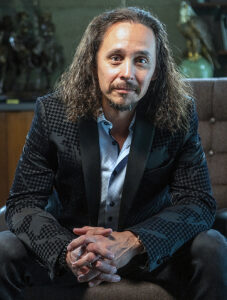 Shortly after, law enforcement arrived with guns drawn. The attorney, already at the gate, instructed her not to speak with officers until he was present. Once he confirmed her firearm was no longer on her person, he escorted her outside, where she was placed in handcuffs.
For the first time in her life, Milli Stanford-Miles was under arrest.
Legal Aftermath
Booked at the Los Angeles County Sheriff’s Department, Stanford-Miles was processed and placed in a cold cell. A hot sandwich offered as a meal became a makeshift foot warmer. Hours passed.
Detectives asked to interview her the next morning. She declined, waiting until her attorney was present. A short time later, her $50,000 bail was through her USCCA membership benefits. She was released by 8:30 a.m.
Later, she learned that the man she had shot was a local teenager. The bullet struck his abdomen but missed vital organs. He was expected to make a full recovery.
Stanford-Miles was charged with:
- Felony assault with a deadly weapon using a semi-automatic firearm
- Misdemeanor hit and run (property damage)
- Misdemeanor possession of a concealed firearm in a vehicle
If convicted, she faced up to 22 years in prison.
From Survival to Courtroom
In the weeks after Stanford-Miles’ release, she retained Dave McDermott, a seasoned criminal defense attorney from Chicago with a long track record of defending USCCA Members in self-defense cases. He would become her shield, her strategist and, in many ways, her anchor.
“These are the events that can change your life indefinitely forever,” McDermott said. “These are the types of things and situations that can end your life, that can take years away that you would otherwise have.”
In the 22-month battle that followed, Stanford-Miles came to believe that truth alone wouldn’t be enough to protect her. In California, she thought, simply owning a gun made you a suspect — and prosecutors weren’t seeking justice, just wins.
Through it all, Stanford-Miles leaned on her faith. The weight of her situation was constant and unrelenting — but so was the sense that God had placed the right people in her path.
Take Your Protection to the Next Level
Milli Stanford-Miles took every step to follow the law. She:
- Transported her firearm legally under California law
- Avoided confrontation multiple times
- Attempted to flee to a place of safety
- Used her firearm only when she was physically attacked
Her training — including countless hours of Online USCCA® Training — had prepared her for that moment. Still, she never imagined needing to use her firearm.
She fired one round. She called 911. She cooperated with her attorney. And through the support of her USCCA Membership, she had legal protection when it mattered most.