With the passage of the One Big Beautiful Bill, it’s become easier than ever for shooters to enter the suppressor world. While the purchase process has become far more accessible, choosing the suppressor is only part of the equation.
The suppressor is only as effective as the ammunition you feed it. The right ammunition can reduce noise, improve reliability and keep your suppressor cleaner. Though the wrong ammo may still function, the best ammo for suppressors will aid in the goal of a quiet 9mm.
Whether your goal is preserving your hearing, reducing noise on the range or making your firearm more pleasant to shoot, choosing the right ammunition is just as important as choosing the right suppressor.
Subsonic ammunition for suppressor use isn’t a difficult subject, but it is important to understand when choosing ammunition to use with a suppressor.
What Is Subsonic Ammunition?
To avoid confusion, the basic difference between subsonic and supersonic loads is that subsonic ammunition will not break the speed of sound, whereas supersonic loads will.
Most of us have heard, and even felt, the crack of a jet breaking the sound barrier. It can even rattle windows. A similar effect occurs when a bullet exceeds the speed of sound.
The sound barrier is largely accepted to break at 761 mph. We hear the supersonic crack of a bullet at 1,125 feet per second or greater. That sound is created by shock waves pushing air molecules ahead of the projectile, and the crack actually occurs slightly ahead of the bullet as it travels.
Subsonic ammunition simply stays below that speed. Because it never breaks the sound barrier, the supersonic crack is absent.
Do You Need Subsonic Ammo for a Suppressor?
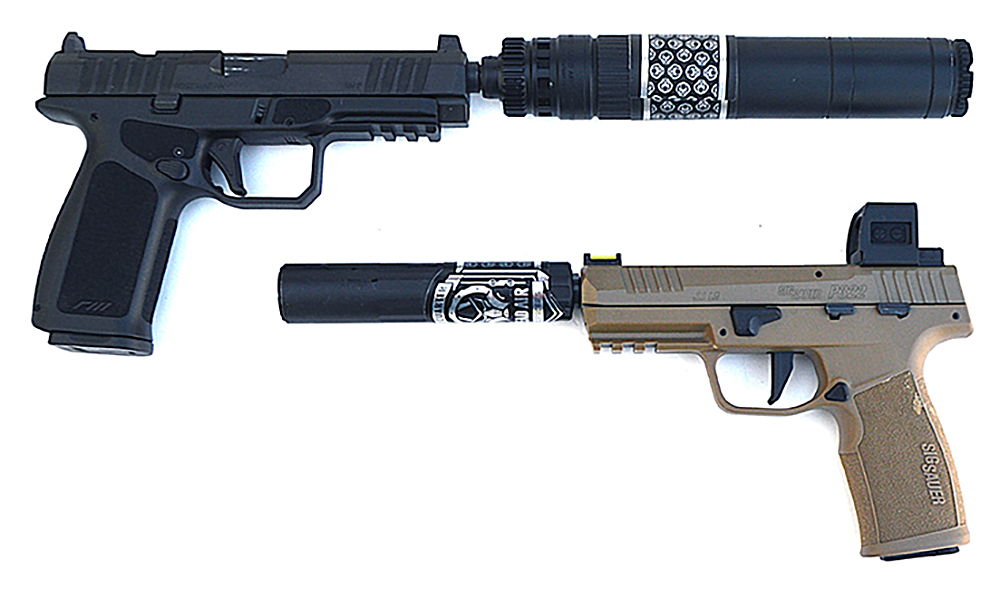
The short answer is no. A suppressor will function with either subsonic or supersonic ammunition. However, subsonic ammunition is the better choice for maximum sound reduction.
The primary reason most of us use a suppressor is to preserve our hearing and reduce noise levels. Ammunition selection plays a major role in accomplishing that goal. Even with a suppressor, a supersonic bullet still produces the unmistakable crack.
Supersonic ammunition may certainly be fired through a suppressor-equipped firearm and will function properly. The tradeoff is simple: the suppressor can reduce muzzle blast, but it cannot eliminate the supersonic crack. If your goal is the quietest possible shooting experience, subsonic ammunition is the better choice.
Once you’ve decided to use subsonic ammunition, the next question is bullet weight. This is where many new suppressor owners become confused.
Why Heavy Bullets Work Better With Suppressors
The 9mm thrives with higher-velocity loads. But you don’t have to sacrifice performance with subsonic ammunition. A subsonic load doesn’t mean it’s a weak load.
Heavyweight 9mm loads were originally developed to provide accurate performance in suppressed firearms at distances out to 100 yards. They remain stable, accurate and well suited to both competition and long-range pistol shooting. They also function perfectly well in unsuppressed firearms.
A typical 9mm training load launches a 115-grain bullet at roughly 1,150 feet per second and produces about 338 foot-pounds of energy. By comparison, a 147-grain bullet traveling at 950 feet per second generates approximately 295 foot-pounds of energy, while many 147-grain defensive loads run closer to 980 feet per second and produce around 315 foot-pounds. Those are hardly powder-puff loads.
Why 147- and 150-Grain Loads Work Better
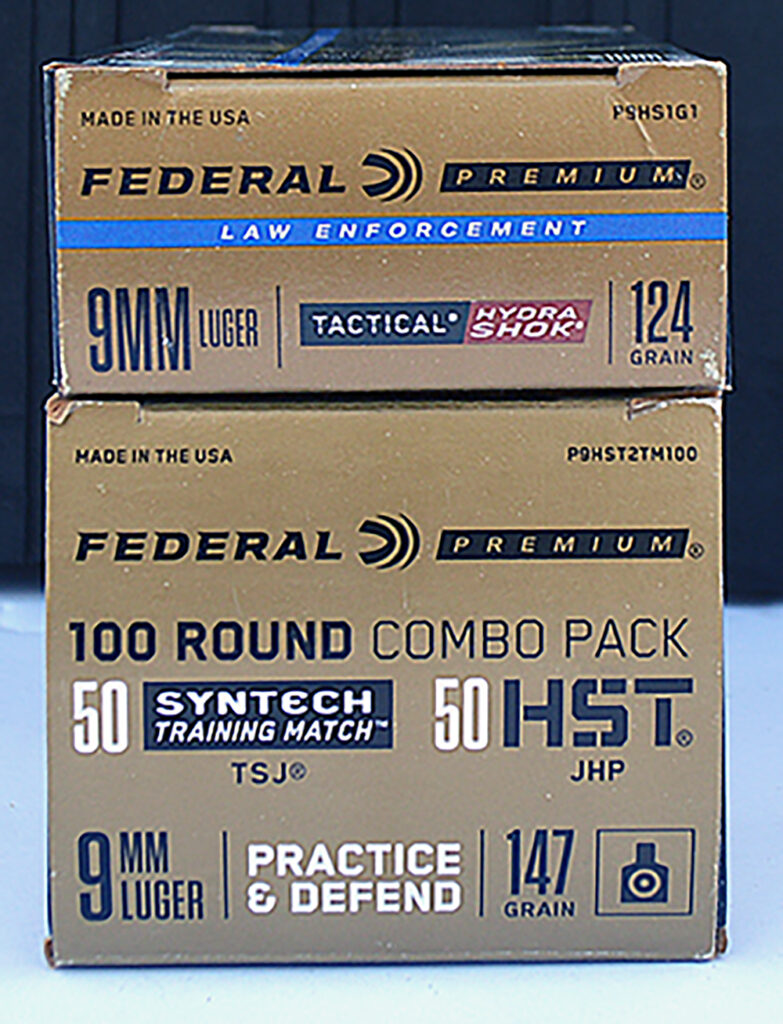
Many experienced shooters prefer 147-grain defensive ammunition like the Federal HST because it offers an excellent balance of penetration and expansion. If you prefer lighter, faster 115- or 124-grain loads, moving to subsonic ammunition will be a compromise, but the heavier 147-grain loads remain highly effective.
Heavier bullets are more popular in suppressed 9mm shooting as they offer more reliability. A 124-grain bullet at 1,000 feet per second simply will not produce enough momentum to cycle a semi-automatic pistol reliably. The heavier 147- or 150-grain loads maintain the momentum needed for dependable function.
The balance of bullet weight and velocity is often referred to as the power factor.
Choosing Suppressor Ammo by Caliber
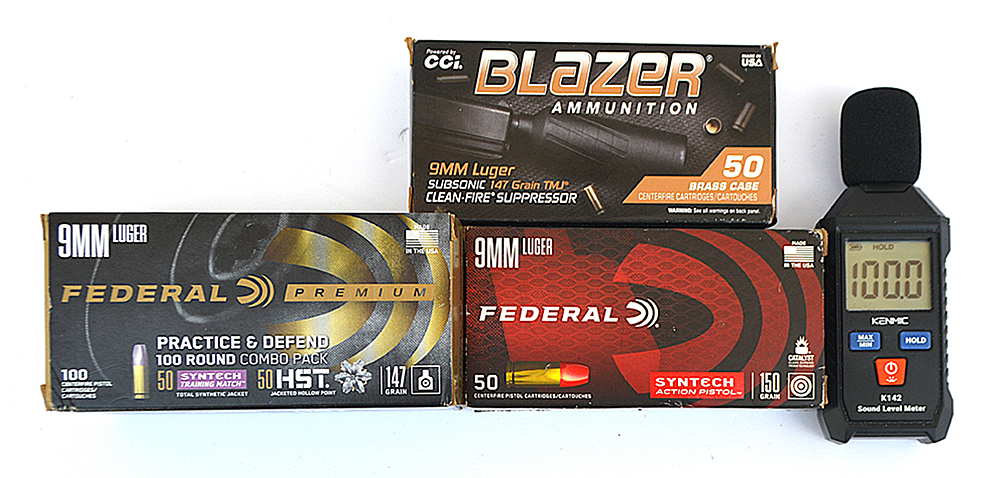
The 9mm is by far the most popular handgun caliber in America and is an excellent choice for suppressed shooting. The .45 ACP is naturally subsonic with almost every load, so ammunition selection is less of a concern. The 10mm would demand more research, though, as many loads exceed the speed of sound.
To keep practice inexpensive, the .22 Long Rifle is another choice as a suppressor caliber.
Regardless of caliber, the same basic rules apply as when selecting any quality load. Reliability should come first. The cartridge should feature good primer and case mouth seal, referred to as cartridge integrity. A full-powder burn is equally important to reduce muzzle flash, minimize powder ash and unburned residue. A cleaner-burning powder helps keep both the firearm and suppressor cleaner.
Best 9mm Suppressor Ammo
Because of how clean it burns while delivering reliability and accuracy, the Federal 150-grain Syntech is my favorite suppressor-grade 9mm loading. Other practice loads that have produced excellent results include:
- Blazer Brass 147-grain FMJ
- Remington 147-grain FMJ
- Speer Lawman 147-grain FMJ
Each is subsonic, reliable and accurate.
 One benefit of using a suppressor is reduced muzzle report and improved control. For many shooters, that makes practice more enjoyable and less fatiguing.
If your suppressed 9mm firearm is for home defense, ammunition selection will differ. Expansion and penetration will be just as important as reliability and function. Thankfully, the major ammo manufacturers offer excellent defensive loads in subsonic bullet weights. Among my favorites are:
- Federal 147-grain HST
- Hornady 147-grain XTP Subsonic
- Speer Gold Dot 147-grain
- Winchester 147-grain SXT
These options provide homeowners effective defense while helping reduce the hearing damage that could result from firing a handgun indoors.
I tested several popular loads in my preferred firearms. Results were excellent. These 9mm subsonic loads performed reliably with good accuracy and a clean powder burn.
9mm Suppressor Ammo Test Results
| Firearm | Load | Velocity | DCB |
| Glock 19 | Blazer Brass 147-grain | 1,001 feet per second | 130 |
| Glock 19 | Federal 150-grain Syntech | 860 feet per second | 125 |
| Glock 19 | Federal 147-grain HST | 980 feet per second | 127 |
| Ruger Carbine | Federal 147-grain HST | 999 feet per second | 130 |
DCB rating and velocity averaged over several test sessions.
While the primary focus here was handgun ammunition, many suppressor owners also shoot pistol-caliber carbines. A 9mm carbine and handgun often perform well with the same ammunition. Likewise, many popular PDW-style 9mm pistols do not generate significantly higher velocities than standard handguns, so heavy subsonic loads remain an excellent choice.
Best .22 LR Suppressor Ammo
Like 9mm, the .22 Long Rifle (LR) is used in both rifles and handguns. However, rimfire ammunition requires more caution when selecting loads for self-defense.
Many shooters use semi-automatic firearms for practice. Loads such as the CCI Suppressor are designed primarily for bolt-action and lever-action rifles. They may function in a semi-automatic firearm but often require manually cycling each round.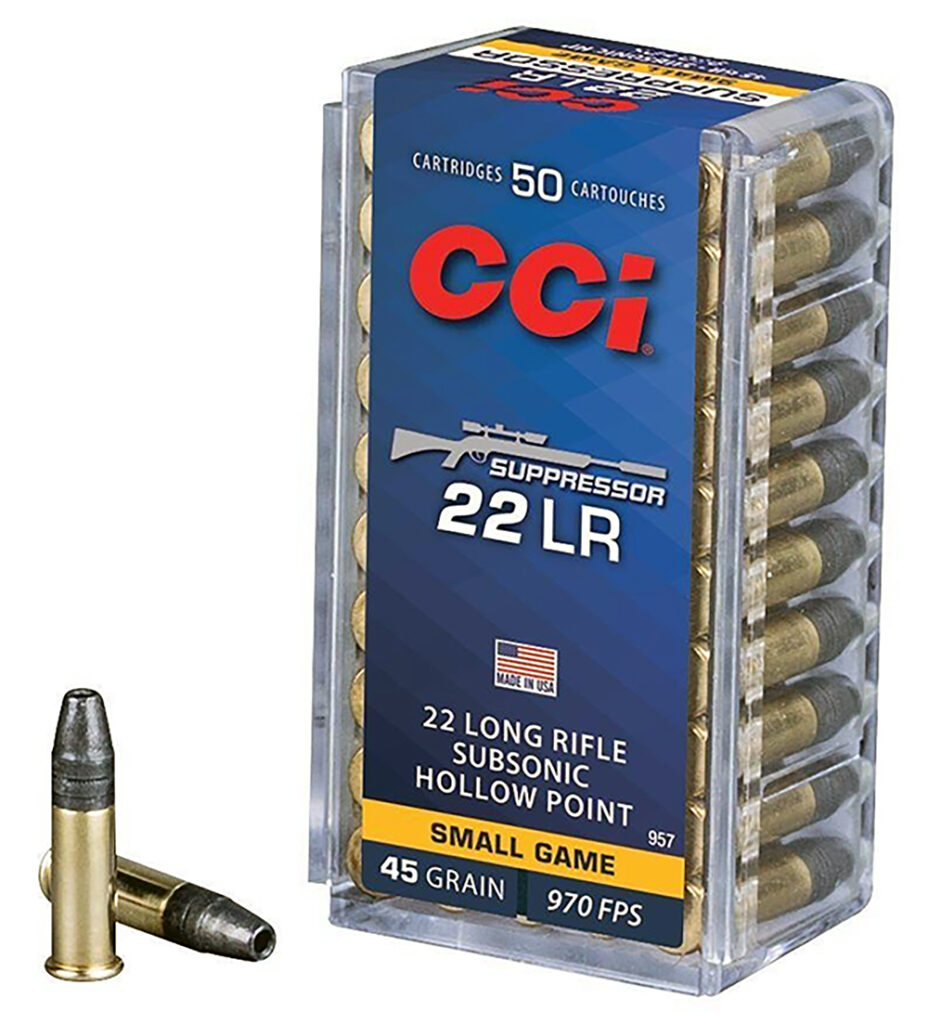
The CCI Quiet .22 Semi-Auto uses a heavier 45-grain bullet that generates the momentum needed for reliable cycling in self-loading firearms. Understanding the differences makes choosing the right ammo easier.
Rimfire ammunition does require more maintenance than centerfire loads. Most .22 LR bullets are lubricated to prevent leading, leaving residue that accumulates inside both the firearm and suppressor. Combined with the relatively slow-burning powders common in rimfire ammunition, this means .22 suppressors require more frequent cleaning.
For that reason, I prefer a low-maintenance suppressor such as the Dead Air Mask. Paired with quality ammunition like the CCI Quiet .22 Semi-Auto, it has proven both reliable and accurate.
I tested several popular .22 Long Rifle loads in both handguns and rifles and found that standard-velocity ammunition often represents an excellent value. Because these loads remain below the speed of sound, they are considerably quieter than high-velocity ammunition.
.22 LR Suppressor Ammunition Results
| Load | DCB Handgun | DCB Rifle |
| CCI Standard Velocity | 116 | 114 |
| CCI Quiet 45-grain | 115 | 110 |
| CCI Suppressor | 111 | 114 |
| CCI Suppressor Hollow-Point | 112 | 114 |
| CCI Mini Mag | — | 118 |
Practical Considerations
Subsonic ammunition offers excellent performance, but it is important to understand its limitations.
If you are using a carbine or shooting a handgun at longer distances, remember that subsonic ammunition does not shoot as flat as high-velocity loads. The heavier, slower-moving bullet drops more quickly and should be accounted for when zeroing your firearm.
For example, a suppressed .22 is an outstanding choice for small-game hunting. At typical hunting distances of about 25 yards, bullet drop is easily managed with a proper zero. Likewise, a suppressed 9mm carbine used in competition should be zeroed specifically for the ammunition you intend to shoot.
Choosing suppressor ammunition is not complicated, but it does require some thought. Match the ammunition to both your firearm and your intended use, and don’t overlook the importance of reliability, clean-burning powder and accuracy. Take the time to study your options, choose quality ammunition and confirm its performance in your firearm. Subsonic ammunition is an excellent resource that performs exceptionally well in quality suppressed firearms.
FAQs
Do you need subsonic ammo for a suppressor?
No. A suppressor can function with supersonic ammunition, but the bullet will still produce a sonic crack. Subsonic ammunition provides greater overall sound reduction.
What is the best bullet weight for suppressed 9mm?
Heavier 147- and 150-grain loads because they can remain subsonic while maintaining the momentum needed to cycle a semiautomatic firearm reliably.
Is 147-grain 9mm always subsonic?
The tested loads remained below the speed of sound, but actual velocity depends on the ammunition and firearm. Shooters should confirm performance with their chosen load and firearm.
Can regular ammunition be fired through a suppressor?
Yes. Supersonic ammunition may be fired through a suppressor-equipped firearm and should function properly, but the suppressor cannot eliminate the bullet’s sonic crack.
What is the best 9mm suppressor ammo for practice?
The author’s preferred practice load is Federal 150-grain Syntech. Good results were also achieved with Blazer Brass, Remington and Speer Lawman 147-grain FMJ loads.
What is the best suppressed 9mm ammo for home defense?
Consider Federal 147-grain HST, Hornady 147-grain XTP Subsonic, Speer Gold Dot 147-grain and Winchester 147-grain SXT.
What is the best .22 LR ammo for a suppressor?
The author found reliable and accurate performance from CCI Quiet .22 Semi-Auto. Standard-velocity loads may also remain subsonic, though firearm reliability varies by load.
Does subsonic ammunition require a different zero?
It may. Heavier, slower bullets drop more quickly than high-velocity ammunition, particularly at longer distances. Carbines and hunting firearms should be zeroed with the load that will actually be used.