Taurus recently introduced a .380 ACP version of its GX4 pistol. The obvious question is why chamber a pistol of this size in .380 ACP when compact 9mm handguns are readily available?
There have been two trends in .380 ACP handguns during the past decade. One is to make the handgun as small as possible. The Smith & Wesson Bodyguard 2.0 and Glock 42 are examples. The other is to chamber pistols originally designed around the 9mm in .380 ACP. The SIG P365 .380 is one example.
The reason is recoil. While experienced shooters may not find a subcompact 9mm particularly difficult to control, a novice may. The .380 ACP offers less recoil energy in a pistol with a neat, compact platform. For those with less physical strength or shooters seeking a more comfortable shooting experience, a subcompact .380 ACP has merit.
Taurus did not have to design a new .380 ACP handgun from the drawing board. The company simply adjusted some components of the GX4 platform, such as the chamber, recoil spring and striker spring, to accommodate the .380 ACP cartridge.
I thoroughly tested the GX4 .380 to see how well it worked in practice.
Why Choose the Taurus GX4 in .380 ACP?
Taurus didn’t design the GX4 to be the smallest .380 but as an answer to the problem of recoil. It gives the shooter a larger handgun that should be easier to control than a similarly sized 9mm.
Of course, there’s a tradeoff: The .380 ACP isn’t as powerful as the 9mm Luger. The need for a powerful and reliable subcompact handgun led to guns like the Smith & Wesson Shield and Glock 43X. But recoil from a 9mm can be snappy.
Some newer 9mm handguns, like the SIG Sauer P365 TacOps and S&W Shield X, address the problem with longer slides and grips.
the design of the S&W Shield, Glock 43X, and other 9mm handguns. In response to this snappy recoil there have been improvements of the original subcompact-type 9 mm handguns with an elongated slide and grip such as the SIG P365 TACOPs and S&W Shield X.
Another solution is to chamber a similar-size pistol for a cartridge with less recoil energy. That’s where the GX4 .380 fits. Some shooters simply want a good .380 ACP pistol and look at the caliber first and the handgun second.
The GX4 competes with pistols such as the Beretta 84, a purpose-designed full-size .380, and the SIG P365 .380. The GX4 is more affordable than either. During this evaluation, I found the pistol priced from about $285 to $340. Shop around and remember to consider shipping and FFL fees when comparing prices.
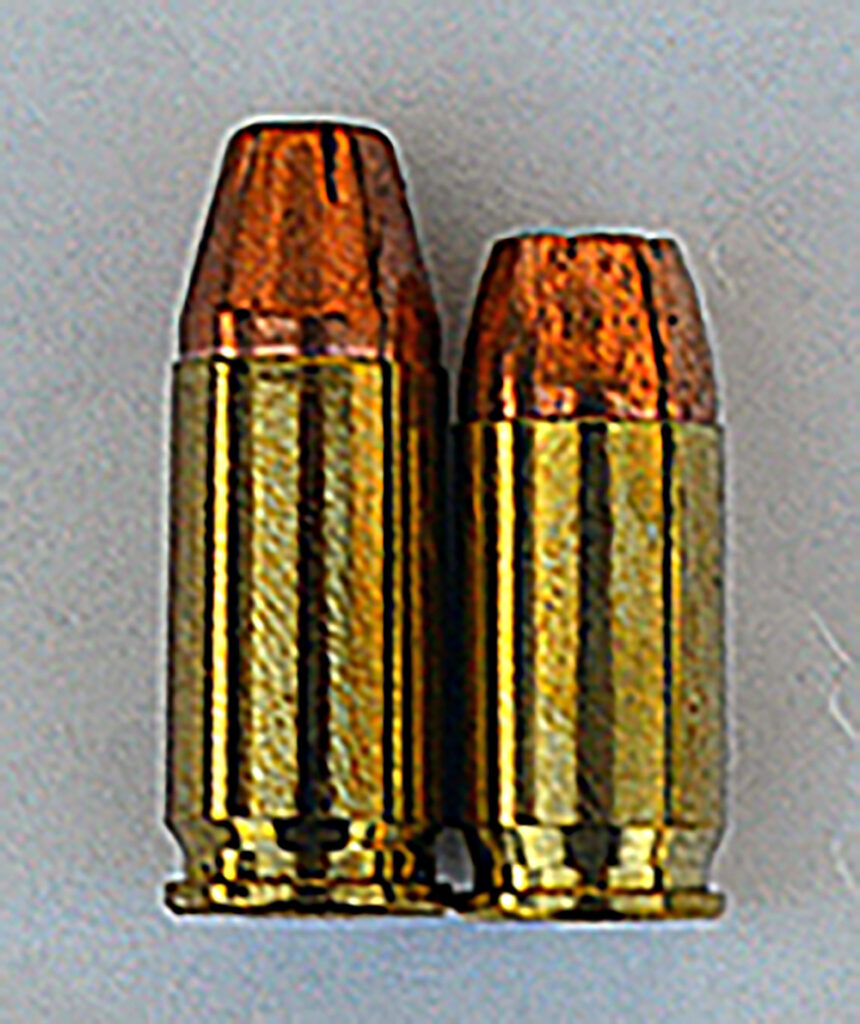 Taurus GX4 .380 vs. GX4 9mm: What’s Different?
Taurus did not have to design a new .380 ACP handgun from the drawing board. The company simply adjusted some components of the GX4 platform, such as the chamber, recoil spring and striker spring, to accommodate the .380 ACP cartridge.
The magazine also features a thin metal spacer that allows it to accommodate the shorter .380 ACP cartridge.
Taurus GX4 Specifications
Caliber: .380 ACP
Height: 5.16 inches (without optic)
Overall length: 6.56 inches
Width: 1.0 inches
Barrel length: 3.7 inches
Weight unloaded: 21 ounces
Magazine capacity: 15 rounds (two magazines supplied)
Trigger: Single-action, striker-fired
Taurus GX4 Features and Ergonomics
The polymer frame of the GX4 .380 is black, and the stainless-steel slide features a durable DLC finish. Forward cocking serrations provide another surface for manipulating the slide, while a light rail on the dust cover accommodates compact weapon lights.
I like the grip a great deal. It fits my average-sized hands well and offers a good balance of adhesion and abrasion. Two additional grip inserts are included and should benefit shooters with larger hands.
The magazine catch is positive in operation. An unobtrusive slide lock is fast enough with practice.
Disassembly is unusual but functional. A flat, slotted control on the right side of the frame is turned to release the slide. The recoil spring assembly is designed to control recoil and ensure function and did a fine job of doing so.
Sights
Surprisingly, the rear sight is fully adjustable. A front post features a white insert. XS sights designed for the Glock 42, 43 and 48 fit also fit the GX4 .380 slide.
Trigger
The single-action trigger is not quite flat, but close enough. Trigger pull measured 6 pounds, 11 ounces, with a clean break and sharp reset. A sharp reset is as much of an aid in speed shooting as a crisp trigger action.
Safety Features
The GX4 uses a blade-type trigger safety along with a striker block that prevents the pistol from firing until the trigger is fully pressed. A lever-type loaded-chamber indicator provides both a tactile and visual indication of the pistol’s condition.
The pistol also features a magazine disconnect. If the magazine isn’t inserted, the trigger action is locked.
True safety, of course, is between the ears.
Range Performance: Shooting the Taurus GX4 .380
Let’s look at power factor for a moment. This is a figure obtained by multiplying bullet weight by velocity and dividing by 1,000. While there are numerous loads with different bullet weights and velocities, the following examples give us an idea of what to expect in recoil.
| Caliber | Weight | Velocity | Power Factor |
| .380 ACP | 90 grains | 900 feet per second | 81 |
| 9mm Luger | 115 grains | 1,100 feet per second | 126.5 |
| .38 Special | 158 grains | 850 feet per second | 134.3 |
Handgun weight also plays a part in felt recoil. Two pistols of similar weight will generally produce less recoil when chambered in .380 ACP rather than 9mm Luger.
While the 9mm may be bearable for some shooters, others find the recoil snappy. During long practice sessions of 100 cartridges or more, recoil is cumulative. This is one reason many shooters use a full-sized 9mm for training but a compact handgun for concealed carry.
The 9mm kicks much less than a .45 ACP, .40 S&W or 10mm handgun. By the same token, occasional shooters will find the .380 ACP much more comfortable to fire. Describing recoil precisely is difficult, but I would estimate the GX4 .380 produces perhaps 60 percent of the recoil of a similarly sized 9mm handgun.
This is a friendly handgun to fire, crossing into the category of being fun to shoot.
The slide is also easier to rack because the recoil spring doesn’t need to be as strong. And the magazines are easy to load to full capacity, something that isn’t always true of subcompact handguns.
Taurus GX4 .380 Reliability Testing
To date, I have fired 320 rounds of mixed ammunition through the GX4 .380. These were primarily economy FMJ practice loads, with jacketed hollow-point and all-copper loads mixed in.
The pistol didn’t require a break-in period. The GX4 came out of the box running and never failed to feed, chamber, fire or eject.
Most shots were fired from 7 to 10 yards, although I also ran a few drills at 15 yards.
The firing experience was pleasant. The GX4 handles well and gets on target quickly. Recoil is controllable, and the combination of decent sights, a good trigger and a well-designed grip frame results in good performance at personal-defense distances.
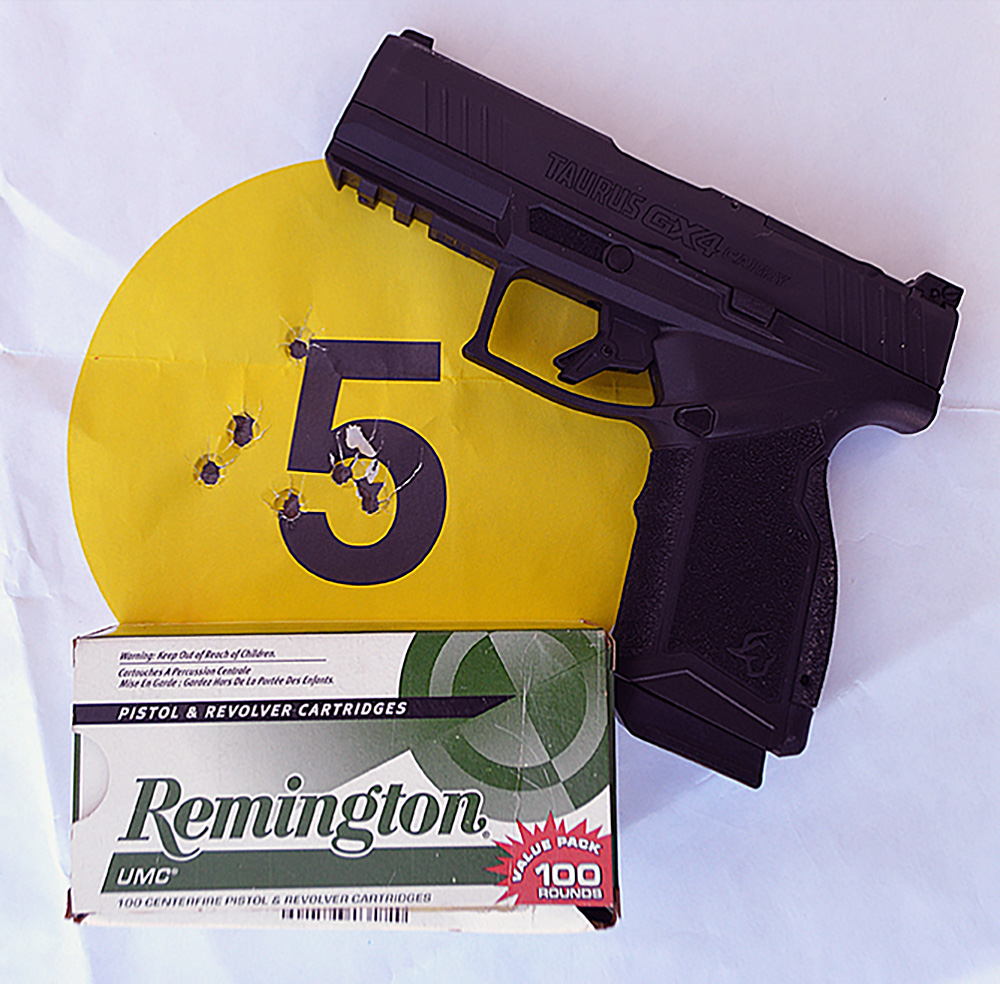
Taurus GX4 .380 Accuracy Testing
Toward the end of my evaluation, I tested the GX4 for absolute accuracy from a solid benchrest firing position.
Sight regulation was good, with the loads striking to the point of aim without requiring sight adjustment. This tells us something about the pistol’s fitting and quality.
The following results are from five-shot groups fired at 15 yards.
| Load | Group Size |
| Remington UMC 88-grain JHP | 2 inches |
| Black Hills Ammunition 90-grain JHP | 2.25 inches |
| Federal Train & Protect 85-grain JHP | 2.4 inches |
| Hornady Critical Defense 90-grain FTX | 1.95 inches |
These are good results with quality ammunition. With the human component considered, all four loads are probably equally precise in the real world.
Taurus GX4 .380 vs. 9mm: What Are the Trade-Offs?
The question of comparing the two calibers must be addressed. While the .380 ACP is easier than the 9mm to shoot well and equally accurate and reliable, there are several trade-offs.
The most obvious compromise is wound ballistics. Most of us feel that .380 ACP hollow-point ammunition doesn’t offer adequate penetration for defensive use. We may have expansion or penetration, but not both in the same loading. For this reason, some may recommend FMJ ammunition to ensure penetration.
I believe a superior choice is solid-copper projectiles. The Lehigh Defense 68-grain Xtreme Defense and Black Hills Honey-Badger 60-grain are all-copper projectiles with specially designed flutes in the bullet nose. These are designed to produce tissue damage and have reliable penetration.
While such loads maximize the caliber’s potential, they are not in the same class as the 9mm Luger in wound ballistics.
Another drawback is ammunition expense. The 9mm Luger is generally $5 to $6 per 50-round box. That can mean a great deal over a few months of training.
You must balance the .380 ACP’s inferior wound ballistics and greater ammunition cost against its modest recoil and what may be considered adequate defensive performance.
Another consideration is that the few +P-rated .380 ACP loads available are easily controlled in the GX4. That isn’t necessarily true of smaller .380 ACP pistols.
Is the Taurus GX4 Good for Concealed Carry?
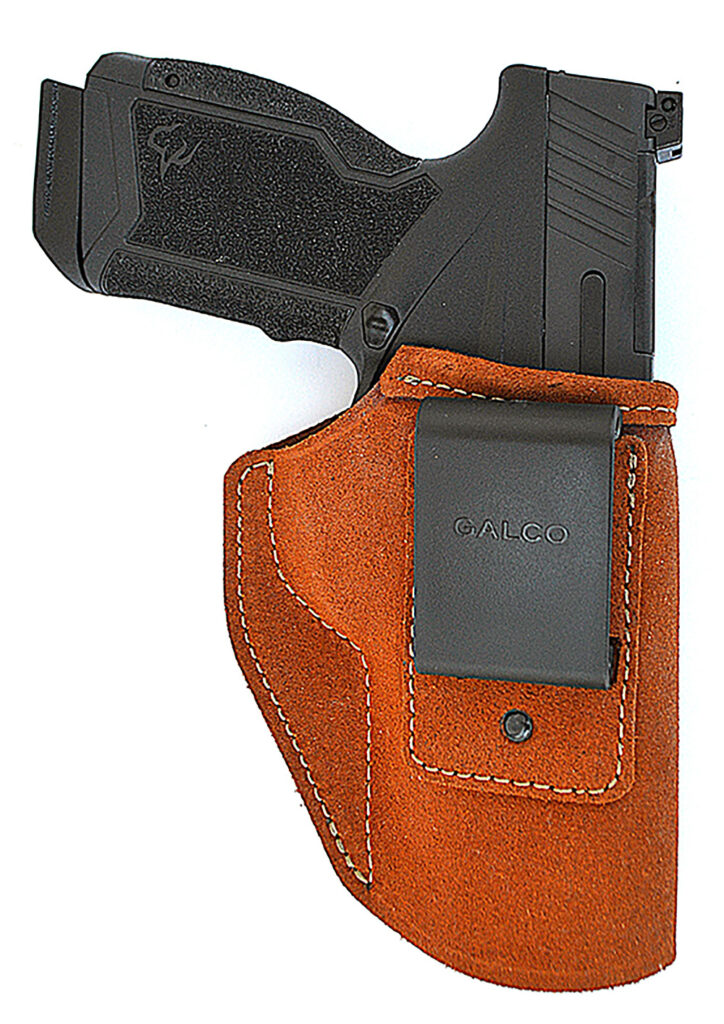
The GX4 .380 is well suited for concealed carry. Its shape makes for comfortable carry while the grip is adequate for rapid presentation from concealment.
I continued the economy theme, testing the GX4 in the Galco Stow-N-Go inside-the-waistband holster. This leather holster features good stitching and a rigid outline and is available in several sizes. A strong belt clip takes a good bite on the belt.
One important consideration is holster fit. Don’t order a holster for the original GX4 9mm, which has a 3.1-inch barrel. The GX4 .380 has a 3.7-inch barrel, and my pistol fit a Glock 19 holster well.
This isn’t a pocket pistol, and it isn’t meant to be. Carried inside the waistband, the GX4 .380 is flat and light enough for good comfort and concealment. At the same time, the grip is large enough to aid in rapid presentation.
I also tried Galco’s belly band holster. This is among the few well-made belly bands.
The Galco features a strong hook-and-loop closure and two leather-reinforced holsters. It is a good option when concealment must be discreet and there is little in the way of covering garments.
The GX4 .380 is fairly easy to conceal, although it isn’t as small as a Glock 43 or other pocket pistols. The trade-off is that the Taurus is easier to shoot well and holds more ammunition.
Pistol-Mounted Optics and Combat Lights
The Taurus GX4 features an optics-ready slide, an important consideration with the prevalence of red-dot sights.
The pistol uses Taurus’ T.O.R.O. system with a direct-mount RMSc footprint. Among the most recommended red-dot sights is the Holosun EPS Carry.
A pistol-mounted optic can improve speed and practical accuracy. There is a learning curve, but once the shooter has made the changeover, the results are well worth the time and expense.
The GX4 .380 also features an accessory rail for compact weapon lights. The pistol accepts the Streamlight TLR-7 and other combat lights. The TLR-7 Sub isn’t necessary for this application.
Who Is the Taurus GX4 Best For?
The GX4 .380 fills much the same niche that .380 ACP handguns have occupied for more than a hundred years.
The pistol is affordable but reliable. It is simple to manipulate and pleasant to fire. The occasional shooter, elderly shooter or anyone with a previous injury may find the pistol’s light recoil especially welcome.
The GX4 also offers advantages over smaller .380 ACP pistols. The grip provides good hand fit, the magazines are easy to load and the pistol is easier to control during firing.
There are trade-offs in ballistic performance and ammunition expense. Even so, the overall package is attractive.
Sources:
Taurus: TaurusUSA.com