The subject of home-defense ammunition comes up often. We all wish to have the right load in our home-defense firearm, but successful home defense depends more on training than gear selection. Alertness and readiness combined with skill mean the most. But we must also have reliable tools.
Some of us may afford only one firearm, the carry gun, also making it the default home defender. Others may have a dedicated firearm for home protection.
Whatever firearm you own or use for home protection, there are several considerations when evaluating ammunition. Reliability, control and accuracy deserve our attention first. Ballistic performance is only part of the picture.
What to Consider When Choosing Home-Defense Ammunition
Reliability
The first criterion is that the loading is reliable. Certain details will not be apparent when comparing ammunition on the shelf. Feed and cycle reliability will need to be confirmed in testing. I consider 100 cartridges expended in a firearm a good baseline. A handgun can be proofed with inexpensive training ammunition, but you must also confirm it fires and ejects defensive loads.
Though there are myriad options available, the choice may be simpler than you think. The major ammunition makers have earned excellent reputations for reliability, conducting testing in ways few, if any, of us could duplicate. Black Hills Ammunition, Federal, Speer and Hornady have extensive experience developing ammunition for military or law enforcement use.
A sealed primer and good case-mouth seal are important to reliability. Resistance to exposure to oil, water and solvents is high on my list. Most inexpensive ammunition doesn’t feature primer seal. Take a look at the colored sealant across the primer of a Federal HST cartridge. This helps seal the primer against the elements.
Recoil and Accuracy
After reliability comes control and accuracy. Any decent handgun and loading will deliver good accuracy from a machine rest. The question is human performance.
There is a considerable difference between firing a handgun from a rest and managing recoil while shooting unsupported. Many of us carry lightweight handguns like the Glock 43X or SIG P365. Recoil may be more noticeable in these firearms.
The most impressive ballistic figures are of little consequence if the shooter cannot manage the firearm comfortably and safely.
Muzzle Flash and Blast
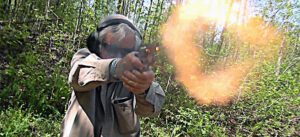
I like a loading with a minimum of muzzle flash. This is especially important in a home environment where lighting may be dim. Have you fired inexpensive ammunition that throws sparks and spits out an orange mushroom in dim light? Some domestic makers’ practice loads can be a bit bright as well.
Though muzzle flash, blast and recoil are characteristics worth noting when evaluating ammunition, they may vary considerably depending on the firearm and the ammunition being fired.
Penetration and Expansion
Penetration and expansion are two characteristics commonly evaluated during ammunition testing.
I have tested ammunition that clocked a full 200 feet per second less than advertised. I’ve also tested bullets that did not expand as advertised.
There is good reason to look beyond the claims on the ammunition box. Actual performance may differ from advertised performance, and the conditions under which ammunition is tested deserve consideration.
Understanding Overpenetration in Home Defense
There has been a great deal of time and ink devoted to overpenetration in home defense. Overpenetration occurs when a bullet passes through its intended target and continues traveling. Bullet construction, impact velocity and intervening materials all influence penetration.
As a firearms instructor, I place considerable emphasis on marksmanship. A missed shot is a serious concern, but as one of the four firearms safety rules states, we must never lose sight of what is beyond the target, even if we hit it. As well, we can’t guarantee that a bullet will remain within its intended target.
Ballistic gelatin testing gives us useful information, but we must consider the conditions under which the ammunition was tested. We cannot account for every variable that may be encountered in an actual defensive situation.
We must also consider the construction of our homes. You can learn more in Wall to Wall: Testing Penetration of Home-Defense Ammo. Every type of ammunition tested penetrated multiple layers of drywall.
While such testing is useful, every home is different. Building materials, furnishings and the space between walls are variables we must consider. Give some thought to where family members are likely to be in the home and how close your neighbors are. Don’t count on a sheetrock wall to stop a bullet.
Home-Defense Handgun Ammunition
Handguns are a common choice for personal protection. For many of us, the handgun we carry every day is also our home-defense firearm.
The characteristics of the handgun itself are important when evaluating ammunition. A lightweight carry gun and a heavier, full-sized handgun may behave quite differently.
9mm Pistols
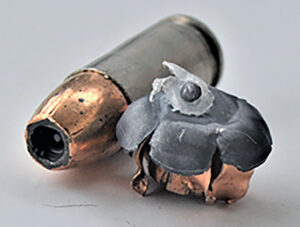
Lightweight carry guns are quite different in handling from heavier service pistols. Recoil, muzzle flash and the shooter’s ability to manage the handgun deserve consideration.
There are also differences between advertised ammunition performance and the results obtained from a particular handgun. Barrel length is one of the variables involved.
Higher-pressure (+P) ammunition may produce additional recoil and muzzle flash. These characteristics are particularly noticeable in some lightweight handguns. We are not loading for bear, so higher velocity isn’t the only consideration.
The effects of powder burn, barrel length and ammunition pressure vary with the particular loading and firearm. I recommend a 115- or 124-grain JHP if using 9mm for home defense. Hornady Critical Defense offers great expansion and wound potential. As always, ammunition must be compatible with the firearm in which it is used.
Preferred 9mm loads: Federal HST, Hydra Shock Deep, Hornady XTP
.38 Special and .357 Magnum Revolvers
For those who use a revolver for home defense, the .38 Special +P is likely as much recoil as they wish to handle. From a 3- or 4-inch barrel, these loads are controllable and offer reasonable wound ballistics.
There is a considerable difference in the shooting characteristics of .38 Special and .357 Magnum ammunition. The .357 Magnum may perhaps offer the most proven wound ballistics, but the muzzle flash and blast associated with Magnum ammunition may be substantial.
These differences become particularly important when considering the confined spaces of a home. As with the semi-automatic handgun, the shooter’s ability to manage the revolver is an important consideration.
Home-Defense Rifle and Carbine Ammunition
Long guns present a different set of considerations. Their handling characteristics, recoil and muzzle blast differ from those of handguns.
9mm Pistol-Caliber Carbines
In my opinion, a 9mm carbine offers the best combination of wound potential, accuracy and effectiveness in a modern defensive firearm. The longer barrel doesn’t offer enough of an increase in velocity to cause the bullet to fragment. They are docile and easily handled.
.223 Rifles
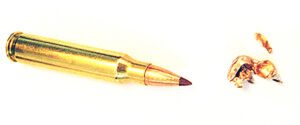
A friend expressed some concern about the .223 rifle, as it was the only long gun he owned. These rifles offer excellent wound ballistics; however, one of the considerations with the .223 is muzzle blast. The rifle is loud, regardless of the loading.
The modern sporting rifle offers good ergonomics, but, as with any firearm, training and familiarity are important.
Preferred loads: Black Hills Ammunition 77-grain SMK, 55-grain JSP from most manufacturers offers good performance as well.
Home-Defense Shotgun Ammunition
Shotguns are underutilized in part because of recoil. There is no sugarcoating that one. They kick considerably more than the .223 and 9mm long guns I’ve discussed.
Much depends on the shotgun itself. A straight, thin stock will pound you. Stock design can make a considerable difference in how comfortable the shotgun is to fire.
There are also considerable differences among shotgun ammunition types. Ammunition intended for hunting birds and small game differs in construction and performance from other shotgun loads.
As with the handgun and rifle, the ability to manage the firearm safely is important.
Preferred loads: Hornady Critical Defense buckshot, Remington Managed Recoil
What Is Frangible Ammunition?
Frangible ammunition is generally manufactured from sintered material and designed to break apart when it strikes a hard surface. These loads are useful in certain training applications, like shooting with steel targets. I do not recommend them for home protection.
The fact that ammunition breaks apart when it strikes steel does not necessarily mean it will behave the same way when it strikes other materials.
I have studied institutional ammunition testing extensively during the past 10 years. These evaluations have included full-metal-jacket training ammunition, expanding-bullet service ammunition and frangible ammunition. In the testing I’ve studied, some frangible loads have presented reliability concerns. The service loads were the most reliable.
Understanding Ballistic Gelatin Testing
I used Clear Ballistics gelatin to evaluate a number of ammunition loads in several firearms.
The ammunition tested included loads for 9mm handguns and carbines, .38 Special revolvers, .223 rifles and 12-gauge shotguns.
My testing recorded velocity, penetration and, where applicable, bullet expansion. Only ammunition that had demonstrated acceptable reliability, recoil and muzzle signature was included.
These are the results obtained with the particular firearms and ammunition I tested.
| Caliber/Firearm | Load | Velocity | Penetration | Expansion |
| 9mm / Glock 19 | Federal HST 124-grain | 1,170 feet per second | 14.4 inches | .63 inches |
| Black Hills 115-grain EXP | 1,190 feet per second | 14 inches | .54 inches | |
| Hornady 115-grain Critical Defense | 1,120 feet per second | 12 inches | .53 inches | |
| Speer Gold Dot 124-grain +P | 1,244 feet per second | 18 inches | .68 inches | |
| Ruger PCC | Speer Gold Dot 124-grain +P | 1,317 feet per second | 20 inches | .74 inches |
| .38 Special / 3-inch barrel | Hornady 110-grain Critical Defense | 938 feet per second | 12 inches | .46 inches |
| Federal 130-grain Hydra Shock Deep | 807 feet per second | 14 inches | .56 inches | |
| .223 / 16-inch Springfield Saint | Black Hills Ammunition 77-grain SMK | 2,765 feet per second | 14 inches | .58 inches |
| Hornady 55-grain JSP | 3,099 feet per second | 11 inches | .43 (Fragmentation) |
|
| 12-gauge | Remington Managed Recoil 8-pellet 00 Buck | 1,109 feet per second | 16 inches | |
| Hornady Critical Defense | 1,267 feet per second | 18 inches |
Training Matters More Than Ammunition Selection
When evaluating ammunition for home defense, consider the criteria. Reliability comes first, followed by control and accuracy. Ballistic performance is another consideration, but it isn’t the whole picture.
We must have good tools, but the tools alone will not make us proficient. Most of all, concentrate on training, preparedness and marksmanship.
Is Your Home-Defense Plan Complete?
Choosing a firearm and ammunition is only one part of protecting your home. Learn what else goes into preparing yourself and your family for an emergency.