It may seem that comparing the .357 Magnum, designed for use in revolvers, to the 10mm, designed for semi-automatic pistols, is much like comparing apples to oranges. But when you examine their histories, performance levels and intended defensive roles, the similarities become clear. In terms of power, development and real-world mission, the 10mm Auto vs. .357 Magnum cartridges have far more in common than most shooters realize.
The .357 Magnum and 10mm Auto are two high-powered handgun cartridges designed to deliver greater range and energy than standard service rounds. While the .357 is traditionally used in revolvers and the 10mm was developed for semi-automatic pistols, both offer overlapping ballistic performance.
.357 vs. 10mm: What’s the Real Difference?
| Feature | .357 Magnum | 10mm Auto |
|---|---|---|
| Platform | Revolver | Semi-auto |
| Typical Bullet Weight | 125 to 158 grains | 155 to 180 grains |
| Example Velocity | 1,450 feet per second (125gr) | 1,250 feet per second (180gr) |
| Example Energy | 583 foot-pounds | 624 foot-pounds |
| Best Known For | Anti-personnel performance | Woods/large-threat defense |
| Capacity | 5–6 rounds typical | Higher magazine capacity |
History and Development of the .357 Magnum
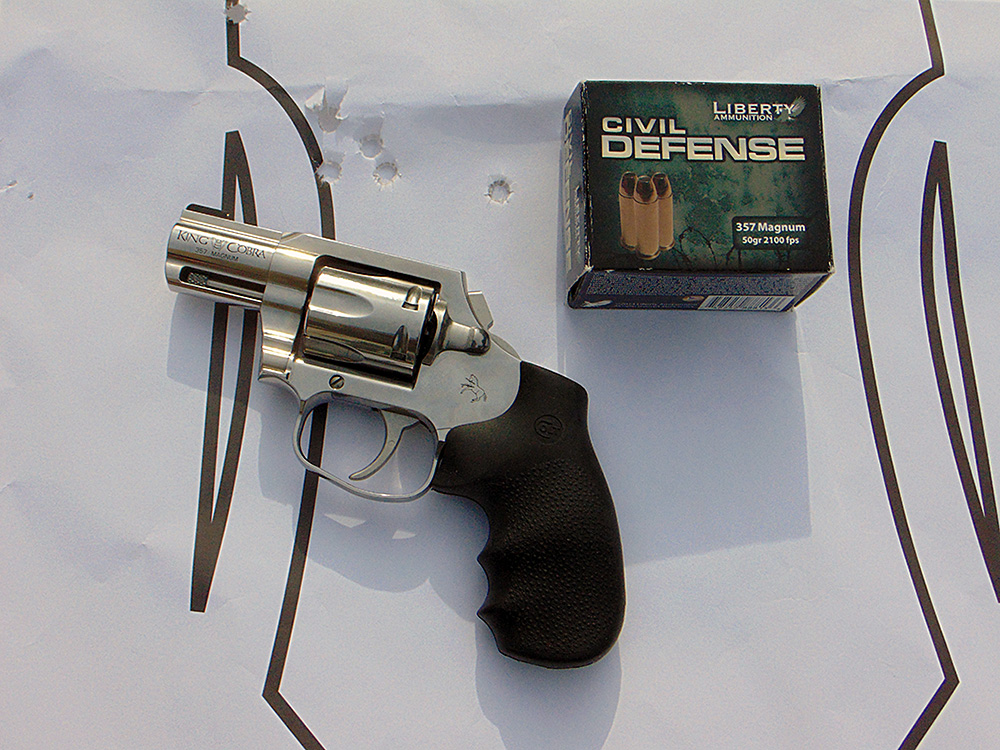
The term “Magnum” comes from the Latin “Magnus,” meaning great or large. It was later used to describe oversized wine bottles. So when Smith & Wesson introduced a new, more powerful cartridge in 1935, the name fit. The .357 Magnum was intended to be greater than the standard handgun round of its day.
Developed by Douglas B. Wesson, the grandson of a S&W founder, and NRA technical advisor Phillip B. Sharpe, the .357 had three clear goals. First, it was meant to be the most powerful handgun cartridge available for hunting large game. Second and most important for the 1930s, it was designed as a “car-stopping” cartridge for officers facing gangsters of the era. Lastly, S&W built the .357 Magnum to compete with Colt’s .38 Super, which had been introduced in 1928 and had already gained attention for its power.
From .38 Special to .357 Magnum
The foundation of the .357 Magnum was the .38 Special, which at the time pushed a 150- to 158-grain bullet at roughly 725-750 feet per second from a 4-inch barrel. With a diameter of .356 to .357 inches, it was a capable cartridge that clearly had room for more power.
At a time when revolvers and lever guns still fired black powder cartridges, finalizing the .357 Magnum required some development in metallurgy before it could stop cars or crack and engine block. As what appears to be a stop-gap measure, Smith & Wesson introduced an intermediate high-pressure round known as the .38-44.
This cartridge used a strengthened .38 Special case and was loaded to a muzzle velocity of 1,125 feet per second with a metal-penetrating, copper-tipped bullet. Foot-pounds of energy delivered jumped from 197 to 444!
To launch the round, S&W developed the Heavy Frame Outdoorsman, which would later serve as the revolver to house the .357 Magnum. However, the .38-44 could be loaded in any handgun chambered for .38 Special. That arrangement would make modern liability attorneys nervous.
I didn’t find stories of shooters harming themselves or their handguns by mixing up the .38-44 with .38 Special, but to solve that potential problem, S&W stretched the .38 Special case by 1/10 inch. The longer case prevented the new round from chambering in standard .38 Special revolvers. Thus, the .357 Magnum was born.
Early Adoption and Versatility
The cartridge was first introduced in the large-frame S&W Model 27. Its power and versatility quickly made it one of the most popular cartridges with outdoorsmen and hunters. The very first .357 Magnum revolver was presented to FBI Director J. Edgar Hoover.
Unlike the .38 Super of that time, which was limited to full-metal jack round-nose ammo of only 130 grains, the .357 Magnum could fire lead bullets of various shapes weighing up to 158 grains or more. It also retained backward compatibility with .38 Special and .38-44 ammunition.
This popular cartridge ended up being chambered in both double-action and single-action revolvers, as well as lever-action carbine and even a semi-auto pistol, the Coonan, which is no longer in production.
Law Enforcement Use
Through the 1980s, many law enforcement agencies, including my former agencies, issued medium-frame .357 Magnum revolvers for duty use. However, because these revolvers could also chamber .38 Special and .38 Long Colt, many departments required officers to load the lower powered .38 Special ammunition rather than full-power .357 Magnum.
There were practical reasons for these policies:
- Full-power .357 Magnum produced significant recoil in medium-frame revolvers, possibly resulting in missed shots.
- The higher velocity, even with lighter 125-grain bullets, led to penetration concerns.
- The powder used in .357 Magnum revolvers through the 90s generated intense muzzle flash, destroying night vision in low-light encounters.
Large N-frame revolvers would mitigate the recoil, but the extra weight would become burdensome during long shifts. As semi-automatic pistols rose to dominance, the .357 Magnum eventually gave way to higher-capacity 9mm service pistols.
Train for confident shot placement and recoil control with powerful handgun cartridges.
Understanding 10mm Auto and .357 Magnum performance is just the first step. Proper training transforms you from a gun owner into a confident protector.
USCCA’s expert-led classes cover everything from firearm fundamentals and accuracy training to legal considerations and conflict avoidance – giving you the confidence and skills to protect what matters most.
Over 1 million students trained nationwide. Find certified instruction in your area and take the next step in your protector journey.
The .357 Magnum Today
The .357 Magnum ended up being chambered in smaller guns eventually, including Bond Arms Derringers, small snub-nosed revolvers like the Ruger SP101 and several J-frame snub-nosed revolvers from S&W. Modern metallurgy, advances in grip design and low-flash powders have allowed manufacturers to chamber .357 Magnum in handguns that can be comfortably carried all day.
Although no longer a standard police duty cartridge, the .357 Magnum remains extremely popular for civilian self-defense, woods carry and hunting. In addition to revolvers, the .357 Magnum has become popular in lever-action carbines, where longer barrels significantly increase velocity and energy compared to handgun-length barrels.
Nearly ninety years after its introduction, the .357 Magnum remains one of the most versatile and enduring handgun cartridges ever developed — an important benchmark when comparing it to modern powerhouses like the 10mm Auto.
Read reviews of .357 revolvers
The History and Development of the 10mm Auto
While the .357 Magnum was born out of the gangster era, the 10mm Auto emerged from a mindset driven by modern defensive shooting theory. The late Colonel Jeff Cooper, well known for promoting the modern shooting technique of the two-hand Weaver stance, was looking for a handgun cartridge with more effective range and power than existing duty cartridges.
Cooper admired the .45 ACP and the 1911 platform but believed performance could be improved. His goal was a cartridge that could do at 50 yards what the 1911 .45 ACP could do at 25 yards. He believed a narrower projectile, approximately .40 caliber lengthened to contain more powder, could get the results he envisioned.
The Bren Ten and Early Challenges
Cooper partnered with Dornaus & Dixon to develop the Bren Ten pistol, built around his 10mm cartridge concept. The Bren Ten gained visibility, helped by its appearance on early seasons of Miami Vice, but the company had production problems. Magazine shortages and manufacturing setbacks lead to Dornaus & Dixon ceasing production in 1986.
Fortunately, the 10mm cartridge survived.
Colt and Law Enforcement Adoption
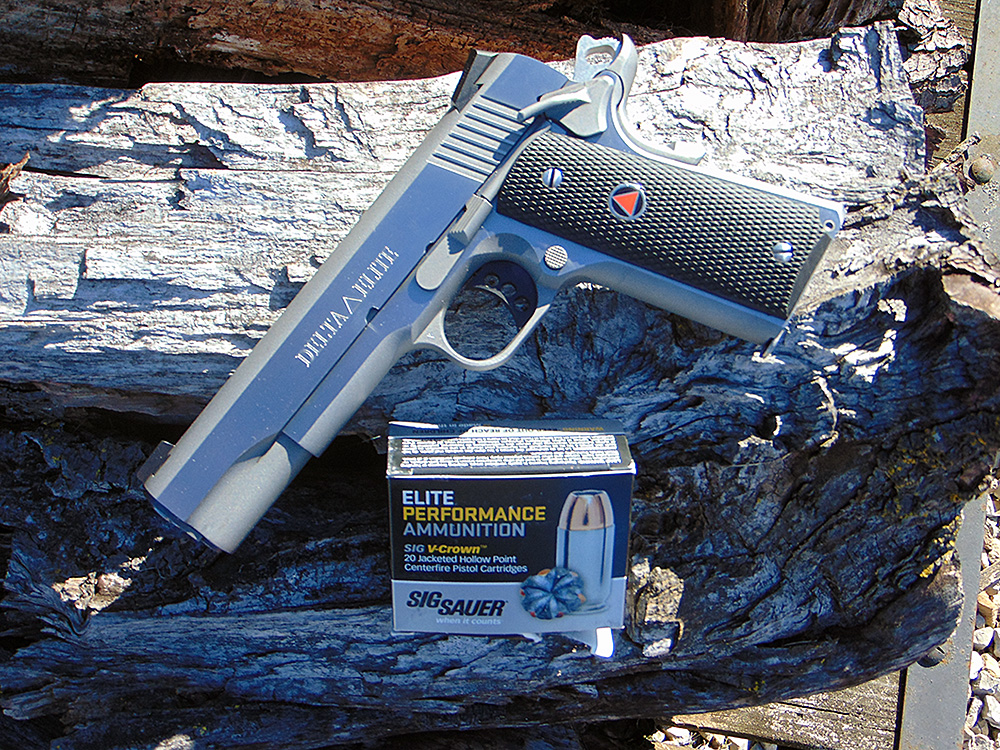
Colt rescued the 10mm when it introduced its Delta Elite 1911 in 1987. I first encountered a Delta Elite in the holster of a firearms instructor at my former sheriff’s office. It was the first one I had seen in person. He let me shoot his Delta, and it left an impression.
Smith & Wesson was again working with the FBI to develop a new duty pistol in a more powerful caliber. The FBI adopted the 10mm in 1989 and chose the S&W 1076 as its official duty pistol in 1990. The 10mm gained momentum.
Based on the S&W 4506, the 1076 was a great pistol to carry on duty but difficult to conceal as a plainclothes detective. It also brought significant recoil and blast from full-powered 10mm loads.
For many agents, full-powered 10mm loads proved difficult to manage. The FBI eventually reduced the cartridge’s power to a lighter “Fed-Lite” load, which was later shortened into what became the .40 Smith & Wesson. As a result, the 10mm stepped back from mainstream law enforcement use.
The 10mm Auto’s Second Life
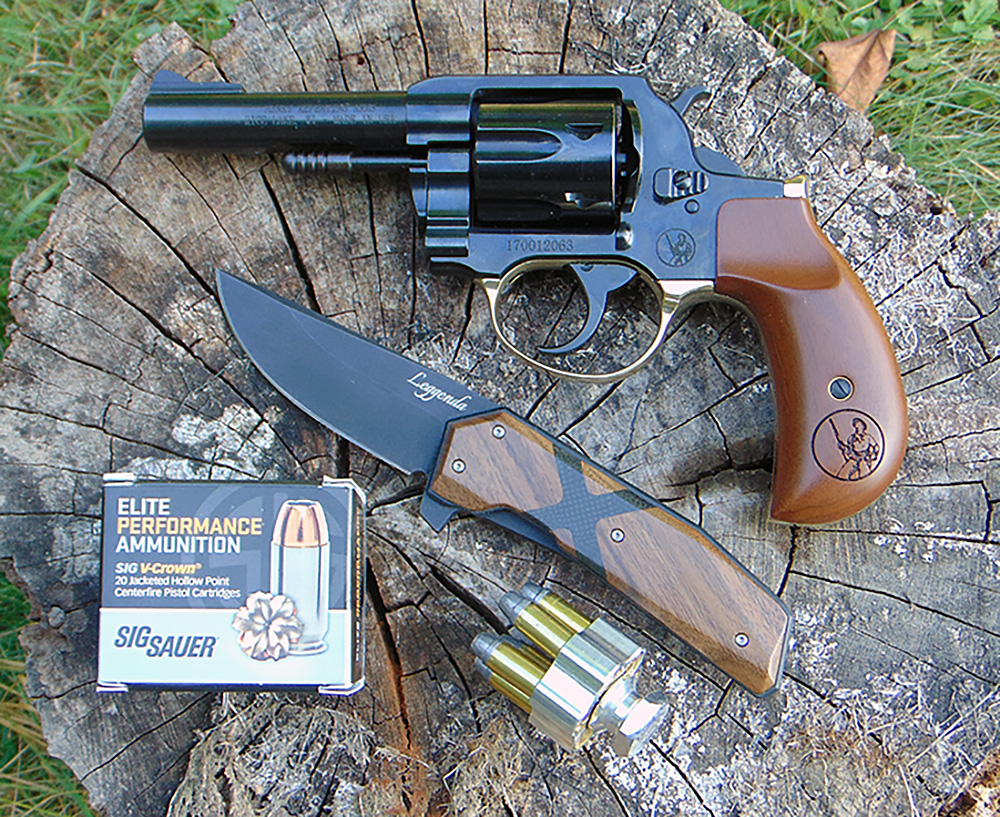
Though 10mm didn’t become a prominent law enforcement round, it did gain popularity in the civilian world. Like the full-powered .357 Magnum, 10mm Auto is a great outdoors caliber for defense against animals.
Again, advances in metallurgy, ammunition design and recoil management made the cartridge more practical than during its brief law enforcement peak. Today, it’s a powerful option chambered in 1911-style pistols, modern polymer semi-autos, AR-type carbines and even some large-frame revolvers.
Nearly four decades after its introduction, the 10mm remains a powerful option for shooters seeking magnum-level performance from a semi-automatic handgun.
Read reviews of 10mm handguns
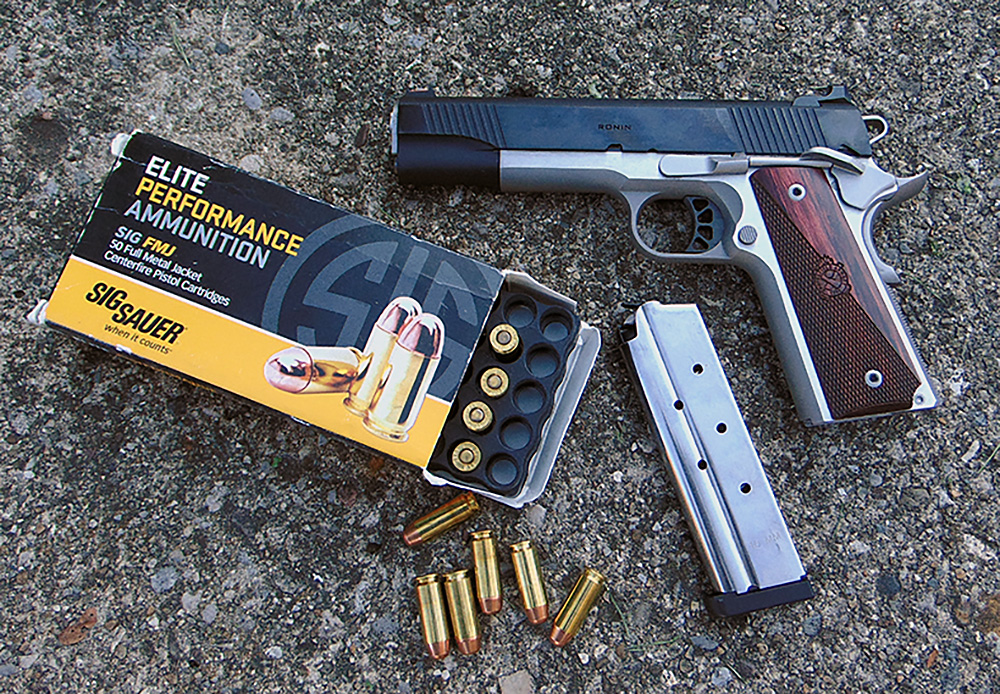
Colt Delta Elite Springfield Armory Ronin Smith & Wesson M&P 2.0
10mm vs. .357 Magnum: Ballistic Comparison
On paper, the 10mm Auto and .357 Magnum produce similar ballistic numbers. Using comparable loads, these cartridges overlap in terms of velocity and energy ranges. But paper ballistics don’t tell the whole story.
| Cartridge | Brand | Bullet Weight | Muzzle Velocity | Muzzle Energy |
| .357 Magnum | SIG Sauer Elite Performance | 125-grain V-Crown | 1450 feet per second | 583 foot-pounds |
| 10mm | SIG Sauer Elite Performance | 180-grain V-Crown | 1250 feet per second | 624 foot-pounds |
Real-world performance depends on bullet construction and penetration characteristics, not just velocity and energy. A lightweight 125-grain .357 Magnum traveling at high velocity is often considered one of the most effective anti-personnel handgun loads with a good combination of speed and expansion
By contrast, a full-power 180-grain 10mm with its .40-caliber diameter is better suited for deeper penetration and defense against large threats. That’s why the 10mm has gained popularity as an outdoors and woods-defense cartridge.
Of course, both cartridges are versatile. There are lighter 10mm loads optimized for defensive use against human threats, and there are heavy-bullet .357 Magnum loads designed for hunting.
The real comparison isn’t just velocity or energy. It’s bullet weight, construction and intended purpose. When comparing 10mm vs .357 Magnum for self-defense, the practical takeaway is this: Both are powerful, both are capable, and both must be matched carefully to the mission.
Which Is Better: 10mm or .357 Magnum for Self-Defense?
It was interesting to revisit the history and development of these legendary rounds and realize how similar their origins are.
The .357 Magnum was created to push revolver performance beyond the limits of the .38 Special. Decades later, the 10mm Auto was developed to push semi-automatic pistol performance beyond what the .45 ACP could deliver. Though separated by nearly half a century, both cartridges were born from the same idea: more effective performance at greater distance.
Which Is Better For…
- Anti-personnel defense: .357 Magnum (historical track record)
- Woods defense: 10mm (heavy bullet penetration)
- Capacity: 10mm
- Recoil in medium guns: .357 (with .38 loads)
- Versatility: Tie
Today, choosing between the .357 Magnum and the 10mm comes down to platform and personal preference. If you prefer a revolver with proven performance in law enforcement, the .357 Magnum remains a formidable choice. If you want magnum-level power in a higher-capacity semi-automatic pistol the 10mm Auto offers advantages.
Both cartridges remain relevant, and both reward shooters who understand power alone isn’t enough. In the end, the better cartridge is the one that fits your lifestyle and the one you can shoot well.
Take Your Protection to the Next Level
Join over 860,000 USCCA Members for leading self-defense education, training and legal protection benefits.
Sources:
SIG Sauer: SIGSauer.com
Smith & Wesson: Smith-Wesson.com
Ruger: Ruger.com
FAQs
Is the 10mm more powerful than the .357 Magnum?
On paper, the 10mm Auto and .357 Magnum produce similar ballistic numbers. Comparable loads overlap in velocity and energy. For example, a 125-grain .357 Magnum can reach 1,450 fps, while a 180-grain 10mm may reach 1,250 fps, with both delivering more than 580 foot-pounds of energy. The difference often comes down to bullet weight, construction and intended use rather than raw numbers.
Which is better for self-defense: 10mm or .357 Magnum?
Both cartridges are powerful and capable defensive rounds. The .357 Magnum has a long history in law enforcement and is often associated with high-velocity anti-personnel loads. The 10mm Auto offers magnum-level power in a higher-capacity semi-automatic platform. The better choice depends on whether you prefer a revolver or a semi-automatic pistol and which platform you shoot well.
Does 10mm have more recoil than .357?
Recoil depends heavily on platform and load selection. Full-power 10mm loads were difficult for many FBI agents to manage. Similarly, full-power .357 Magnum loads in medium-frame revolvers produced significant recoil and muzzle blast, leading many law enforcement agencies to issue .38 Special ammunition instead.
In short, both cartridges can generate substantial recoil in lighter or mid-sized handguns. The experience varies.
Which penetrates more: 10mm or .357 Magnum?
Penetration depends more on bullet weight and construction than on cartridge name alone. Both cartridges offer lighter and heavier load options. The key factor is matching the bullet type and weight to the intended purpose rather than assuming one cartridge always penetrates more than the other.
Why did the FBI stop using the 10mm?
Although the FBI adopted the 10mm in 1989, full-power loads proved difficult for many agents to manage due to recoil and blast. The Bureau reduced the load to a lighter version, which was later shortened into the .40 Smith & Wesson.
Can the .357 Magnum still be used for self-defense?
While no longer a standard law enforcement duty cartridge, the .357 Magnum remains popular for civilian self-defense, woods carry and hunting. Modern metallurgy and improved powders have made it practical in compact revolvers as well.
Is 10mm good for woods or animal defense?
Yes, full-power 10mm loads are well-suited for deeper penetration and defense against larger threats, which is why the cartridge has gained popularity for woods carry.