Key Takeaways
- Safety comes first. A home-defense firearm should be secured against unauthorized access.
- Storage and accessibility must be balanced. A quick-access safe may offer a practical compromise between security and emergency access.
- Handguns, rifles and shotguns have different handling and storage considerations.
- Familiarity with your firearm, safe access procedures and regular training can help you prepare for an emergency.
- A home-defense plan involves more than a gun. Understanding your home’s layout, maintaining awareness and identifying potential threats are essential considerations.
A question that comes up often in classes and in my daily conversations counseling armed citizens is how to keep a home-defense gun ready. The choice involves both location in the home and the firearm’s state of readiness. To a large extent, this is a personal decision based on your needs and perceived threat.
Young children may be a consideration. The layout and location of your home are definitely factors. You may live in a simple three-room walk-up apartment, a mobile home or a ranch-style house. Neighbors may be down the road or within shouting distance.
Home defense isn’t concealed carry. When carrying concealed, the handgun is on the body and ready to respond to an unexpected threat. The home-defense firearm is often a long gun, and different criteria apply.
In every scenario, the primary concern is safety. Access and the ability to use the firearm well are important, but safety is by far the most important criterion.
What Does Home-Defense Gun Readiness Mean?
There are three primary types of home-defense firearms: handguns, rifles and shotguns. Each has subcategories, including revolvers and semi-automatic handguns, AR-type rifles chambered in 5.56mm, 9mm or .300 BLK, and pump-action, semi-automatic and single-shot shotguns. We shouldn’t forget lever-action rifles.
You can find more information about choosing a firearm for home defense in our guide. Here, we’ll talk about safe and accessible deployment for each type.
The options are much broader than with concealed carry. Weight isn’t as much of a consideration, as just one example.
The important questions are where the firearm is kept, how quickly it can be accessed and what condition it should be in when needed.
How to Store a Home-Defense Gun Securely
Storing firearms around the home invites arming the housebreaker. Burglars know the hiding places.
My preference is to keep the firearm in a safe until I am at home and settled, then place it beside the bed. I recommend keeping long guns locked away in a sturdy safe when you are not home.
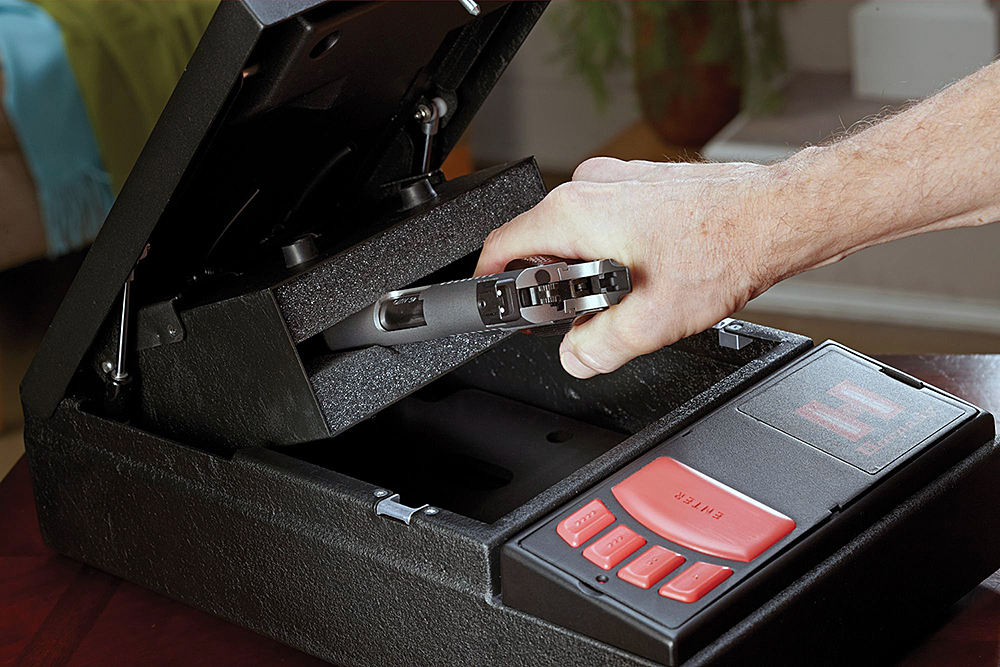
There is a balance between safe gun storage and access. The slowest access is a combination safe in another room, which may be practically worthless in an emergency. A good compromise is a biometric safe with a fob worn on the wrist as you sleep.
Keeping Firearms Secure Around Children and Visitors
If there are children or untrained individuals in the home, it is essential that the firearm be secured from prying eyes and curious fingers.
This means a safe of some type or a secured, unloaded firearm with a trigger lock.
There can be no compromising safety, and greater security may mean slower access.
Where Should a Home-Defense Gun Be Kept?
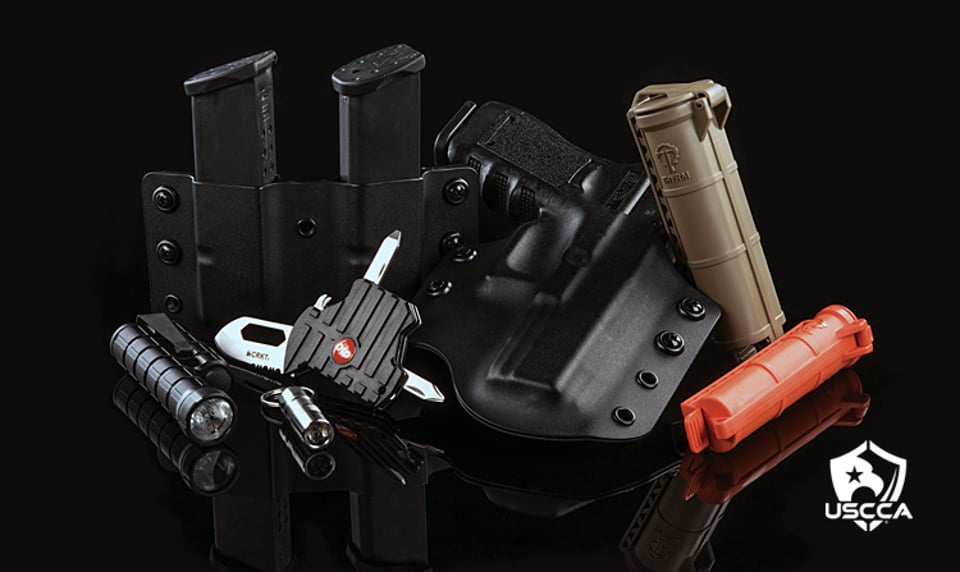
A handgun is easily kept ready in a secure holster that covers the trigger guard.
Some like to tuck the handgun into the mattress, butt out, for home readiness. This is fine until you try to draw the handgun with your body compressing the mattress against the pistol. If the handgun is in a holster, this problem disappears.
Another option practiced by many is to lay the pistol on a table, stool or hassock beside the bed. This is comfortable and reassuring for many shooters. However, it is easy to fumble and send the firearm flying if it isn’t stabilized. A firearm lying flat isn’t as easy to grasp quickly as a holstered handgun.
With a long gun, some keep the rifle standing beside the bed, muzzle up. That puts your face near the muzzle. Why not keep the rifle muzzle down? It is more natural to grasp the rifle and shoulder it from a muzzle-down position.
Be certain the firearm is balanced against falling.
It is also best to have some type of alarm. A pet as small as a Pekingese is a fine security alert. A dog that barks will provide many false alarms, but the most expensive alarm system may provide false alarms as well.
Is Your Home-Defense Plan Ready?
Keeping your firearm secure and accessible is only one part of protecting your household. Learn the essential elements of a home-defense plan and how they work together to help you prepare.
Should You Keep a Round Chambered for Home Defense?
This answer depends, in part, on whether the home-defense firearm is a handgun or long gun.
Rifle and Carbine Readiness
When it comes to long guns, my recommendation is an emphatic no to keeping a round chambered.
Studies at various military and police agencies have shown that shotguns and rifles are not as drop-safe as handguns.¹ A floating firing pin simply isn’t designed the same as a pistol with a positive firing pin block.
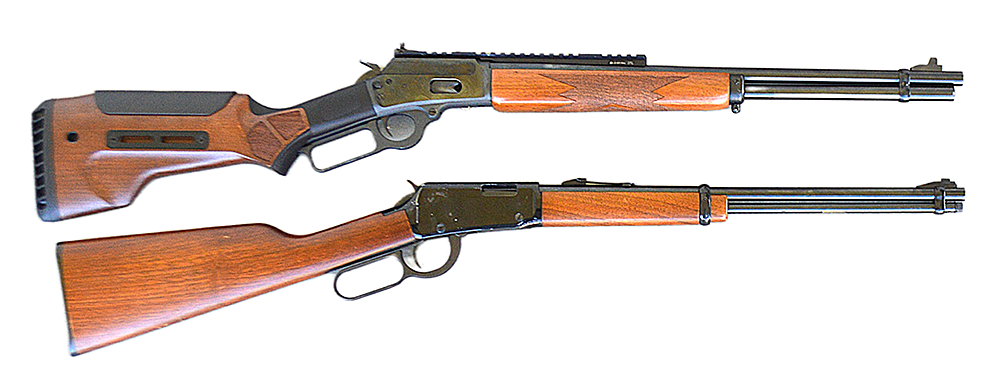
With a long gun, it is a simple matter to rack the bolt. An AR-type rifle can be charged as it is brought to ready, and a Ruger PC Carbine is easily racked. A lever-action rifle, which many of us keep ready and trust, is among the simplest to make ready in an instant.
I recommend an empty chamber and the safety off when the long gun is in its ready condition. With a rifle, whether the hammer is cocked doesn’t matter much, although the bolt may be slightly easier to rack with the hammer cocked.
I don’t recommend keeping the long gun completely unloaded so that it requires loading before it can be made ready. If there is a real threat, chances are you will be shot before you can load the piece and make it ready. Trembling hands and an increased heart rate do not aid manual dexterity.
Purchase snap caps and dummy rounds and practice making the long gun ready. Just as important, practice safely unloading the firearm. With most rifles, this involves removing the magazine and clearing the chamber.
In most incidents, there will be no gunfire. The ability to return the long gun to a safe, ready condition is important.
Shotgun Readiness: Chamber Empty vs. Cruiser Ready
There are two modes of readiness with the pump-action shotgun.
The first is to have the chamber empty and the hammer cocked. The bolt is locked in place in this condition. You must operate the action release to unlock the bolt. For safety’s sake, don’t press the trigger to drop the hammer and free the action.
The second mode is to have the shotgun uncocked. This is known as cruiser ready, the preferred mode in many police cruisers.
To establish this condition, first be certain the shotgun is unloaded. Check both the chamber and magazine. Close the bolt and, with the muzzle pointed in a safe direction, press the trigger to drop the hammer. Manipulating the slide bars racks the bolt in an emergency.
Don’t work all the shells through the action to unload. Use the controls in the magazine tube if applicable or carefully operate the action to remove a shell from the chamber.
Handgun Readiness
Some of us have a dedicated home-defense handgun, perhaps a heavier pistol with a long slide and extended magazine. For others, the daily carry gun becomes the home-defense firearm.
In this case, I prefer to keep the handgun with a round chambered.
The standard response drill — drawing and achieving a center hit at 10 yards in 1.5 seconds — is severely slowed by an empty chamber.
If you choose to keep the home-defense handgun with an empty chamber, I admit you are on the long end of safety. Be certain to use snap caps and practice racking the slide to make the pistol ready.
Whatever the ready position, practice getting into action quickly.
Home-Defense Handgun vs. Rifle, Carbine or Shotgun
For most shooters, a handgun is the default home-defense firearm. We carry a handgun for concealed carry and then press it into home defense. If you can afford only one gun, the choice is a handgun.
A rifle or carbine is far easier to use well and accurately and hits harder. A rifle or carbine offers fast handling, superior wound ballistics and a reserve of ammunition for those who practice.
A 9mm carbine is a good compromise. With lighter recoil and muzzle blast, it invites frequent practice and proficiency.
Shotguns are underutilized by shooters for many reasons. Recoil is stout, and few shooters find the shotgun a pleasant recreational platform. Carbines and pistols, on the other hand, are often included in recreational shooting with inexpensive 9mm ammunition.
A long gun and a pistol chambered in 9mm that accept the same magazines are a popular and effective home-defense combination.
As for ammunition capacity, I am not big on attaching spare ammunition to the firearm. A 20-round magazine seems adequate in a carbine or rifle. A shotgun with eight shells seems good, although those concerned about multiple home invaders may install a buttstock shell carrier.
The handgun may not be as easy to use well as a long gun, but in a high-threat scenario, it can be carried on the body at all times in relative comfort.
Accessing Your Home-Defense Firearm
It’s important to regularly practice drills designed to build speed in accessing your home-defense firearm.
Be certain the firearm is triple-checked unloaded and do not touch the trigger during these drills. The goal is to build muscle memory in accessing the firearm and bringing it to bear.
A reasonable amount of speed must be achieved. I consider five seconds from alert to holding a long gun ready to go a reasonable standard.
A handgun will be faster to deploy by its nature, but this is balanced against less energy and practical accuracy.
I practice lying across the bed and quickly moving to access one of my ready firearms. Sometimes I practice accessing a long gun after moving from the living room or laundry room.
In the usual course of things, I have a handgun on my body. I don’t have to suit up when leaving for an errand, and I am always ready.
An important point: If you cannot quickly access the firearm in the dark, you are behind the curve. You cannot simply turn on a bedroom light and illuminate your position.
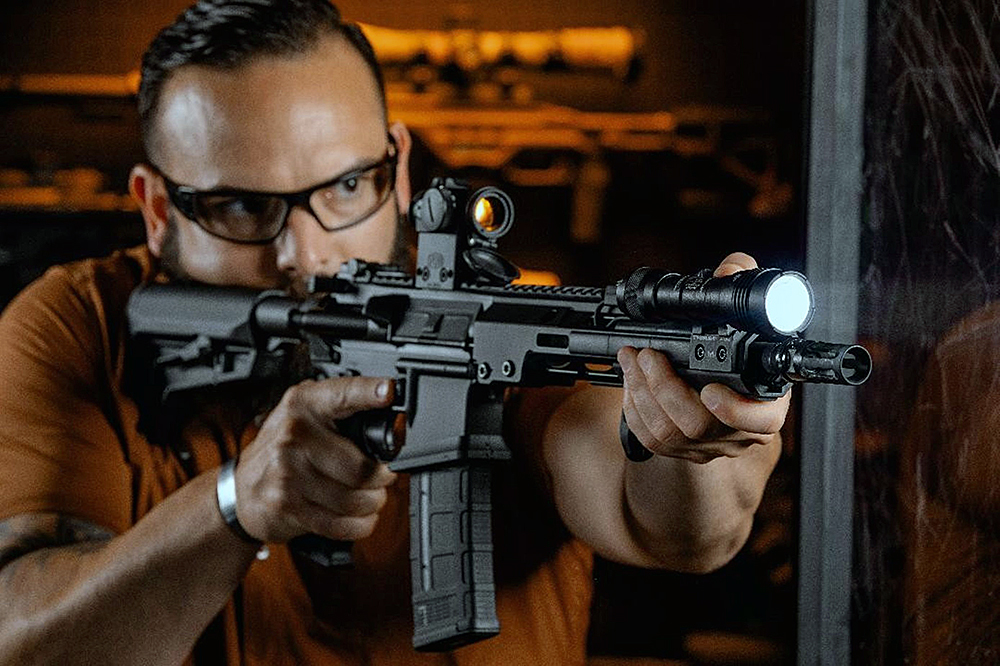
It is essential, in my opinion, that a dedicated home-defense firearm be equipped with a light. Target identification is vital.
A long gun may wear a larger, more powerful light such as the Streamlight ProTac. A handgun or carbine may be served with the Streamlight TLR-1, a versatile light useful on both handguns and long guns.
Practice operating the light before firing. Use the momentary switch and practice locking the light in the on position.
If your firearm doesn’t accommodate a light, keep a flashlight close by.
Practice Your Home-Defense Plan
It isn’t the shot that secures your home, but the plan. Prepare and practice for a home intruder.
Maintain a superior protected position behind cover. Don’t move into a doorway. This is known as a fatal funnel, where you may be centered in an adversary’s point of aim.
If there are dependents in the home and movement is necessary, maintain security and don’t lead with the muzzle. Keep the firearm close and maintain a secure grip.
The plan and tactics may be practiced in the home. Marksmanship, proofing the firearm and sighting in should be done at the firing range.
You can determine the viability of your home ready condition at the range. Place the firearm on the bench and keep your hands above your head. On signal, make the firearm ready and get a single X-ring hit at 10 yards. Pass or fail depends on time.
Safety Comes First
There is no single home-defense setup that works for everyone. A handgun, rifle or shotgun may serve you well, but where you keep it and how you maintain its readiness are just as important as the firearm itself. A gun that cannot be accessed when needed is of little use. One that can be accessed by children or untrained individuals presents an unacceptable risk.
Whatever firearm you choose, practice accessing it safely, understand its condition of readiness and be certain you can identify a threat before taking action. Your home’s layout, the people who live there and your own abilities should guide your decisions.
If there is one point I hope you take away, it is that safety comes first. The second is that the plan matters more than the shot. Having a firearm is only part of being prepared. Knowing how to secure it, access it and use it well is what makes a home-defense plan practical.
Endnotes
(1) Sporting Arms and Ammunition Manufacturers’ Institute, Voluntary Industry Performance Standards Criteria for Evaluation of New Firearms Designs Under Conditions of Abusive Mishandling for the Use of Commercial Manufacturers, ANSI/SAAMI Z299.5-2023, accessed October 22, 2026, https://saami.org/technical-information/ansi-saami-standards/; Defense Technical Information Center, document ADA587409, accessed October 22, 2026, https://dtic.minsky.ai/document/ultra-boil-horse?query=ADA587409&documentsOffset=20&sort=relevance&nodes=tag.